
Reviewed · TOURS
Belgrade Big Tour: Top Attractions and Belgrade Neighborhoods
Belgrade’s story is easiest to grasp when you see its sharp contrasts in one day: Roman walls beside Ottoman gates, Austro-Hungarian Zemun beside socialist New Belgrade, and grand royal buildings beside modern business towers. This 7 to 8 hour tour connects those far-flung districts by minibus, with enough walking to make each place feel real.
I like the way the route gives first-time visitors both the famous sights and the less obvious corners. The walk through Zemun and up Gardos Hill is a real highlight, while the included visit to Saint Sava Temple saves you the trouble of arranging another stop.
The main drawback is the pace. You will cover a lot of ground, but some stops are short, and the day involves hills, cobblestones, steps, and getting in and out of a high vehicle. Group size can reach 16, and a few poor experiences point to the importance of staying close to the guide.
Key points to know before booking
- The route covers several different Belgrades: fortress, riverside Zemun, socialist New Belgrade, royal Dedinje, and the central government district.
- Saint Sava Temple admission is included, with about 45 minutes inside one of the world’s largest Orthodox churches.
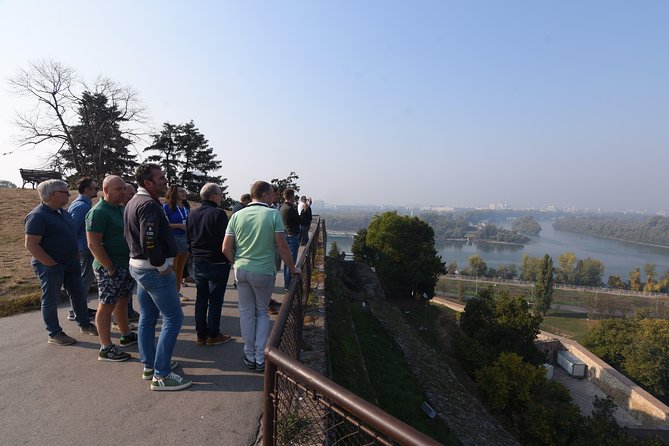
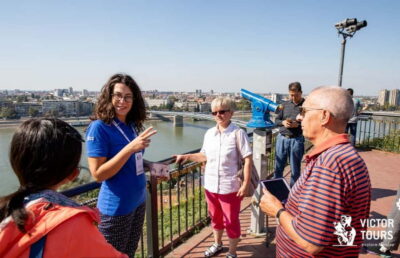
- Gardos Hill offers one of the day’s best views, looking across Zemun, the Danube, the Sava, and the fortress.
- Hotel pickup is offered within 5 kilometers of Republic Square, though you may be asked to walk 7 or 8 minutes to a nearby pickup point.
- The tour is a strong choice for a first visit, especially if you have only a weekend or a few days in Belgrade.
- Lunch is not included, but you get about 75 minutes in Zemun to choose fish, burek, chevapchichi, coffee, or something else.
Why this Belgrade tour works for a first visit
Belgrade is spread across several distinct areas, and the distances can make independent sightseeing slow. This tour uses an air-conditioned van or minibus to link the fortress in the old center with Zemun across the river, then returns to the southern and central districts.
That arrangement gives you a useful city lesson, not just a checklist of monuments. You see how Belgrade grew from a fortified Roman settlement into a medieval and Ottoman stronghold, then into a divided 20th-century capital with Austro-Hungarian, socialist, royal, and modern Serbian influences.
The strongest guides bring that story to life. Aleksandar is praised for turning Serbian and Belgrade history into an engaging narrative, while Milan, Isidora, Dragana, Jelenca, and several other guides have been singled out for clear explanations and a friendly manner. Guide quality can vary, of course, and one poor account describes rushed timing and weak group management. Keep that in mind, but the overall rating of 4.8 from 232 ratings and a 97 percent recommendation rate suggest that most departures go well.
At $72.59 per person, the value depends on how you use your time. You are paying for hotel pickup, transport across town, an English-speaking certified guide, and Saint Sava Temple admission. You also avoid arranging separate taxis to Zemun, Dedinje, and the fortress. Food, drinks, gratuities, the Gardos Tower fee, and the ride back to your hotel are extra.
Other Belgrade days people book alongside this one:
- From Belgrade: Novi Sad & Sremski Karlovci Full-Day Tour
★ 4.7 · 1,068 reviews - From Belgrade: Gems of Eastern Serbia Tour
★ 5.0 · 427 reviews - Northern Serbia: Sremski Karlovci and Novi Sad Full-Day Tour from Belgrade
★ 5.0 · 425 reviews
Kalemegdan and Belgrade Fortress: the city’s best opening chapter
The morning begins with pickup, usually 15 to 30 minutes before the 9:30 start for a shared departure. The first major stop is Kalemegdan Park and Belgrade Fortress, right in the city center.
This is the right place to begin because Belgrade’s location explains much of its past. From the Upper Town, you look toward the meeting point of the Sava and Danube rivers, a strategic position that made the city worth fighting over for centuries.
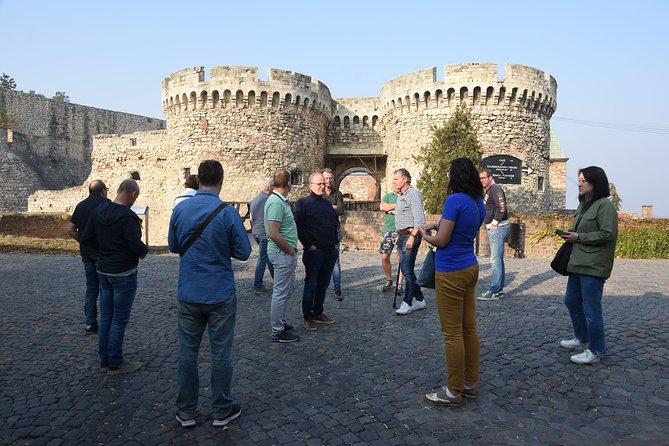
The walk begins near Leopold’s Gate and traces layers of the old stronghold. You pass remains of the Roman castrum Singidunum, then medieval walls and gates including Zindan Gate and Despot’s Gate. Jakšića Tower adds another medieval detail, while the Chapel of Saint Petka and Ružica Church bring the fortress into the world of Orthodox devotion.
You have about 45 minutes for this first section. That is enough to see the key areas, but not enough for a slow exploration of every path in the park. Wear shoes with a firm sole, especially if the weather is wet.
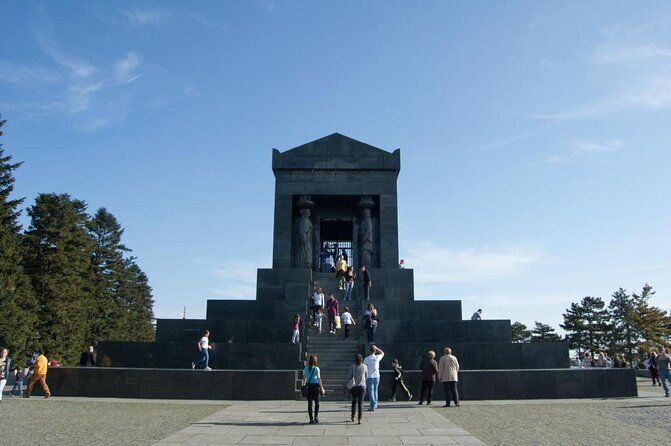
The next half hour continues through the Upper Town. You see the Victor monument, one of Belgrade’s most recognized symbols, created by Ivan Meštrović. The route also passes the Roman Well, King’s Gate, the Sava Promenade, the Damat Ali Pasha Tomb, Clock Gate, and Clock Tower.
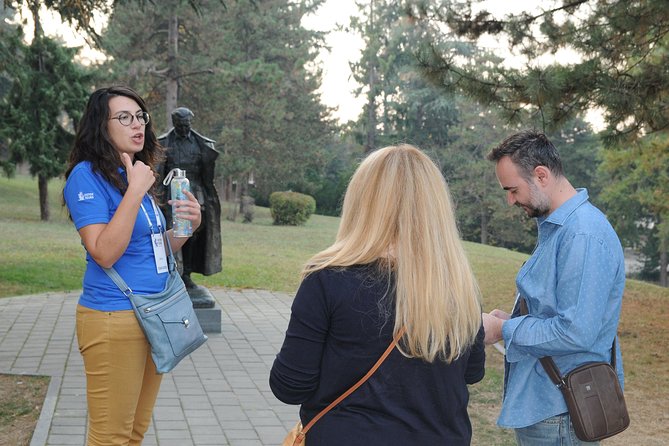
You will also pass the Military Museum and Istanbul Gate before returning toward Kalemegdan Park. The Monument of Gratitude to France and busts of Serbian writers add cultural detail to the walk. This part is excellent for getting your bearings, though the guide’s commentary matters. Stay where you can hear clearly, since one complaint described difficulty following the guide in a larger group without an audio system.
New Belgrade: concrete, politics, and a different city
Back in the vehicle, you cross into New Belgrade. This district was built after World War II during the socialist period, and its broad blocks and large concrete structures look very different from the old center.
The route points out the former Central Committee of the Communist Party, the Palace of Federation, the Genex Tower, Sava Center, Belgrade Arena, and the Novak restaurant connected with tennis star Novak Đoković’s family. Some sights are viewed from the vehicle, so this is more of a guided architectural and historical ride than a walking tour.
New Belgrade is worth seeing because it corrects the idea that Belgrade is only an old fortress and a scattering of 19th-century buildings. Its architecture reflects Yugoslavia’s attempt to create a modern socialist capital with monumental public spaces and bold concrete forms. A special Museum of Modern Art exhibition in New York once focused on this style, which tells you that the district has more artistic interest than its plain surfaces might suggest.
The limitation is clear: you cannot stop everywhere. Windows on a minibus may also limit your view, especially if the glass is small or cloudy. If modern architecture interests you, sit on the side with the best outward view and ask the guide when a building is coming up.
Zemun and Gardos Hill: the day’s most atmospheric walk
After New Belgrade, the vehicle reaches Zemun, a former town with a Central European feel on the Danube. This is where the tour becomes more intimate.
The first pass through Zemun includes Avijatičarski Square and the old city entrance. You see the monument to World War II heroes, the old elementary school, and the Air Force Ministry, a fine example of prewar Yugoslav modernism. Along Gospodska Street, the guide points out the post office, Hotel Central, Town Museum, and House with a Sundial.
This drive lasts only about 15 minutes, but the later walk gives Zemun more room. The vehicle is left by the Danube, and you follow the promenade beneath old plane trees. The riverbank is lined with fish restaurants, making this one of the better places in Belgrade for a relaxed meal with a waterside setting.
The route passes Saint Nicholas Church, described as the oldest Orthodox church in Zemun, dating from the 17th century. Then comes the climb up Gardos Hill. The cobblestone streets curve past small houses, and the district’s mixture of Mediterranean and Central European character becomes easier to see on foot than from a window.
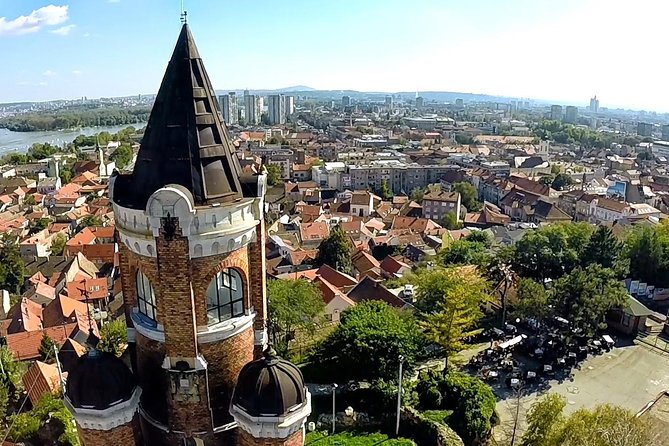
At the top, the remains of the Zemun citadel surround the Millenary Monument, also called the Millennium Tower. It was built in the late 19th century in several historical styles to mark the southernmost point of the Austro-Hungarian Empire. The tower admission is not included, so bring a little extra money if you want to go up.
The view is the reward. You can look over Old Zemun, the Danube and Sava confluence, and Belgrade Fortress across the water. Several people who especially enjoyed the tour have picked this hilltop as their favorite part. I can understand why: it gives you both a clear sense of the city’s geography and a pleasant break from vehicle sightseeing.
The walk ends at Zemun’s Main City Square, beside the daily market. The Bishop’s Office and the 18th-century Roman Catholic Church of the Blessed Virgin frame the square. You then get about 75 minutes for lunch or free time.
Food choices include freshly prepared Danube fish, burek, and chevapchichi. Burek is a flaky filled pastry, while chevapchichi are small seasoned rolls of ground meat. The guide may suggest a restaurant, but lunch is your own expense. This free time is welcome, though it can feel short if you want a full meal and extra wandering.
Same riverbank, a completely different kind of day:
- Day Trip from Belgrade: Gems of Eastern Serbia
★ 5.0 · 424 reviews - Western Serbia 1-Day Tour of the Key Sites from Belgrade
★ 4.8 · 333 reviews - Belgrade Nightlife Bar Pub Club Crawl with Drinks
★ 5.0 · 277 reviews - From Belgrade: Golubac Fortress and Iron Gate Gorge Tour
★ 4.8 · 271 reviews
Dedinje and Belgrade’s football rivalry
After Zemun, the route crosses the Gazela Bridge and heads toward Dedinje, one of Belgrade’s most expensive residential areas. The district is leafy and filled with large houses and former official residences.
Your guide discusses the owners and political events tied to these properties during Serbia’s turbulent 20th century. Much of this section is viewed from the vehicle, so it works best as context rather than close-up sightseeing.
The route also passes Rajko Mitić Stadium, home of Red Star Belgrade, and Partizan Belgrade’s stadium on the other side of a small hill. The rivalry between the two clubs has lasted more than 70 years. Red Star’s victory in the European Cup, now the Champions League, is another important part of the city’s sporting identity.
This is a useful stop for anyone curious about how politics, wealth, and football shape modern Belgrade. It is less rewarding if you expect to enter stadiums or visit houses. The tour shows them from outside.
Saint Sava Temple: the visual centerpiece
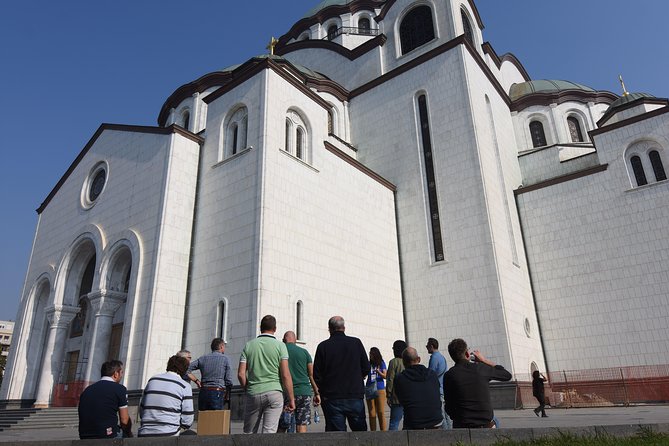
The next major stop is Vračar and Saint Sava Temple. Admission is included, and you have about 45 minutes to see the church.
The temple was built on the site where Ottoman forces burned the relics of Saint Sava, a 13th-century Serbian Orthodox leader and the first archbishop of the independent Serbian Orthodox Church. Construction began in the 1930s and continued over many decades.
The scale is hard to miss. The main dome rises 70 meters, and the gilded cross adds another 12 meters, bringing the total height to 82 meters. The ground level covers about 3,500 square meters, with three first-level galleries adding another 1,500 square meters.
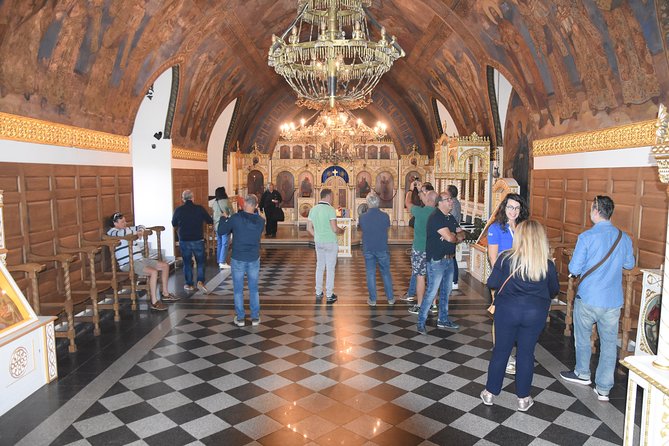
The interior is the reason not to skip this stop. One particularly appreciative account calls the inside a sight to behold, and the 45-minute visit gives you time to look upward, take photographs where permitted, and listen to the explanation of the church’s Serbian-Byzantine design.
There has been conflicting information in at least one departure about an entrance charge, with a guide reportedly requesting 400 Serbian dinars despite the church being publicly accessible. The tour’s stated terms include admission, so confirm the arrangement at booking and do not pay twice. This appears to be an isolated service problem, but it is worth knowing.
Central Belgrade: ministries, squares, and royal power
After Saint Sava, you ride through Slavija Square and Nemanjina Street. This street is lined with major state buildings, including the Government Building, Ministry of Foreign Affairs, General Staff of the Serbian Army, Ministry of Railways, Ministry of Finance, and State Court.
The value here is architectural and political. You are seeing the formal face of the Serbian state, with prewar buildings that help explain how Belgrade presented itself as a European capital before the socialist period.
At Republic Square, the tour reaches the center of city life. The National Museum and National Theatre frame the square, while the equestrian statue of Prince Mihailo points to one of the key figures in Serbia’s modern development.
From there, you pass Terazije Square, its 19th-century white stone fountain, and the Moskva Hotel, one of the city’s most recognizable buildings. Nikola Pasic Square follows, named for a major prime minister of the Kingdom of Yugoslavia.
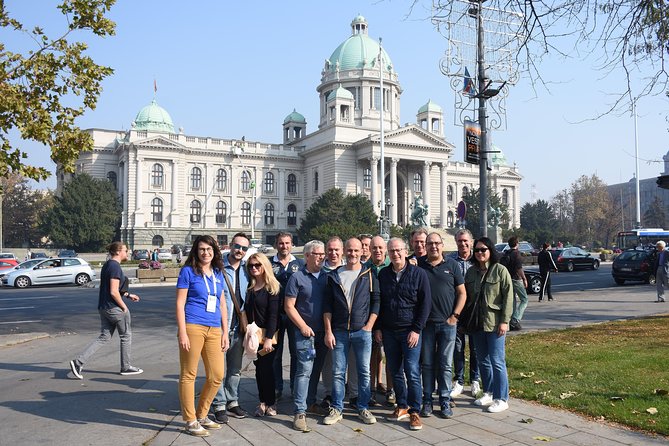
The final stop is in front of the Parliament Building. You can photograph the Old and New Royal Palaces and hear about the two dynasties that ruled Serbia in the 19th and 20th centuries. The guide ends the tour here, in the city center, with suggestions for the rest of your afternoon.
One practical point matters: there is no hotel drop-off. You finish at the National Assembly, which is convenient for continuing into central Belgrade, but less convenient if you have luggage or want to return straight to your accommodation.
Timing, group size, and walking demands
The shared tour has a maximum of 16 people, though the exact number can vary. One unhappy account expected a group of no more than eight and found 12 people instead. If a small group matters to you, ask about the current option before booking, or consider the private version.
The tour requires moderate walking, including Gardos Hill, cobblestones, steps, and repeated movement between the van and the sights. One person specifically warned that the vehicle had no helpful step for getting in and out. If high vehicle steps are difficult for you, ask about this before paying.
Pickup is available from hotels, Airbnbs, and pensions within 5 kilometers of Republic Square. Shared pickup details arrive by email the evening before, and traffic or multiple pickups can cause delays. The minimum for a shared departure is three people. If that number is not reached, you will be offered another date, another available tour, or a full refund.
Free cancellation is available up to 24 hours before the start time. Changes made inside that window are not accepted, so keep your plans firm on the final day.
Who should book this Belgrade day tour?
I would choose this tour if I were visiting Belgrade for the first time, staying only a weekend, or wanting a clear overview before exploring alone. It is especially useful for people who want to see Zemun and New Belgrade but do not want to work out several taxi rides and bus connections.
Families can also make it work, since the route mixes short walks with air-conditioned transport and includes a lunch break. One praised guide handled a group that included a nine-year-old and older adults, adjusting the day well.
I would be more cautious if you prefer slow museum visits, long café stops, or complete control over your schedule. The tour is packed, and the fortress, Zemun, and central districts all deserve more time than one day allows. It is an introduction, not a substitute for staying in each neighborhood.
Should you book it?
Book it if you want to cover Belgrade’s main sights and several distinct districts in one organized day. The best reasons are the efficient transport, the fortress walk, the Zemun hilltop view, and the included Saint Sava Temple visit.
Before booking, confirm pickup details, ask about expected group size, and wear shoes suited to hills and cobblestones. Stay close to the guide and listen carefully for meeting times. At $72.59, the tour offers solid value for a first visit, provided you accept a full schedule and the possibility that guide quality and group handling may vary.
FAQ
What is included in the Belgrade Big Tour?
The tour includes hotel pickup, an English-speaking professional certified guide, transport in an air-conditioned van or minibus, and admission to Saint Sava Temple.
How long does the tour last?
The experience lasts approximately 7 to 8 hours and begins at 9:30 a.m.
Where can I be picked up?
Pickup is available from hotels, Airbnbs, and pensions within a 5 kilometer radius of Republic Square. You may be asked to walk 7 or 8 minutes to the nearest pickup point.
Does the tour include lunch?
No. Food and drinks are not included. You have about 1 hour and 15 minutes in Zemun to choose and pay for lunch, coffee, or a snack.
Is the Gardos Hill tower admission included?
No. Admission to the Millenary Monument, or Millennium Tower, is not included.
Does the tour return me to my hotel?
No. The tour ends in front of the National Assembly in central Belgrade, and hotel drop-off is not included.
Can I cancel for a refund?
You can cancel up to 24 hours before the experience begins for a full refund. Cancellations or changes made less than 24 hours before the start time are not accepted.
Just added around Belgrade
- Private Wine Tasting by Party in Belgrade★ 5.0 · 3 reviews
- Zica and Studenica Monasteries Private Day Tour from Belgrade★ 5.0 · 4 reviews
- Urban & Alternative Belgrade tour★ 5.0 · 4 reviews
- Belgrade Bike Tour: Be a local in the hood of Belgrade!★ 5.0 · 5 reviews
- The World of Pubs and Taverns: A Golden Mile★ 5.0 · 5 reviews
- Private Truffle‑Hunting Tour from Belgrade – Lunch with Wine★ 5.0 · 4 reviews
- Sidecar Tours Belgrade★ 5.0 · 5 reviews
- Private Day Trip/Transfer Tour from Belgrade to Timisoara★ 5.0 · 5 reviews
Tours, compared.
Sremski Karlovci and Novi Sad Full-Day Tour from Belgrade
Read our review →
Western Serbia 1-Day Tour of the Key Sites from Belgrade
Read our review →
From Sofia: Day Tour to Nis, Serbia with tickets and pick-up
Read our review →
East Serbia Tour with Cave, Monastery, & Waterfall
Read our review →Browse the lists this tour appears in