
Reviewed · PRIVATE
NATO Bombing of Belgrade Private Tour
The most striking part of this Belgrade tour is that the evidence has not been tidied away. The damaged Ministry of Defence and the unrepaired RTS building still carry the marks of the 1999 NATO bombing. You move through the city by private vehicle, stopping at five sites where military decisions became civilian tragedies.
I like the small private format, since you can ask direct questions and spend time with subjects that need care. I also like the use of photographs alongside the buildings themselves. That pairing helps you connect the present-day streets with what happened there.
The main drawback is that this is a serious, sometimes painful history tour, not a light sightseeing outing. The sites are viewed from outside, admission is free, and the value comes from the guide’s explanation rather than from formal exhibits or restored interiors.
Key points at a glance
- Five significant bombing sites: Visit RTS, the Ministry of Defence, Ušće, the former Chinese embassy site, and the Air Force Command Building.
- Private hotel or port pickup: Your guide and driver collect you from your hotel, apartment if arranged, or Belgrade port.
- Real wartime evidence: See damaged structures that remain part of Belgrade’s daily cityscape.
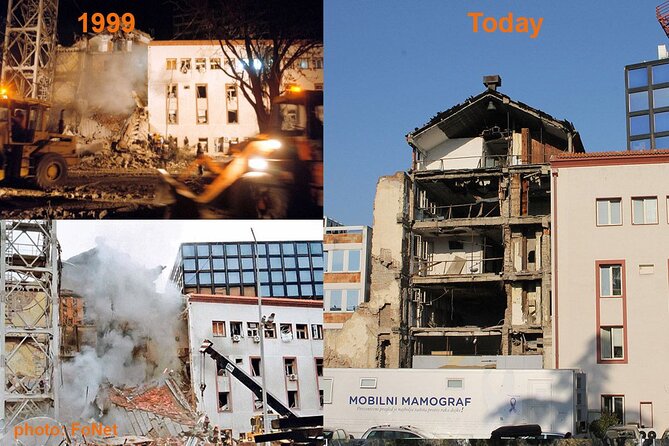
- Photos add needed context: The guide uses visual material to show how the sites looked during the bombing.
- About three to four hours: The schedule allows roughly 30 minutes at each location, plus driving time.
- A history-first experience: You should book this for context, questions, and memory, not for conventional sightseeing.
Why these five Belgrade sites matter
The 1999 NATO air campaign lasted 78 days, and its effects are still visible in Belgrade. This tour focuses on places that connect military strategy, government, media, diplomacy, and human loss.
That mix gives the route a useful shape. You are not simply looking at bomb-damaged buildings. You are comparing different kinds of targets and considering how each one affected ordinary people, public institutions, and Serbia’s sense of itself.
The tour runs for about three to four hours. Each of the five stops is planned for around 30 minutes, with the rest of the time used for driving between them. Since only your group participates, the pace can be more personal than on a large bus tour.
I would not expect a museum-style presentation. Most stops are exterior viewpoints, and the buildings remain part of modern Belgrade. That is also the point. Cars, offices, and everyday city life carry on around structures connected to a difficult period.
A few more Belgrade trips to weigh up
- Private Red Star-Partizan Stadium Tour in Belgrade
★ 5.0 · 72 reviews - Belgrade Private City Tour
★ 5.0 · 41 reviews - Private Transfer
★ 5.0 · 40 reviews
RTS and the monument called Why
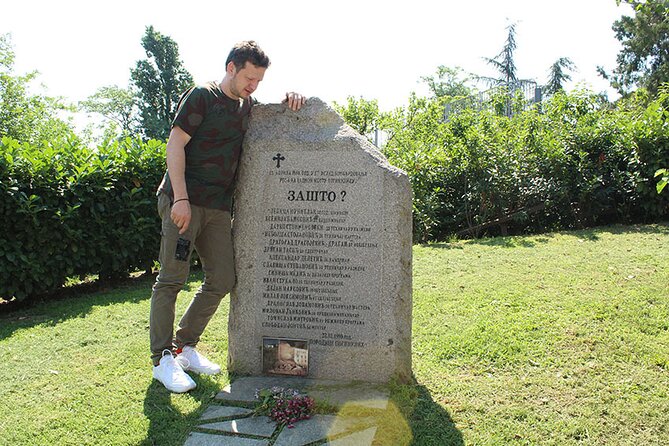
The first stop is Radio Television of Serbia, usually known as RTS. Outside the building, the monument Zašto?, meaning Why?, marks the people killed during the night shift.
Sixteen people, mostly young staff members, died when RTS was hit. The original building remains unrepaired, giving the site a direct and unsettling quality. You are looking at a workplace, not a distant battlefield, and the story centers on people who were carrying out an ordinary night shift.
This is a strong opening because it sets a human tone. The tour does not begin with maps or military hardware. It begins with a question and with the cost paid by people inside a broadcast building.
Your guide explains the event while showing photographs from the period. That visual comparison matters. It can help you understand the building’s condition and the scale of the loss without relying only on dates and political language.
There is no admission charge, but you should be ready for a quiet stop. The subject is tragic, and the site may feel more like a memorial than a sightseeing attraction.
The Ministry of Defence and the April 29 attack
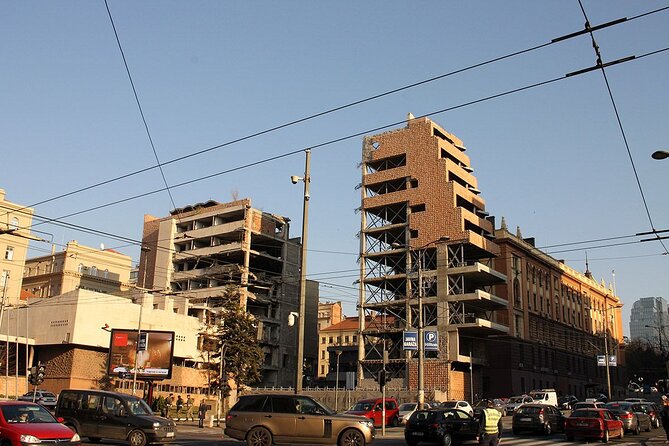
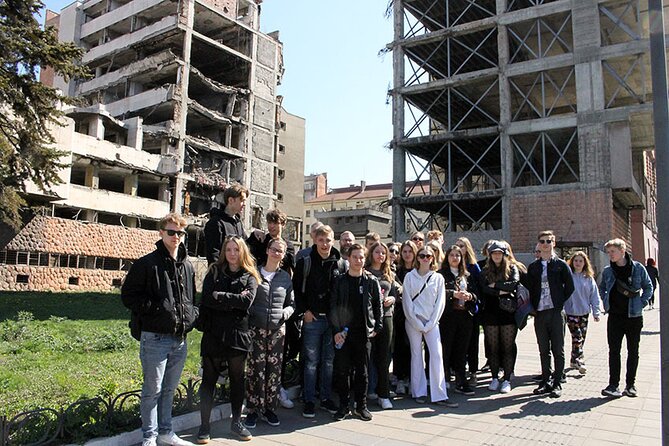
The Ministry of Defence is the image most often associated with NATO bombing in Belgrade. Its ruined sections remain among the city’s most recognizable reminders of the campaign.
The building was hit on the night of April 29, 1999, when several military objectives were attacked. One person died, and civilian buildings nearby were damaged. From the outside, you can see how a military target was also part of a wider urban setting.
That setting is important. Belgrade is not presenting the building as an isolated relic. It sits in the city, surrounded by roads and other structures. The result is a clear lesson in how air strikes affect more than the intended target.
I like this stop because it gives you a visual reference for the conflict. The Ministry of Defence is not an abstract point on a map. It is a physical building with a damaged form that has become part of Belgrade’s modern identity.
The limit is that you do not go inside. If you want detailed military analysis, ask questions during the drive and at the stop. The tour’s strength is the combination of site, photos, and explanation, not access to an interior collection.
Ušće, from communist headquarters to business center
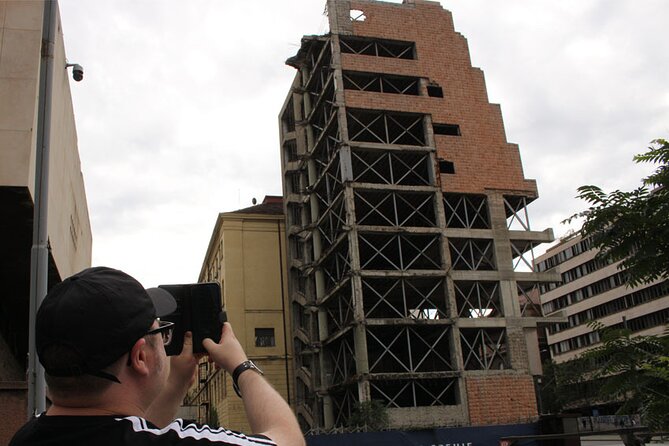
The former Central Committee of the Communist Party of Yugoslavia is now the Ušće business center. The current structure uses the same basic skeleton and retains the appearance of the earlier communist-era building.
This stop adds political context to the route. The building was not just another office tower. It represented the authority of Yugoslavia’s ruling system, which helps explain why it had symbolic value as well as practical importance.
You will hear why the structure was considered resistant to NATO missiles in 1999 and why it was targeted in the first place. That makes Ušće different from RTS and the Ministry of Defence. Here, the questions concern political symbolism, construction, and the way a former government building was later absorbed into commercial Belgrade.
I find this one of the more useful stops for understanding how the city changed after Yugoslavia. The same basic structure connects the communist period, the bombing, and the present-day business district.
Because the building has been retained and reused, the stop may feel less visibly damaged than the Ministry of Defence. Its importance comes more from the explanation than from obvious destruction. Pay close attention to the guide’s account of its former role.
Same riverbank, a completely different kind of day:
- From Belgrade: Novi Sad & Sremski Karlovci Full-Day Tour
★ 4.7 · 1,068 reviews - From Belgrade: Gems of Eastern Serbia Tour
★ 5.0 · 427 reviews - Northern Serbia: Sremski Karlovci and Novi Sad Full-Day Tour from Belgrade
★ 5.0 · 425 reviews - Day Trip from Belgrade: Gems of Eastern Serbia
★ 5.0 · 424 reviews
The former Chinese embassy and a disputed explanation
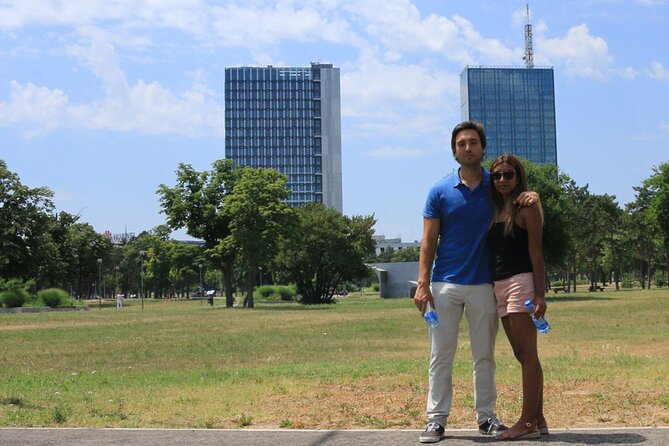
The former Chinese embassy is the most controversial stop on the route. Four Chinese citizens died when the building was hit on May 7, 1999.
The official explanation was that the strike resulted from an intelligence error. Another explanation has long been suspected, involving a different possible purpose for the building. The tour presents this as an unresolved and disputed part of the bombing campaign rather than pretending the issue is simple.
That uncertainty makes the stop valuable, but it also calls for careful listening. You are dealing with competing claims, international politics, and the deaths of civilians. A good question to ask is which parts of the account are established facts and which parts remain allegations.
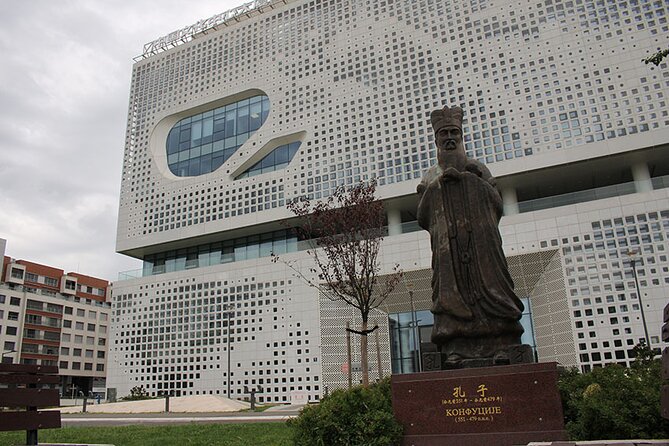
The site is now associated with the Chinese Cultural Center. The change in use gives the location another layer of meaning. It is not only a place connected to a fatal mistake or disputed operation. It is also part of the later relationship between China and Serbia.
This stop may interest you most if you want to understand the diplomatic effects of the bombing. It is less about visible damage alone and more about why the event remains politically sensitive.
The Air Force Command Building in Zemun
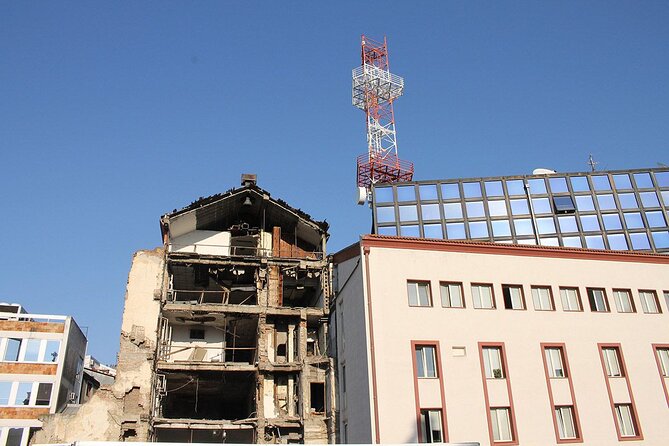
The final stop is the Air Force Command Building, a 1935 structure known for its Yugoslav and Serbian architectural design. Two missiles struck it on April 5, 1999.
The building represented a strategic target, but the guide also tells the story of pilots who knowingly entered the fight against the much stronger NATO air force. Their deaths are presented as part of the defense of the skies above Serbia and Yugoslavia.
This ending shifts the focus from buildings and casualties to the people involved in the air war. It gives the route a military dimension while keeping the human story in view.
Architecturally, this can be one of the more interesting stops. The building’s prewar design helps show that Belgrade’s wartime sites are not all modern concrete offices. Some are older civic structures with their own place in Serbian architectural history.
Again, access is not described as an interior visit. You see the exterior and hear the story from the guide. If architecture interests you, take time to look at the building before the explanation turns back to the bombing.
What the private vehicle adds
The private guide and driver are included, along with pickup and drop-off at your hotel. Pickup can also be arranged from an apartment or Airbnb if you provide the location, and collection is available at the Belgrade port where cruise ships dock.
This matters because the five sites are spread around the city. You do not need to work out public transport between them, and you can keep the same guide for the entire route.
The private setup also gives you room to ask questions. A subject like the NATO campaign can lead into Serbian politics, media, military history, international law, and personal memory. On a shared tour, you may have less freedom to follow those threads.
Bottled water is included. Food and other personal spending are not, but the tour lasts only part of the day, so you can plan a meal before or after it.
The stated start time is 10:00 a.m. Confirmation is normally sent at booking, though reservations made within 20 hours of departure are subject to availability and may be confirmed as soon as possible.
Is $145.10 a fair price?
At $145.10 per person, this is not the cheapest way to spend a morning in Belgrade. Its value depends heavily on your group size.
For one person, the price is a substantial outlay for a three to four-hour tour with no paid admissions. For a couple or small group, the private vehicle, hotel pickup, driver, bottled water, and dedicated guide make the price easier to justify. Group discounts may also be available.
You are paying for access to a focused route and for someone to connect five difficult sites into one clear story. You are not paying for museum tickets, meals, or dramatic attractions.
I would compare this with the cost and effort of arranging the route yourself. You could potentially reach some sites independently, but you would need to research the bombing, identify the correct locations, and understand the links between them. The private guide saves that work and gives you a person to question on the spot.
The best value comes when you care about modern Serbian history and want more than a passing look at damaged buildings. If you only want general city sightseeing, the price may feel high.
Who should book this tour?
I would recommend it most strongly to people interested in recent European history, military affairs, journalism, diplomacy, or the breakup of Yugoslavia. It also suits anyone who has seen photographs of Belgrade’s ruined buildings and wants to understand what they represent.
The route works well for visitors with a limited schedule. In one morning, you cover five major locations and still have the rest of the day for other Belgrade sights.
It is also a practical choice for cruise passengers because port pickup is available. The private format should appeal to families, couples, and small groups who want to discuss the subject without strangers listening in.
I would think twice if you want a cheerful introduction to Belgrade. This is a sober experience, and some stops involve deaths of civilians and military personnel. You should come prepared to listen rather than treat the route as a collection of photo opportunities.
A few practical tips before you go
Wear comfortable shoes, even though the tour uses a vehicle. You will still leave the car at each location, and the experience depends on being able to look carefully at the buildings and memorials.
Bring questions. The route includes disputed claims, military decisions, political symbolism, and personal loss. Asking the guide to separate confirmed information from interpretation can make the experience more useful.
Allow the full three to four hours rather than planning another activity immediately afterward. Driving time, traffic, and discussion can affect the exact schedule.
The tour is offered in English, and most people can participate. Since it is private, you can tell the provider in advance if pickup is from an apartment or another location not included in the usual pickup details.
Free cancellation is available if you cancel at least 24 hours before the start time. Changes or cancellations inside that period are not refunded, so check your plans before the deadline.
Should you book the NATO Bombing of Belgrade Private Tour?
Book it if you want to understand why certain Belgrade buildings remain damaged, how the 1999 campaign affected civilians, and why the subject still carries political weight. The strongest parts are the unrepaired RTS building, the Ministry of Defence, and the guide’s use of photographs to connect past events with what you see today.
The tour is less suitable if you want interiors, formal museum displays, or a broad introduction to all of Belgrade. At $145.10 per person, it makes the most sense for a private group that values convenience and serious historical discussion.
For the right visitor, this is a direct way to read Belgrade’s recent past in the buildings themselves. You leave with more than photographs. You gain a clearer sense of how war, memory, and ordinary city life occupy the same streets.
FAQ
How long does the NATO Bombing of Belgrade Private Tour last?
The tour lasts approximately three to four hours. Each of the five listed stops is planned for about 30 minutes, with additional time for driving between locations.
What time does the tour start?
The stated start time is 10:00 a.m.
Is hotel pickup included?
Yes. Hotel pickup and drop-off are included. Pickup can also be arranged from an Airbnb or apartment if you provide the location.
Can cruise passengers join the tour?
Yes. Pickup is available from Belgrade port, where cruise ships dock.
Is the tour private?
Yes. Only your group participates in the activity.
Is the tour offered in English?
Yes. The experience is offered in English.
Can I cancel for a full refund?
Yes, if you cancel at least 24 hours before the experience start time. Cancellations or changes made less than 24 hours before the start time are not refunded or accepted.
Just added around Belgrade
- Private Wine Tasting by Party in Belgrade★ 5.0 · 3 reviews
- Zica and Studenica Monasteries Private Day Tour from Belgrade★ 5.0 · 4 reviews
- Urban & Alternative Belgrade tour★ 5.0 · 4 reviews
- Belgrade Bike Tour: Be a local in the hood of Belgrade!★ 5.0 · 5 reviews
- The World of Pubs and Taverns: A Golden Mile★ 5.0 · 5 reviews
- Private Truffle‑Hunting Tour from Belgrade – Lunch with Wine★ 5.0 · 4 reviews
- Sidecar Tours Belgrade★ 5.0 · 5 reviews
- Private Day Trip/Transfer Tour from Belgrade to Timisoara★ 5.0 · 5 reviews
Private, compared.
Private Day Tour to Fruska Gora Monasteries, Sremski Karlovci and Novi Sad
Read our review →
Private Novi Sad, Titanic wine tasting and Farmer’s House
Read our review →
Private Limo Transfer from Beograd Airport to Belgrade downtown
Read our review →
Browse the lists this tour appears in