
Reviewed · WESTERN SERBIA TOURS
From Belgrade: Studenica monastery & Zica monastery
The real prize here is the chance to leave Belgrade behind and meet Serbia’s medieval heart. At Žiča Monastery, seven kings were crowned. At UNESCO-listed Studenica, 13th and 14th-century Byzantine paintings fill one of Serbia’s most important Orthodox sanctuaries.
I like the clear story linking the Nemanjić royal family, Serbian state-building, and Orthodox faith. I also like the mountain road itself, especially the Ibar Gorge and the view toward Maglič Fortress. Guides such as Jovana, Milos, and Stefan are noted for warm, careful explanations that make the long drive worthwhile.
The drawback is simple: this is a very long day, with roughly two and a half hours each way between Belgrade and the monasteries. You will spend plenty of time in the van, and lunch in Kraljevo is not included.
Key points to know before you book
- Žiča was Serbia’s royal coronation church: Seven kings were crowned here, giving the monastery a direct link to several medieval dynasties.
- Studenica is the main historical prize: The late 12th-century monastery is UNESCO protected and famous for its Byzantine wall paintings.
- The drive is part of the experience: You pass through mountain country, the Ibar Gorge, and a viewpoint facing the medieval Maglič Fortress.
- The group stays small: Shared departures are limited to 10 people, while private transportation and hotel pickup are included.
- The day runs for 12 hours: Plan on about 1.5 hours at Žiča, one hour in Kraljevo, and two hours at Studenica, plus the road time.
- Dress matters inside the monasteries: Bring comfortable shoes and avoid sleeveless shirts. Flash photography is not allowed.
Why these two monasteries matter
This excursion is not just a pair of old churches. It introduces you to the Nemanjić family, the medieval rulers who helped form the Serbian state and shaped the Serbian Orthodox Church. Their story appears in royal tombs, church buildings, religious art, and the very choice of places along this route.
Žiča and Studenica also show two different sides of medieval Serbia. Žiča is closely tied to royal ceremonies and coronations. Studenica is larger, more secluded in feel, and prized for its art and monastic importance.
I find that pairing useful because you do not see two similar stops back to back. One explains power and kingship. The other gives you a better sense of spiritual life and medieval art.
The trip takes place in the Raška District, a part of Serbia where wooded hills, river valleys, and old fortifications provide the setting. If you have spent most of your Serbian trip in Belgrade, this is a strong change of pace. You trade city streets for mountain roads and quiet monastery courtyards.
Other Serbia days people book alongside this one:
- From Belgrade: Novi Sad & Sremski Karlovci Full-Day Tour
★ 4.7 · 1,068 reviews - From Belgrade: Gems of Eastern Serbia Tour
★ 5.0 · 427 reviews - Northern Serbia: Sremski Karlovci and Novi Sad Full-Day Tour from Belgrade
★ 5.0 · 425 reviews
The long road from Belgrade to Žiča
Hotel pickup in Belgrade makes the start straightforward. The first drive takes about two and a half hours, so you should treat the morning as a road journey rather than a quick transfer.
That distance is the main issue to consider before booking. If you want a short excursion with little time in the vehicle, this is not the right choice. You need to be comfortable giving an entire day to the trip.
Still, the road gives the excursion its scale. You are not simply being taken to a nearby monument and returned to the city. You are heading into the historic center of medieval Serbia, with views of wooded hills and the Ibar Gorge along the way.
The small-group format helps here. A maximum of 10 people is much easier for questions and conversation than a full-size coach. The guides speak English, and the strongest part of the experience is likely to be the explanation during the drive and at the churches. Guides including Jovana, Milos, and Stefan have been praised for clear historical context, personal warmth, and attentive care.
Bring water and a light snack if you like, since food and drinks are not included. You will have time for lunch in Kraljevo, but you pay for that meal yourself.
Žiča Monastery and seven crowned kings
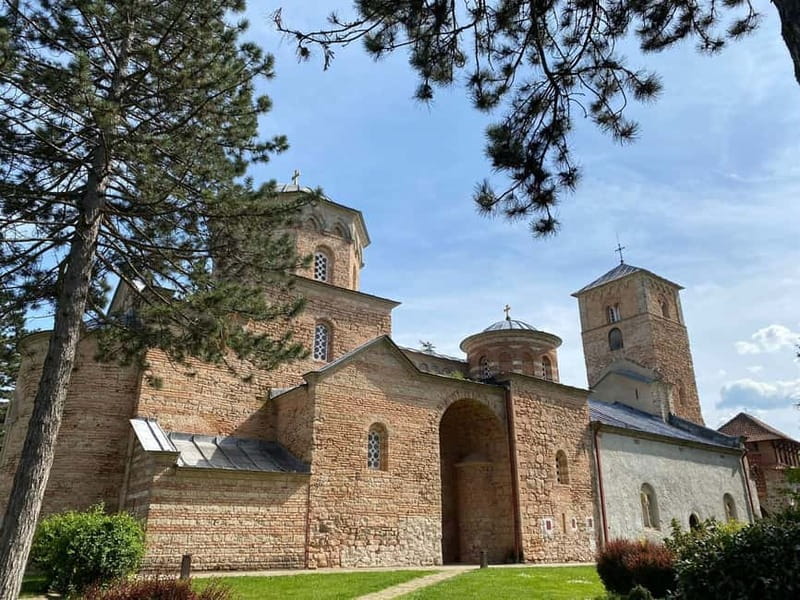
The first major stop is Žiča Monastery, with about 90 minutes for a visit, guided tour, walking, and sightseeing. The monastery is known as the coronation church where seven Serbian kings were crowned.
That fact gives Žiča a special role. It connects several royal dynasties and centuries in one place, so your guide can help you follow the political and religious story rather than leaving you with only a date and a photograph.
Žiča is also a good early stop because it gives the day a clear theme. Before you reach Studenica, you have already met the medieval Serbian rulers and seen how closely the monarchy and Orthodox Church were linked.
Take your time with the exterior and interior details your guide points out. Monasteries can look simple at first glance, especially if you are accustomed to Europe’s grand Gothic cathedrals. Here, the meaning often comes from the ceremony, the patronage, the church tradition, and the painted surfaces.
You should wear clothing suitable for an Orthodox religious site. Sleeveless shirts are not allowed. Comfortable shoes are also important, since walking is part of the visit and the full day is demanding on your feet.
Kraljevo gives the day a useful pause
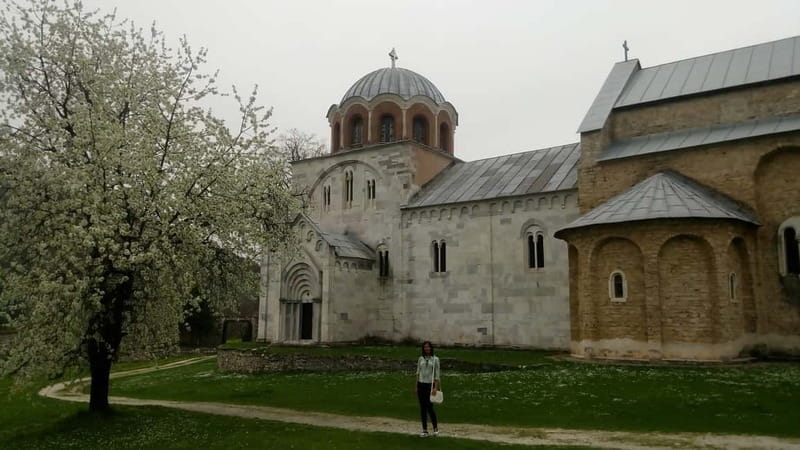
After Žiča, the route continues to Kraljevo for about an hour of free time, a break, and lunch. This is where you can eat at your own expense and reset before the afternoon visit.
The lunch stop is practical rather than a major sightseeing event. That is a good thing on a 12-hour outing. You need a proper pause, and Kraljevo breaks up the day before the longer approach to Studenica.
Because no specific restaurant is included, your meal choice and cost are your responsibility. I would keep the break relaxed and allow enough time to eat without turning lunch into another rushed appointment.
This is also a useful point to think about the trip’s rhythm. The day combines history, road scenery, walking, and conversation. You are not continuously touring monuments, which makes the schedule more manageable, but it also means the experience depends on enjoying the journey between the stops.
Same riverbank, a completely different kind of day:
- Day Trip from Belgrade: Gems of Eastern Serbia
★ 5.0 · 424 reviews - Western Serbia 1-Day Tour of the Key Sites from Belgrade
★ 4.8 · 333 reviews - From Sofia: Day Tour to Nis, Serbia with tickets and pick-up
★ 4.7 · 302 reviews - Belgrade Nightlife Bar Pub Club Crawl with Drinks
★ 5.0 · 277 reviews
Maglič Fortress and the Ibar Gorge
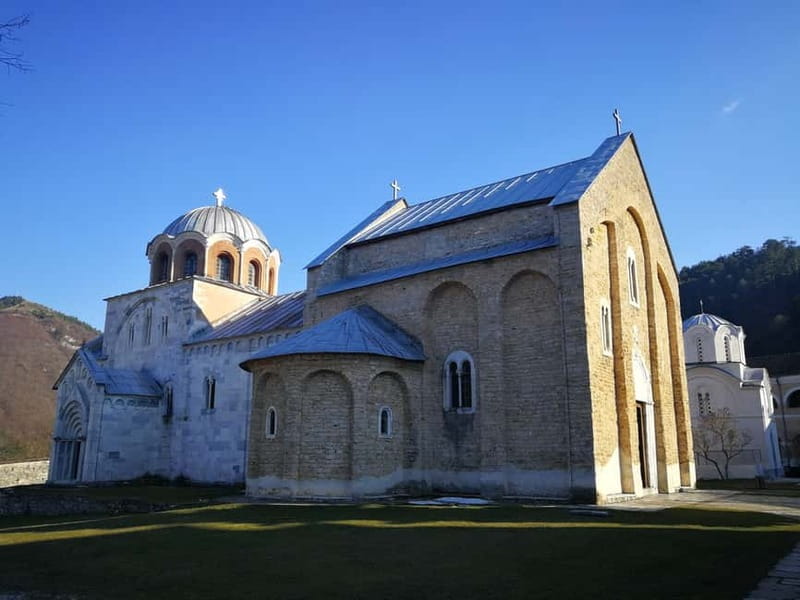
The route includes a short viewpoint stop of about 10 minutes. From the road, you can see the hills around Maglič Fortress, one of the best-preserved and most attractive medieval fortifications in Serbia.
The stop is brief, so you should not expect a full fortress visit. It is a chance to take photographs and understand the defensive setting from a distance. The fortress sits among the hills above the Ibar Gorge, and the view adds a useful layer to the story of medieval Serbia.
I like this brief pause because it keeps the drive from becoming anonymous. You see why the area mattered. Rivers, narrow valleys, and high ground shaped movement and defense, while monasteries occupied places connected to Serbia’s royal and religious centers.
Do not book this excursion mainly for Maglič. It is a roadside view, not a separate tour of the fortress. But if you enjoy seeing how a region’s terrain relates to its history, the stop is worthwhile.
Studenica, the artistic high point
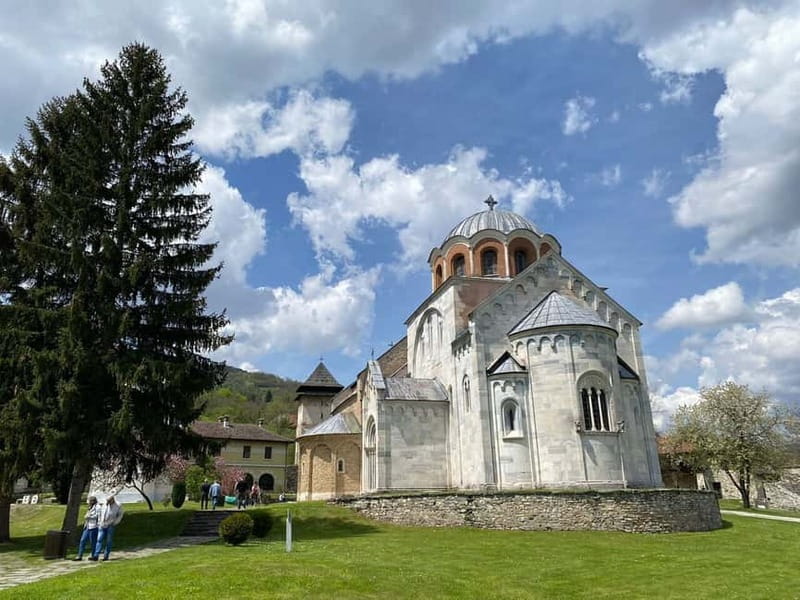
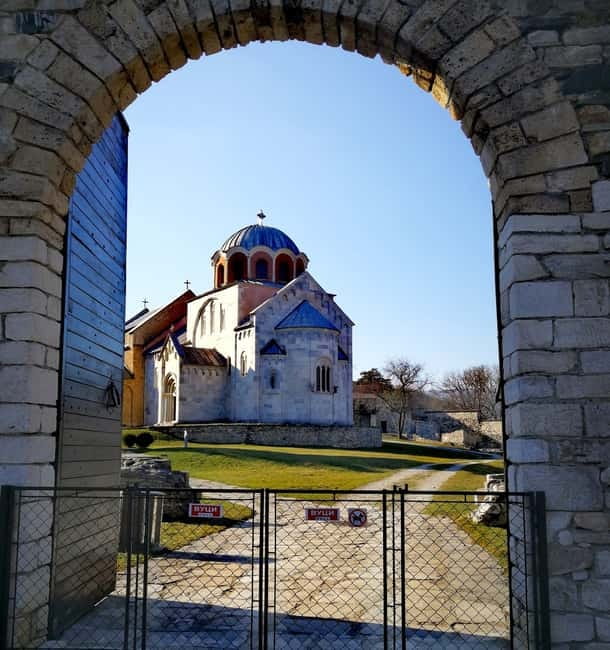
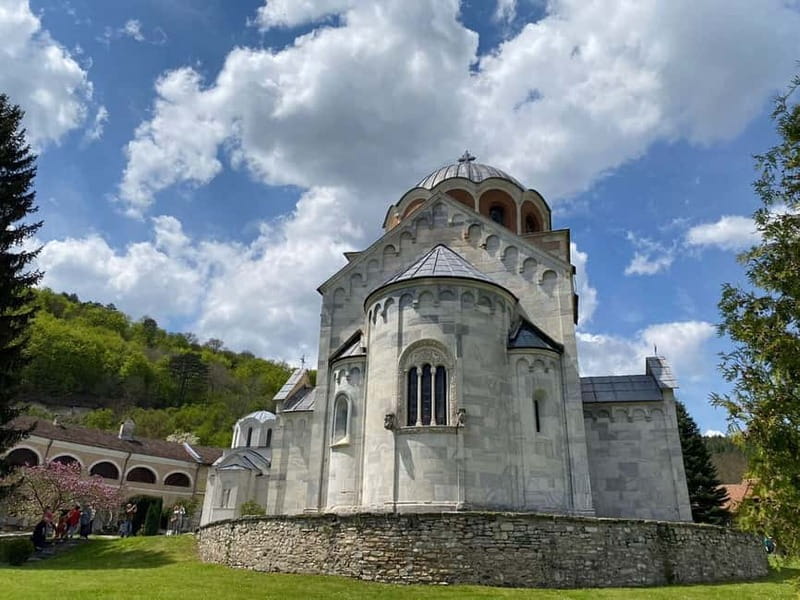
Studenica is the centerpiece of the day. The late 12th-century monastery is protected as a UNESCO World Heritage Site and is described as the largest and wealthiest of Serbia’s Orthodox monasteries.
You have about two hours here for a guided visit, sightseeing, and photographs. That is enough time to give Studenica proper attention, especially after the long ride from Belgrade and the earlier stop at Žiča.
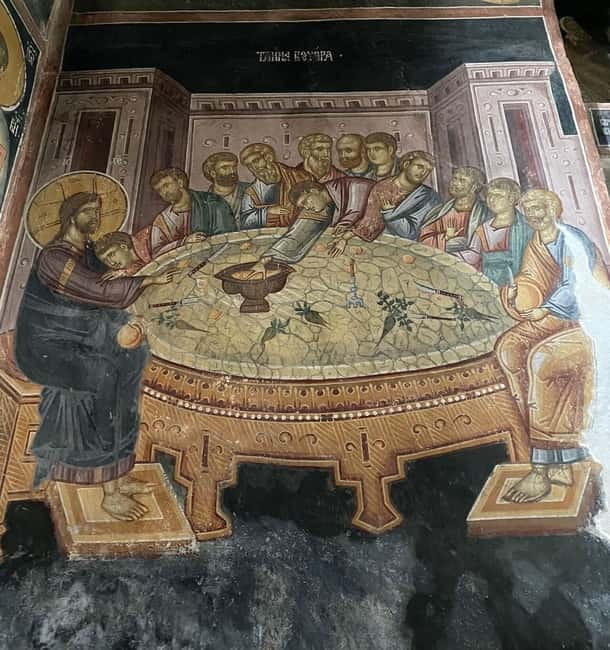
The monastery belongs to the group of Serbian sanctuaries sometimes called the Valley of the Kings. It preserves priceless collections of 13th and 14th-century Byzantine painting, which makes the visit especially important for anyone interested in medieval religious art.
The paintings are not decoration added for atmosphere. They were central to worship and teaching, and your guide can help you understand the figures, scenes, and artistic tradition you are seeing. Without that context, it is easy to glance at old frescoes and move on. With a strong explanation, the painted walls become a record of faith, royal support, and artistic exchange.
Studenica also rewards a slower pace. The setting is peaceful, and the quiet feels very different from central Belgrade. One guide described the monasteries as a welcome break from city touring, and that is a fair way to think about the afternoon. You are still learning, but the experience is calmer and less crowded in spirit.
Flash photography is not allowed. Follow the guide’s instructions inside the church, and remember that this remains an active Orthodox religious place, not simply an open-air museum.
What the guides add to the day
The quality of the guiding matters more here than it would on a simple scenic transfer. These monasteries carry names, dates, dynasties, church traditions, and art that can be hard to sort out on your own.
The guides associated with this experience, including Jovana, Milos, and Stefan, are praised for clear explanations and a friendly manner. That combination is important. You need someone who can explain Serbian history without turning the day into a lecture, and who can answer questions during the long drive.
I would use the road time actively. Ask about the Nemanjić family, the Serbian Orthodox Church, the royal dynasties connected with Žiča, and the role of Studenica. The small group, limited to 10 people, makes that kind of conversation more realistic.
The strongest feedback also points to care and attention. That can matter on a full-day trip, especially if you need help with timing, directions, or understanding what you are looking at. The guide is not just there to point at a church and start a stopwatch.
Is $152 a fair price?
At $152 per person, this is not a budget sightseeing loop. The value depends on what you would otherwise need to arrange yourself.
The price includes hotel pickup and drop-off in Belgrade, private transportation, and a professional English-speaking guide. You also get a small group, with no more than 10 participants. Those features matter because Studenica is a long way from Belgrade, and organizing the route independently would require transport, navigation, timing, and research.
Food and drinks are extra, and the long drive means you should budget for lunch in Kraljevo. There is also no separate Maglič Fortress visit in the schedule, so do not count that as part of the paid sightseeing.
I think the price is reasonable for you if you want historical interpretation and door-to-door transport. It is less compelling if you are mainly looking for a cheap way to reach the monasteries or if you prefer to explore at your own pace without a guide.
The five-star rating and strong comments from people from the United States, France, Poland, Hong Kong, and Japan point to broad appeal, especially for the guiding. The consistent praise centers on careful explanations, warmth, and the ability to make Serbian history understandable.
How demanding is the 12-hour schedule?
This is a full day, not a casual half-day outing. The stated timing includes about 2.5 hours by van to the first monastery, 1.5 hours at Žiča, one hour in Kraljevo, a 10-minute viewpoint stop, two hours at Studenica, and about 3 hours and 20 minutes returning to Belgrade.
The schedule leaves little room for adding other sights. That is not a flaw if your goal is these two monasteries. It does mean you should avoid booking an important evening commitment in Belgrade.
The return journey can be tiring. Comfortable shoes are specifically recommended, and I would also choose practical clothing suitable for religious sites and changing weather. The tour runs rain or shine, so you should be ready for a full outdoor and indoor day.
This excursion suits you best if you enjoy history, religious art, scenic road trips, and long conversations with a guide. It is also a good choice if you want to understand Serbia beyond Belgrade rather than simply collect another photograph.
You may want to skip it if you dislike long drives, need a highly flexible schedule, or want a trip centered on food and city life. The route is focused and serious, with its rewards coming from place, context, and quiet.
Who should book this monastery trip?
I would recommend it to first-time visitors who want a strong introduction to medieval Serbia. It is also useful for anyone interested in Orthodox Christianity, royal history, Byzantine painting, or the Nemanjić dynasty.
Photographers will appreciate the mountain views, monastery architecture, and Maglič viewpoint, although flash photography is prohibited and the fortress is seen from the road rather than visited directly.
History fans should book early in their Serbian trip if possible. The day gives you context that can make later visits to churches, fortresses, and museums easier to understand.
Families with older children may find the trip worthwhile if the children can handle the long van rides and the religious focus. For very young children, 12 hours on the road may be a lot.
Couples and solo visitors benefit from the small group. Solo guests may find the guided conversation especially useful, and the trip can feel personal when numbers are low. A private transportation setup also makes the route more comfortable than a large coach.
Practical details for a smooth day
Hotel pickup and drop-off in Belgrade are included, which removes much of the route-planning work. The tour is conducted in English by a live guide.
You should bring:
- Comfortable shoes
- Clothing that avoids sleeveless shirts
- Money for lunch and drinks in Kraljevo
- A camera, used without flash inside the monasteries
- Weather-appropriate clothing, since the tour operates rain or shine
Cancellation is flexible up to 24 hours before departure for a full refund. You can also reserve now and pay later, which helps if your Belgrade plans are still shifting.
Should you book the Studenica and Žiča tour?
Book this trip if you want Serbia’s medieval story explained in person, and if you are willing to spend a long day on the road for two important monasteries. The combination of Žiča’s royal role, Studenica’s Byzantine paintings, Maglič views, and the Ibar Gorge gives the day real substance.
The best reason to go is the guide. Names such as Jovana, Milos, and Stefan are associated with warm, detailed explanations, and that personal element helps turn distant monuments into understandable places.
Skip it if you want a short excursion or an inexpensive transfer. But for a well-organized introduction to Serbia beyond Belgrade, $152 is a fair price for transport, pickup, a small group, and expert interpretation. Pack comfortable shoes, allow the whole day, and save room for a paid lunch in Kraljevo.
FAQ
How long does the tour last?
The tour lasts 12 hours, including transportation from Belgrade, visits to Žiča and Studenica, a lunch break in Kraljevo, and a viewpoint stop.
Where does the tour begin and end?
Pickup and drop-off are provided at your hotel in Belgrade.
What language is the tour conducted in?
The live tour guide speaks English.
How large is the group?
The tour is limited to 10 participants.
Is lunch included in the price?
No. Food and drinks are not included, but the schedule provides about one hour in Kraljevo for lunch and free time.
Can I visit Maglič Fortress?
The route includes a viewpoint where you can see the hills and fortress area from the road. A separate visit to Maglič Fortress is not included.
What should I wear and bring?
Bring comfortable shoes and avoid sleeveless shirts. Flash photography is not allowed, and the tour operates in both rain and sunshine.
Just added around Serbia
- Zlatibor tour – Gold gondola, Stopic cave, Sirogojno & falls★ 5.0 · 3 reviews
- Mokra Gora and Tara National Park Full-Day Private Tour★ 5.0 · 3 reviews
- UNESCO tour★ 5.0 · 3 reviews
- Private Wine Tasting by Party in Belgrade★ 5.0 · 3 reviews
- Zica and Studenica Monasteries Private Day Tour from Belgrade★ 5.0 · 4 reviews
- Stara Plana Day Tour★ 5.0 · 4 reviews
- Urban & Alternative Belgrade tour★ 5.0 · 4 reviews
- Belgrade Bike Tour: Be a local in the hood of Belgrade!★ 5.0 · 5 reviews
Western Serbia Tours, compared.
West of Belgrade: Woodentown, Šargan 8 train & Drina River
Read our review →
From Zlatibor/Užice: Mokra Gora & Tara National Park
Read our review →
From Zlatibor/Užice: Tara National Park Adventure
Read our review →
Sargan Eight railroad train ride & Tara mountain
Read our review →
Drina River House & Tara National Park Full Day Tour
Read our review →
Zlatibor tour – Gold gondola, Stopic cave, Sirogojno & falls
Read our review →Browse the lists this tour appears in