Reviewed · TOURS
Kosovo War Tour
Kosovo’s recent past is not confined to a museum display. It is written into schoolrooms, family compounds, memorials, and the roads outside Prishtina. This tour connects those places to the 1998-99 war and the years of pressure that came before it. I like the small group of up to four and the way the route pairs personal stories with major monuments. I also like having transport included, since the stops are spread across the district.
The main consideration is time. Three hours is short for a route that can include Prishtina, Hertica House, Gazimestan, Prekaz, and several memorial sites. The optional trip to Mitrovica adds another 50 Euros and turns the outing into a longer, fuller day, so ask about timing before you set off.
Key points at a glance
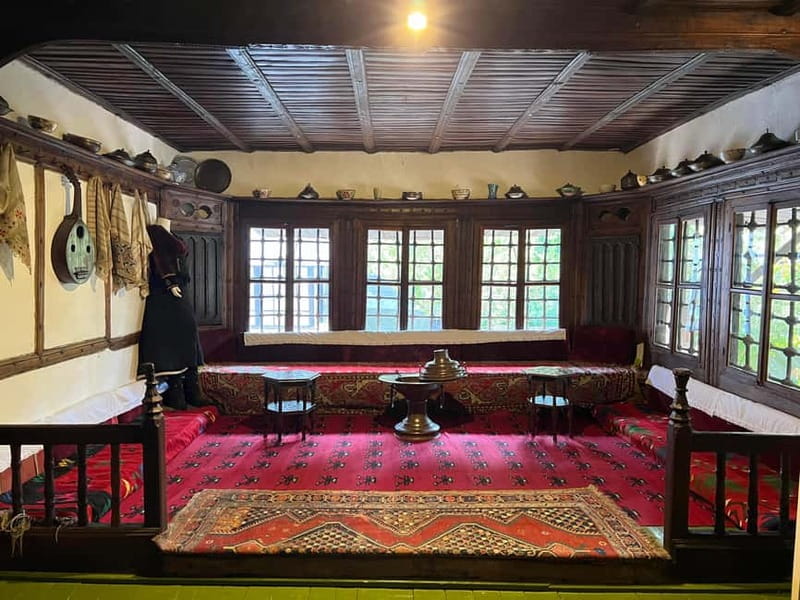
- Secret schooling at Hertica House: See the home that served as an underground school after the normal education system was shut down.
- A direct look at Kosovo’s recent past: The National Museum gives the political and social background before you visit war sites.
- Prekaz is the emotional center: The Jashari family complex is a major memorial to the armed struggle and the cost of liberation.
- Gazimestan links medieval and modern Kosovo: Climb the 28-meter tower and visit the nearby mausoleum of Sultan Murad.
- Astrid guides with care: The guide is praised for explaining the war with clear historical context and compassion.
- Mitrovica adds a current political edge: The divided town, its bridge, crystal museum, and lunch stop are available for an extra fee.
Why this tour matters before you visit Kosovo
If you arrive in Prishtina knowing only that a war took place in Kosovo in 1998 and 1999, the headlines will not tell you enough. This tour begins with the buildup: in 1989, Kosovo’s autonomy was revoked, schools were closed, workers were dismissed, and the rights of Kosovo Albanians were restricted.
The story then moves through peaceful resistance, home-based education, protests, and growing pressure. Eventually, armed resistance became part of the struggle. You do not need to agree with every political claim to understand why the period remains so important to people here. A good guide helps you see how daily life, identity, education, and political power became tied together.
I appreciate that this is not simply a drive past battlefield markers. The route uses a museum, a private home turned memorial, Ottoman-era sites, and a family war complex. Each stop gives you a different type of evidence. One explains policy. Another shows how ordinary people kept teaching. A third recalls a medieval battle. Prekaz brings the story close to one family and its sacrifice.
That mix makes the tour useful for anyone who wants more than a quick city walk. It also means the subject can be difficult. You will encounter memorials to missing people and sites connected with death. Treat the tour as serious cultural travel, not as a casual sightseeing loop.
Other Serbia days people book alongside this one:
- From Belgrade: Novi Sad & Sremski Karlovci Full-Day Tour
★ 4.7 · 1,068 reviews - From Belgrade: Gems of Eastern Serbia Tour
★ 5.0 · 427 reviews - Northern Serbia: Sremski Karlovci and Novi Sad Full-Day Tour from Belgrade
★ 5.0 · 425 reviews
Starting at Newborn and Prishtina’s memorials
The meeting point is the Newborn monument in Prishtina. From there, the tour begins with a short introduction and a stop connected with people who went missing during the last war. You also learn about Dr. Ibrahim Rugova, Kosovo’s historic president and a central figure in the years of nonviolent political resistance.
This opening works well because it places the war in the center of the capital, not in some remote location disconnected from daily life. The Newborn monument itself is a natural place to meet, and the nearby memorials give you an early reminder that the conflict affected families across Kosovo.
You should expect this section to move quickly. The tour has several destinations ahead, and the main purpose here is orientation. If you have a particular question about the missing-person memorial or Rugova, ask early. A small group makes that easier than a large coach tour.
The National Museum’s recent-history room
The first major stop is the National Museum of Kosovo. The visit focuses on the second floor, where displays cover Kosovo’s recent history. Allow about half an hour for this part.
This is an important stop because the later sites can otherwise feel disconnected. At the museum, you get the basic sequence of political pressure, repression, resistance, and war before seeing the places where those events touched real communities. The museum also gives you a chance to pause and absorb information before moving into the countryside.
Do not expect the entire museum to be covered in detail during this outing. The route is designed around the recent past, and the museum visit is one part of a larger story. If you want a long museum visit, you may need to return separately.
I like the order. Starting with the museum gives you a framework, then Hertica House shows how policy affected education at home. From there, the journey moves toward older monuments and the 1990s war memorial at Prekaz.
Hertica House and the home-school years
Hertica House is one of the tour’s most revealing stops. During the 1990s, when the normal school system was shut down, this home served as a secret in-home school. It is now preserved as a museum house and memorial.
The idea is simple, but the meaning is large. A classroom is usually a public place, with desks, teachers, and an accepted role in community life. Here, education had to continue inside a private home. The site helps you understand resistance through an everyday act: families protecting the chance to learn.
You spend roughly another half hour here. The visit is valuable because it shifts the story away from politicians and armed groups. You see how repression could reach children, parents, teachers, and households. It also makes the conflict easier to grasp if you are not familiar with Kosovo’s political history.
This stop may affect you more than a grand monument. There is no need for dramatic staging. The power comes from the purpose of the house and the explanation provided by the guide. Astrid’s careful approach is especially useful here, since the subject calls for context rather than slogans.
Same riverbank, a completely different kind of day:
- Day Trip from Belgrade: Gems of Eastern Serbia
★ 5.0 · 424 reviews - Western Serbia 1-Day Tour of the Key Sites from Belgrade
★ 4.8 · 333 reviews - From Sofia: Day Tour to Nis, Serbia with tickets and pick-up
★ 4.7 · 302 reviews - Belgrade Nightlife Bar Pub Club Crawl with Drinks
★ 5.0 · 277 reviews
Gazimestan, Sultan Murad, and the 1389 battle
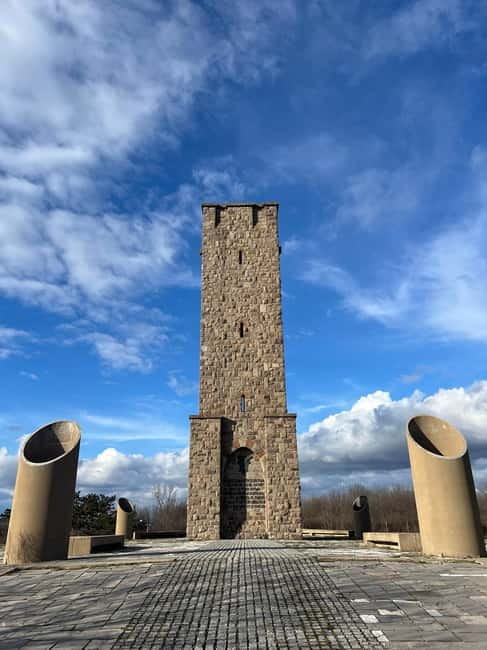
After Prishtina, the route heads toward Prekaz and pauses at Gazimestan. The tall tower commemorates the Battle of Kosovo in 1389, a medieval conflict that remains deeply important in Serbian and Ottoman historical memory.
You can climb the tower, which is 28 meters high, if you wish. The climb gives the stop a physical element that a quick roadside viewing would not. Still, the information provided does not specify the condition of the stairs or the time available, so ask the guide before going up, especially if mobility is a concern.
Nearby, you visit the mausoleum of Sultan Murad, who was killed in the battle. A small Ottoman museum adds material about Ottoman rule and life in the area. This section broadens the tour beyond the 1998-99 war and shows that Kosovo’s political meaning did not begin in the twentieth century.
Gazimestan can also be a complicated stop because the Battle of Kosovo carries different meanings for different communities. That is precisely why a careful guide matters. The tour does not treat the site as an isolated monument. It places it within a much longer sequence of rulers, conflicts, and competing memories.
The contrast with Hertica House is useful. At one stop, you see a recent struggle over schools and rights. At another, you encounter a medieval battlefield and Ottoman memorial traditions. Kosovo’s past is layered, and this route makes those layers visible without requiring a separate history lecture at every location.
Prekaz and the Jashari family complex
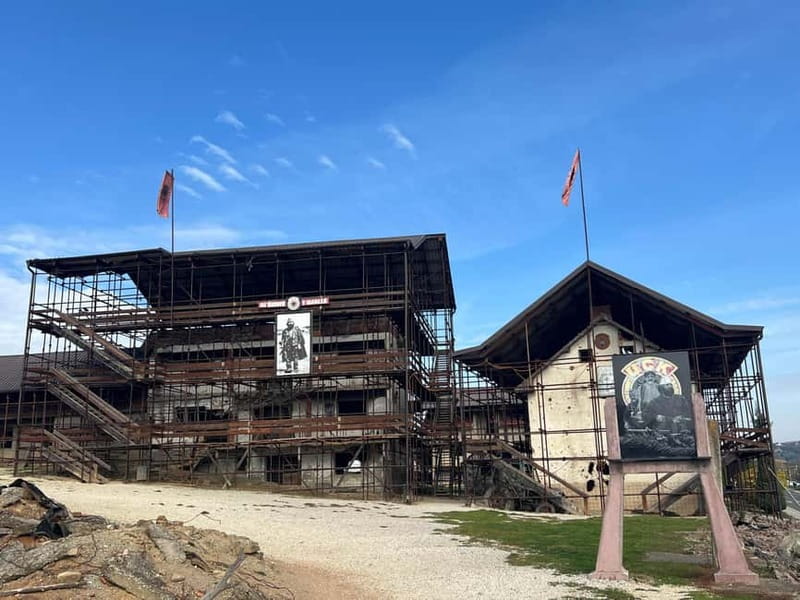
The central stop is the legendary complex connected with the Jashari family at Prekaz. It is described as a unique war memorial and a place tied to the struggle that led to Kosovo’s liberation.
Prekaz is not simply another monument on a list. It focuses the story on a family and the human price of armed resistance. After hearing about political restrictions, secret schooling, and demonstrations, you arrive at a site where the war becomes intensely personal.
Expect this part of the tour to carry the most emotional weight. You may find the atmosphere difficult, particularly if you have little prior knowledge of the conflict. Listen closely to the guide’s explanation and leave room for your own response. This is a place for respect and attention, not hurried photographs.
The Jashari complex also helps explain why Kosovo’s recent history remains present in public life. The memory of the family is tied to national identity and the independence struggle. Astrid is a strong fit for this section because the guiding style described for the tour emphasizes context and compassion rather than sensational storytelling.
Since the overall tour lasts only three hours, the exact time at Prekaz matters. If this is the stop you most want to study, tell the guide at the beginning. The route includes several sites, and a short schedule may require a brisk pace.
Adding Mitrovica for a wider view
Mitrovica is an optional extension with an extra charge of 50 Euros. The town has major political and economic importance because it is divided between a southern and a northern section. The visit includes the bridge dividing the town, the centers of the two sides, a crystal museum, lunch, and the return to Prishtina.
This addition changes the character of the tour. The main route is built around war memory and earlier history. Mitrovica brings you into a place where division remains part of the town’s identity and political reality.
I would choose the extension if you want to connect the 1998-99 conflict with Kosovo’s later tensions. The bridge is not just a sight to photograph. It represents a division that continues to shape how the town is understood. The crystal museum gives the stop an economic and local angle, while lunch adds a practical break.
There are two cautions. First, the extra visit is not included in the base price. Second, the supplied schedule does not give a separate duration for Mitrovica, so you should confirm how much additional time it requires. If your priority is Prekaz and the Prishtina area, keep the core tour and save Mitrovica for another outing.
Is $235 good value for up to four people?
The price is $235 per group of up to four people. That makes the cost easier to assess if you are traveling with family or friends. Split four ways, the price is $58.75 per person, before any optional expenses. For two people, it is $117.50 each, and a solo booking pays the full group rate unless the provider pairs you with others, which is not stated here.
Transport and a live English-speaking guide are included. Food and lunch are not included, and Mitrovica costs an additional 50 Euros. The value comes from combining transport across several locations with a private or very small group setting, rather than paying only for a short city walk.
I think the price is reasonable for four people who want a focused introduction to Kosovo’s recent war and its historical setting. The small group is especially useful for a sensitive subject. You can ask questions, discuss difficult points, and move at a pace that would be hard in a large group.
For a solo visitor, the value is less obvious. The price is high if you use the entire group allowance alone. You should first check whether other participants can join or consider sharing the booking with companions.
Timing, comfort, and practical details
The advertised duration is three hours, with Prishtina as both the starting and ending point. Transport is included, which matters because the route extends beyond the city. You meet at the Newborn monument, visit Prishtina sites, continue to Gazimestan and Prekaz, and return to Prishtina.
The tour is available in English with a live guide. Astrid is the named guide associated with this experience, and the guiding is particularly important because the subject includes disputed memories, political repression, and wartime loss.
The activity is listed as wheelchair accessible, but some locations may have different physical conditions. The 28-meter tower at Gazimestan involves climbing if you choose to go up, and the information does not spell out access details at every stop. If you use a wheelchair, confirm how the tower, museum houses, and memorial areas will be handled before booking.
Food is not included. The main route does not promise lunch, while the Mitrovica extension includes a lunch stop without stating that the meal is covered in the extra fee. Budget separately for food.
You can cancel up to 24 hours before departure for a full refund, and you can reserve now and pay later. Starting times depend on availability. The tour also offers skip-the-ticket-line access, though the exact ticket arrangements are not detailed.
Who will get the most from this experience?
I would recommend this tour to you if you want to understand Kosovo through places tied to education, resistance, memory, and war. It suits history-minded visitors, people studying the Balkans, and anyone who prefers a guide-led route over trying to connect distant sites alone.
It is also a good choice for families or friends who can share the group price. A maximum of four participants gives you a more personal setting, and the English-language guide can adapt explanations to your questions.
You may want a different activity if you prefer light sightseeing, long museum visits, or a relaxed schedule. The subject is serious, and the number of stops means you will not linger everywhere. The optional Mitrovica visit is better for you if you want a broader look at present-day divisions, but it adds cost and time.
Should you book the Kosovo War Tour?
Book it if you want a direct, place-based explanation of Kosovo’s recent past. The strongest parts are the secret school at Hertica House, the personal focus of Prekaz, and the careful link between the 1998-99 war and older sites such as Gazimestan and Sultan Murad’s mausoleum.
Before booking, decide what matters most. If you want the core war story, keep your attention on the National Museum, Hertica House, and Prekaz. If you also want to see divided Mitrovica, confirm the extra fee and schedule. For up to four people, the $235 group price offers solid value because transport and guiding are included. For one person, sharing the cost would make the decision easier.
FAQ
Where does the Kosovo War Tour start?
The tour starts at the Newborn monument in Prishtina.
Where does the tour finish?
The tour returns to Prishtina.
How long does the main tour last?
The stated duration is three hours.
What language is the tour offered in?
The live tour guide speaks English.
How many people can join the group?
The group is limited to four participants.
Is transport included?
Yes, transport and a guide or companion are included.
Is food included in the price?
No. Food and lunches are not included. A lunch stop is included in the optional Mitrovica visit, but the information does not state that the meal itself is covered.
Can I visit Mitrovica on this tour?
Yes, Mitrovica is available as an optional addition for an extra charge of 50 Euros. The visit includes the divided town bridge, the southern and northern city centers, a crystal museum, lunch, and the return to Prishtina.
Just added around Serbia
- Zlatibor tour – Gold gondola, Stopic cave, Sirogojno & falls★ 5.0 · 3 reviews
- Mokra Gora and Tara National Park Full-Day Private Tour★ 5.0 · 3 reviews
- UNESCO tour★ 5.0 · 3 reviews
- Private Wine Tasting by Party in Belgrade★ 5.0 · 3 reviews
- Zica and Studenica Monasteries Private Day Tour from Belgrade★ 5.0 · 4 reviews
- Stara Plana Day Tour★ 5.0 · 4 reviews
- Urban & Alternative Belgrade tour★ 5.0 · 4 reviews
- Belgrade Bike Tour: Be a local in the hood of Belgrade!★ 5.0 · 5 reviews
Tours, compared.
Sremski Karlovci and Novi Sad Full-Day Tour from Belgrade
Read our review →
Western Serbia 1-Day Tour of the Key Sites from Belgrade
Read our review →
From Sofia: Day Tour to Nis, Serbia with tickets and pick-up
Read our review →