
Reviewed · HISTORICAL TOURS
A Crash Course through Serbian History
Belgrade’s story is crowded into its streets: royal dynasties, Roman foundations, Ottoman rule, modern politics, and the meeting of the Sava and Danube. This walking tour gives you a fast, useful framework for understanding the city before you explore it on your own. The best part is the link between old events and present-day Serbia.
I like the way the tour uses major sights as story points rather than treating them as a checklist. I also like the chance to ask questions and set the pace with guides such as Marina, Pedja, Jovana, Tibor, and Marija. The possible drawback is clear: three hours cannot fully explain 2,300 years of Serbian history, so the experience offers breadth more than detail.
Key points to know before booking
- A smart first-day orientation: The route ends in the heart of central Belgrade, leaving you well placed to continue exploring.
- History tied to real places: Royal courts, Ottoman rule, French friendship, student life, and Serbian politics all appear along the walk.
- Small groups can feel private: The maximum group size is 30, but some departures have had only one participant.
- Strong local guiding: Marina, Pedja, Jovana, Tibor, and Marija have each led tours praised for clear explanations and thoughtful answers.
- A brisk but manageable pace: The walk lasts about three to four hours, with several short stops and one longer visit around Kalemegdan.
- Good value for history-minded visitors: At $72.41 per person, the price is easiest to justify if you want context, conversation, and a city orientation rather than simple sightseeing.
Why this is a useful first look at Belgrade
Belgrade can be hard to read at first. Its central streets mix Austro-Hungarian influences, Ottoman traces, socialist-era buildings, royal symbols, student hangouts, and reminders of recent political change. A casual walk shows you the pieces, but not always how they fit together.
This tour gives you that framework. You move through the old center while your guide explains why certain streets became important, how Serbia’s royal families shaped the city, and why Belgrade’s position at two rivers made it so valuable and so often contested.
I particularly like that the route is not limited to grand monuments. Skadarska Street brings in the city’s bohemian side. Studentski trg shows you a living part of central Belgrade rather than a preserved historic site. At Kalemegdan, the views help explain the city’s military importance, while the monuments open the door to Serbia’s international relationships.
The tone appears to be conversational rather than purely academic. Guides have answered many questions, adjusted the amount of information, and explained difficult political subjects in an understandable way. Jovana, for example, has been praised for connecting history and politics while adding personal stories. Marija has also taken extra care with visitors who needed time to translate the guide’s words into Chinese.
That flexibility matters. Serbia’s past includes names, dynasties, empires, wars, and political shifts that can blur together. A good guide helps you leave with a usable map in your head, not a pile of dates.
A few more Belgrade trips to weigh up
- History and Culture in my Belgrade
★ 5.0 · 41 reviews - NATO Bombing of Belgrade Historical Tour
★ 5.0 · 17 reviews - Football tour: Red Star and Partizan Ultras History
★ 5.0 · 14 reviews
Starting at Terazije and the National Assembly
The tour begins at Terazije 16, in the center of Belgrade. This is a practical meeting point because the walk starts close to the city’s major central streets and finishes in another central location.
The first listed stop is the House of the National Assembly of the Republic of Serbia. You spend about 15 minutes here, with no admission fee. The building provides an immediate route into Serbia’s political and royal past, including the story of two dynasties and two royal courts.
That is a strong opening. Instead of beginning with a general introduction that could apply to any city, the guide starts with a building tied to power and national identity. You can expect an explanation of how Serbia’s royal families influenced the state and how political authority shifted over time.
This stop is short, so do not expect a full architectural visit or an extended interior tour. Its purpose is to establish the main historical players and give you a starting point for the rest of the walk.
The ridge that became Belgrade’s main street
One of the route’s unnamed stops focuses on a ridge dividing the city into two parts. It became a natural place for the main pedestrian area and central street, continuing a role it has held since Roman times.
This is the sort of context that makes a walking tour worthwhile. You are not simply shown a street and told it is important. You learn why its position helped shape movement through Belgrade for centuries.
The ridge also helps you understand the city’s layout. Belgrade is not a flat collection of disconnected sights. Its central areas rise and fall, and its position between major rivers has always affected settlement, defense, and trade.
Since the supplied route does not name this stop, the exact amount of time spent there may vary. You should think of it as part of the walk’s orientation rather than a separate attraction with a fixed visit.
Skadarska Street and old Belgrade’s bohemian side
Skadarska Street offers a change of mood. This old quarter is known for its bohemian character, and the tour uses it to show a more social, artistic side of Belgrade.
After royal buildings and political history, this street gives the walk some personality. You get a sense of how old Belgrade is not only about rulers and battles. It is also about cafés, local habits, music, and the way people use the city center.
The route description calls Skadarska unique and old, but it does not promise a meal or a café stop. Food and drinks are not included, and coffee or tea must be paid for separately. If you want to sit down here, plan on treating it as your own expense and allow extra time after the tour.
This is also one place where a guide’s personal knowledge can make a big difference. The street’s appeal is not just what you see. It is the stories about how the quarter developed and why it remains part of Belgrade’s identity.
Same riverbank, a completely different kind of day:
- From Belgrade: Novi Sad & Sremski Karlovci Full-Day Tour
★ 4.7 · 1,068 reviews - From Belgrade: Gems of Eastern Serbia Tour
★ 5.0 · 427 reviews - Northern Serbia: Sremski Karlovci and Novi Sad Full-Day Tour from Belgrade
★ 5.0 · 425 reviews - Day Trip from Belgrade: Gems of Eastern Serbia
★ 5.0 · 424 reviews
Kalemegdan Park and Belgrade Fortress
The main historical section comes at Kalemegdan Park and Belgrade Fortress. You spend about one hour here, with no admission fee.
The fortress sits on a hill above the meeting point of the Sava and Danube rivers. That setting explains much of Belgrade’s past. A high point over two waterways is naturally useful for defense, and the fortress has seen a long and often violent succession of rulers and conflicts.
This is where the tour’s broad historical approach works best. The guide can use the fortress, river views, monuments, and military remains to explain why Belgrade mattered to Romans, Ottomans, Serbian rulers, and later European powers.
The promenade offers a view toward the Sava and the Monument of Gratitude to France. That monument points to Serbia’s relationship with France and gives the guide a chance to discuss international alliances and memory.
Later, you visit the Victor statue, one of Belgrade’s best-known monuments. Its position gives you a strong view across the rivers, but the statue also carries political and historical meaning. Your guide can explain why it was placed here and what it represents in the city’s public memory.
The route also includes the grave of Ottoman vizier Ali-Pasha. This detail adds an important layer. Belgrade’s story is not only Serbian, and the fortress area makes that plain. Ottoman influence is part of the city’s past, and the grave offers a concrete way to discuss it.
The fortress is a large area, so one hour is enough for an introduction, not an exhaustive examination of every wall and ruin. Wear comfortable shoes, since this is a walking tour with uneven historic areas possible. The tour information does not specify a particular accessibility route, though most participants can take part and service animals are allowed.
Ružica Church and centuries of rebuilding
Ružica Church is a short 15-minute stop. The church was built in the 15th century, destroyed in the 16th, and rebuilt in the 19th century.
That sequence tells you a great deal about Belgrade without requiring a long lecture. Buildings here often carry several layers of time. Ružica is not important only because of its appearance. It is a physical record of destruction, survival, and rebuilding.
The short visit works well after the fortress. You remain in the historic upper part of the city, but the focus shifts from military power to religious and cultural continuity.
Because admission is free, the stop adds historical depth without increasing the tour cost. Still, this is a brief look rather than a full church visit. If you want more time for photographs or quiet observation, ask your guide what is possible within the group’s schedule.
Studentski trg and the city that lives today
The route ends at Studentski trg, or Student Park, with about 15 minutes here. The park sits in an academic part of central Belgrade and is used by students between lectures.
This is a fitting finish. After royal courts, armies, dynasties, and empires, you end among ordinary city life. Studentski trg shows that Belgrade’s center is not simply a historic display. It is still used, crossed, and enjoyed by people who live and study there.
The end point is next to Student Park at Studentski trg 16. That places you in the core of central Belgrade, which is useful for continuing your day. You can also use the guide’s final recommendations to decide what to see next. One visitor specifically appreciated leaving with suggestions for the rest of a stay in the city.
What the guides add to the experience
The guide is the main reason to choose this tour over walking the same route alone. The buildings and views are available to everyone, but the connections between them are not always obvious.
Marina has been praised for explaining complicated events in plain language and for handling a large number of questions when the tour became private. Pedja has been described as friendly and able to make the day interesting. Jovana’s approach includes current politics and personal stories, while Tibor has led visitors through both Belgrade’s past and present and offered practical suggestions for the rest of their visit.
Marija has also worked carefully with a family that needed translation time, even preparing Chinese reading material. That detail suggests a guide-led experience that can adapt when communication needs extra care, though the tour itself is offered in English.
The strongest pattern is not simply factual expertise. It is the ability to explain events so you can follow them. That matters in Serbia, where historical subjects can quickly become complex and politically sensitive.
You should ask questions. The tour seems particularly well suited to curious people who want to understand why the city looks and feels the way it does. If you prefer to move quickly, take photographs, and avoid extended discussion, the amount of historical explanation may feel heavy.
Is $72.41 a fair price?
At $72.41 per person, this is not the cheapest way to see central Belgrade. You are paying for roughly three to four hours of a guide’s time, not for entrance tickets or food. Since the listed stops are free, the value depends almost entirely on the quality of the explanations and the personal attention you receive.
For a private experience, the price is easier to defend. Several departures have ended up with just one participant, creating a custom walk with plenty of questions and a flexible pace. But you should not assume that will happen. The maximum group size is 30, and the actual group depends on the date.
For a first visit, I think the price can make sense if you want history and orientation in one package. You learn the basic structure of the city, see several key areas, and finish with a better idea of where to spend the rest of your time.
It is less compelling if you only want a short introduction to the main sights or if you plan to explore every location at length. No entrance tickets, coffee, tea, food, or drinks are included, so budget separately for those extras.
Who should book this walking tour?
This experience suits you best if:
- You are visiting Belgrade for the first time.
- You want historical context before exploring on your own.
- You enjoy asking questions rather than simply following a guide from place to place.
- You are interested in how Serbia’s past relates to current politics and culture.
- You like a walk that combines major sights with ordinary city spaces.
- You are comfortable spending three to four hours on foot.
It is also a good choice for families or groups with different levels of background knowledge, since the guides appear able to adjust the pace and explain difficult subjects clearly.
You may prefer another type of tour if you want a museum-heavy experience, a food-focused outing, or a highly detailed visit inside each historic building. This tour is an overview. Its job is to make the city legible.
The group size deserves attention. A private feel is possible, but not guaranteed. If you book during a quieter period and only one or two people sign up, you may get much more individual time with the guide. If the group is full, the experience will naturally be less flexible.
The tour requires good weather. If poor weather cancels it, you are offered another date or a full refund. You can cancel for a full refund up to 24 hours before the start time, but changes or cancellations inside that window are not accepted.
Should you book A Crash Course through Serbian History?
Book it if you want to understand Belgrade rather than simply photograph it. The route covers the National Assembly, the old central ridge, Skadarska Street, Kalemegdan Fortress, Ružica Church, and Studentski trg, giving you a solid first picture of the city in about three hours.
The best reason to choose it is the guide’s role in connecting Serbia’s royal, Ottoman, military, cultural, and modern political stories. Guides such as Marina, Jovana, Pedja, Tibor, and Marija have shown the ability to make a large subject clear and personal.
At $72.41, it is a worthwhile choice for history-focused visitors who value conversation and orientation. Just keep your expectations in check: this is a brisk introduction, not a complete account of Serbia or a full tour of every fortress building. For a first day in Belgrade, that broad, human explanation may be exactly what you need.
FAQ
How long does A Crash Course through Serbian History last?
The tour lasts approximately three to four hours.
How much does the tour cost?
The listed price is $72.41 per person.
Where does the tour begin?
The meeting point is Terazije 16, Beograd 11000, Serbia.
Where does the tour end?
The tour ends beside Student Park at Studentski trg 16, in central Belgrade.
What language is the tour offered in?
The tour is offered in English.
Are entrance tickets included?
The listed stops have no admission charge, and the tour includes a guide. Coffee, tea, food, and drinks are not included.
How large can the group be?
The maximum group size is 30 people. Depending on the departure, the group may be much smaller and can sometimes feel like a private tour.
Can I cancel for a full refund?
Yes. You can cancel at least 24 hours before the experience start time for a full refund. Cancellations or changes made less than 24 hours before the start time are not accepted for a refund.
Just added around Belgrade
- Private Wine Tasting by Party in Belgrade★ 5.0 · 3 reviews
- Zica and Studenica Monasteries Private Day Tour from Belgrade★ 5.0 · 4 reviews
- Urban & Alternative Belgrade tour★ 5.0 · 4 reviews
- Belgrade Bike Tour: Be a local in the hood of Belgrade!★ 5.0 · 5 reviews
- The World of Pubs and Taverns: A Golden Mile★ 5.0 · 5 reviews
- Private Truffle‑Hunting Tour from Belgrade – Lunch with Wine★ 5.0 · 4 reviews
- Sidecar Tours Belgrade★ 5.0 · 5 reviews
- Private Day Trip/Transfer Tour from Belgrade to Timisoara★ 5.0 · 5 reviews
Historical Tours, compared.

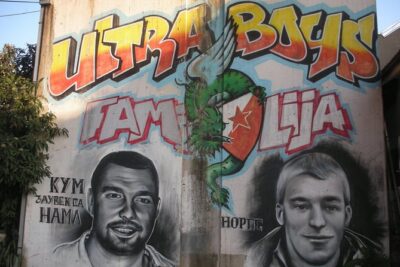
Football tour: Red Star and Partizan Ultras History
Read our review →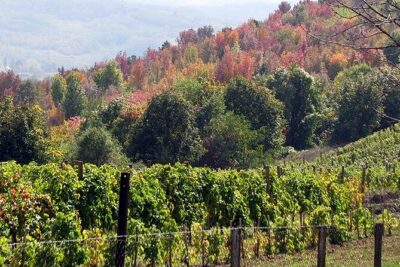
Full-Day Private Royal Heritage Tour to Oplenac With a Winery Visit
Read our review →Browse the lists this tour appears in