
Reviewed · CYCLING TOURS
Belgrade E-Bike Tour: Power Glide!
Belgrade’s broad streets, hills, riverbanks, parks, and widely scattered sights make an electric-bike tour a sensible way to get oriented. In two to three hours, you can move from the Serbian Parliament and Saint Sava Temple to Tito’s mausoleum, the Sava and Danube riverfronts, and Kalemegdan Fortress without spending the day climbing hills on foot.
I like the reach of this route, and I like the small maximum group of 11, which gives guides such as Danilo, Filip, Bogdan, and Alexander room to explain Serbia’s complicated past. At about $35 per person, it is also a good value if the full route operates as planned.
The main caution is equipment and organization. Some bikes have reportedly needed repeated stops or switched off during the ride, and one account describes a route that skipped several advertised sights. Confirm the meeting point, test your bike, and ask the guide to explain the gears and electric assistance before setting off.
What makes this Belgrade bike tour worth considering
- You cover widely separated sights: The route can connect central Belgrade, Vračar, Topčider, the stadium district, the rivers, and the fortress in one outing.
- The e-bike matters on Belgrade’s hills: Electric assistance can save your legs in warm weather and help you see more than a walking tour.
- The history moves across centuries: Parliament, Orthodox churches, Ottoman-era defenses, royal residences, socialist Yugoslavia, and modern city life all appear.
- The group stays fairly small: With a maximum of 11 people, you have a better chance to ask questions and keep track of the guide.
- Some stops are request-based: Red Star Stadium, Partizan Stadium, and Tito’s mausoleum are listed as optional stops, so ask about them before departure.
- The price is modest for the distance covered: At $35.07, the tour can replace several short taxi rides while giving you local commentary along the way.
Why an e-bike suits Belgrade
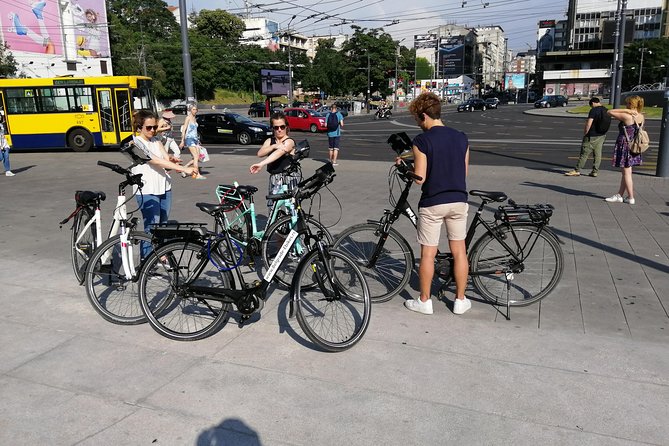
Belgrade is not a flat, compact old town. Its center spreads across several districts, and the most important sights do not sit neatly along one pedestrian route. Saint Sava Temple is some distance from Kalemegdan, while Topčider and the stadiums lie farther south.
That is where the electric bike earns its place. You can use the motor when a hill rises or when the weather turns hot, then pedal more lightly on level streets. One positive account specifically praised the chance to see more without exhausting yourself in warm, sticky conditions.
The tour lasts roughly two to three hours, so expect an overview rather than a slow museum visit. Most stops are short. The guide usually explains the setting, gives you time to look around, and then keeps the group moving.
Before leaving, ask for a quick demonstration of the controls. One disappointing outing involved a rider who became tired because the gears and electric assistance were not properly explained. Check the brakes, battery display, saddle, and tires as well. If the motor cuts out, tell the guide at once rather than trying to keep up in heavy traffic.
A few more Belgrade trips to weigh up
- Cycling the parks, ride through the ages
★ 5.0 · 21 reviews - Fruška Gora Bike Tour
★ 5.0 · 16 reviews - Belgrade Bike Tour: Be a local in the hood of Belgrade!
★ 5.0 · 5 reviews
Parliament and the first glimpse of central Belgrade
The House of the National Assembly of the Republic of Serbia is a strong opening stop. This is where the Serbian parliament meets, and the building gives you an early look at the country’s modern political identity.
The planned stop lasts about 10 minutes. Admission is not included, and the tour description refers to a presentation about the building rather than a full interior visit. Ask whether the presentation will take place outside or inside on your departure date.
From here, the route moves toward St. Mark Orthodox Church and Tašmajdan Park. These opening stops are brief, but they help you see how Belgrade places formal government buildings, religious landmarks, and public green space close together.
St. Mark Church receives about seven minutes. The guide discusses the church’s past and the life of a major Serbian emperor. Admission is free, but seven minutes is enough mainly for an exterior explanation and a quick look, not a full architectural study.
Tašmajdan Park adds a welcome pause. It is described as one of Belgrade’s most attractive parks, and the five-minute stop gives you a break from traffic while the guide explains its place in city life. Do not expect a long walk through the park at this pace.
Slavija Square and Saint Sava Temple
Slavija Square is one of the most useful places to hear local context. The square is large, heavily trafficked, and famously confusing to many people unfamiliar with Belgrade. A five-minute explanation here can make the city’s traffic patterns and urban growth easier to understand.
The highlight of this part of the ride is Saint Sava Temple. The church is among the largest Orthodox churches in the world, and the tour allows about 15 minutes with free admission.
You should have time to take in the huge exterior and hear why the building matters to Serbian religious and national life. The stop is still short for a detailed interior visit, especially if the group needs to park bikes, gather, and move on.
This is one point where your guide makes a major difference. Danilo, Filip, Bogdan, and Alexander are named guides connected with especially positive outings, and their strength is explaining the city in clear historical terms. Still, guide quality can vary, so ask questions if you want more than a quick timeline.
Stadium rivalry and the memory of Tito
The two football stadiums appear as stops upon request. Red Star Belgrade Stadium, widely known as Marakana, gets about five minutes. Partizan Stadium receives another five minutes and carries an extra layer of history because it was formerly the Yugoslav National Army Stadium.
The guide can explain the rivalry between Red Star and Partizan, one of the defining sporting conflicts in Belgrade. These stops are best for people interested in football, former Yugoslavia, or the way sport reflects city identity.
Do not assume both stadiums are automatically part of every departure. Ask at the start if you want them included, especially since the route already contains many stops and the total time is limited.
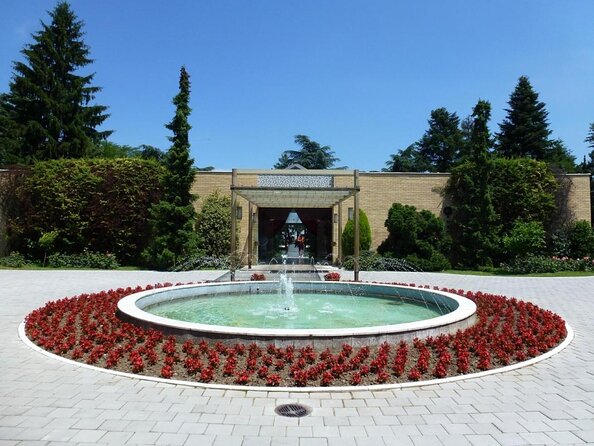
Tito’s mausoleum is also listed as an optional stop. The 15-minute visit focuses on the Museum of Yugoslav History and the House of Flowers, where Josip Broz Tito is buried. Admission is not included.
This is a valuable addition if you want to understand socialist Yugoslavia rather than seeing Belgrade only through medieval and Orthodox landmarks. Fifteen minutes gives you a short introduction, not enough time for a full museum visit. If you want to go inside, confirm the ticket arrangement and available time before the group rides on.
Same riverbank, a completely different kind of day:
- From Belgrade: Novi Sad & Sremski Karlovci Full-Day Tour
★ 4.7 · 1,068 reviews - From Belgrade: Gems of Eastern Serbia Tour
★ 5.0 · 427 reviews - Northern Serbia: Sremski Karlovci and Novi Sad Full-Day Tour from Belgrade
★ 5.0 · 425 reviews - Day Trip from Belgrade: Gems of Eastern Serbia
★ 5.0 · 424 reviews
The royal quarter at Prince Miloš’s Residence
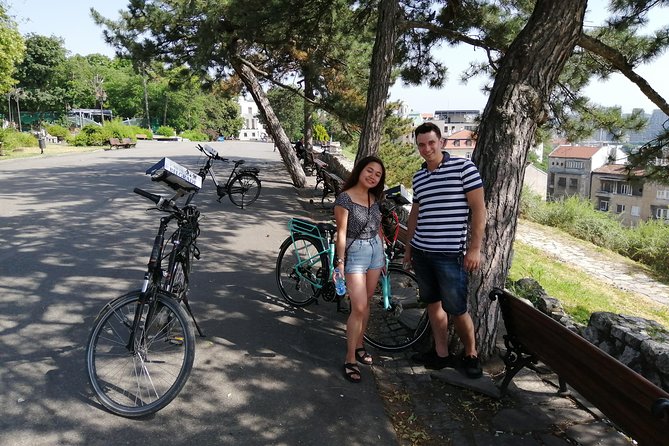
The Residence of Prince Miloš offers another change of period. The museum presents the Serbian uprisings against the Ottoman Empire, connecting the city to the struggle that shaped modern Serbian statehood.
The stop lasts about 15 minutes, and admission is not included. That timing suggests a compact visit or an explanation outside with limited time inside. Ask the guide how the stop will work on your date.
Topčider Park follows for about five minutes. It is described as Belgrade’s oldest royal park, and its broad setting contrasts with the traffic of central squares. The short stop gives you a glimpse of the city’s royal and suburban past.
This section of the tour is especially useful because it moves beyond the standard central sights. You see how power shifted from Ottoman rule to Serbian princes, then later to the socialist period represented by Tito. That sequence gives the ride more shape than a simple list of photo stops.
River life, Nebojša Tower, and the fortress
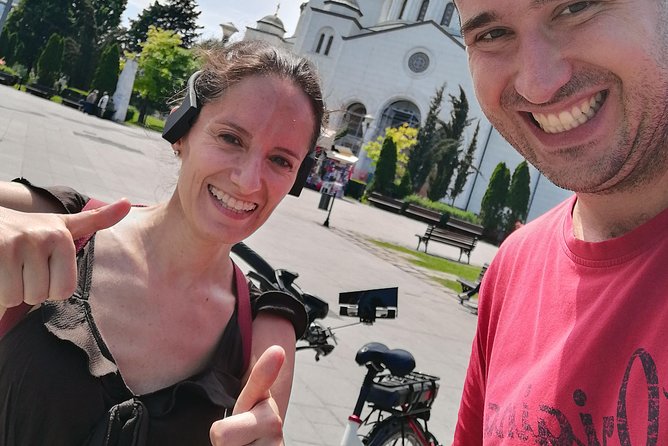
The route also passes floating rafts and holiday homes along the rivers. Many of these floating venues have become restaurants with a distinctive atmosphere. This is a passing section rather than a formal timed stop, but it helps you understand Belgrade’s social life along the water.
The riverfront can also provide a change of pace after the city streets. Ask the guide which river sections are included, since the exact route may depend on traffic, weather, and the group’s pace.
Nebojša Tower receives about seven minutes. The guide discusses its history and legends, giving you a short introduction to one of the fortress area’s more dramatic structures. Admission is not included.
The centerpiece here is Kalemegdan Park and Belgrade Fortress. The stop lasts about 15 minutes and covers history, unusual facts, and legends about one of Europe’s oldest fortresses. Admission to the stop is listed as free, though museums or specific interior areas could have separate charges.
Kalemegdan is one of the most rewarding places on the route because it brings together defensive history, open parkland, and views toward the rivers. A bike lets you reach it without a long uphill walk, but the group will not have time to explore every wall, gate, or museum.
If photography matters to you, this is one of the places where a daytime departure helps. One positive account specifically advised taking the tour during the day for better pictures.
Republic Square and the central finish
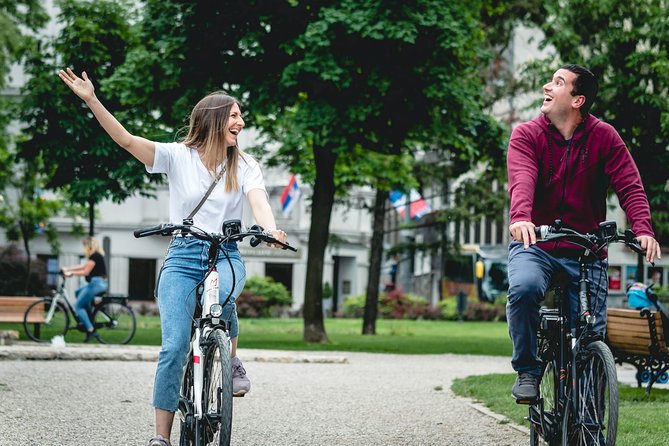
The final named stop is Trg Republike, or Republic Square. It is Belgrade’s best-known meeting point, surrounded by cafés and modern restaurants. The planned stop lasts about seven minutes.
This is a fitting finish because it returns you to the city’s commercial and pedestrian center. The route also passes through Belgrade’s pedestrian zone, where shopping, cafés, and everyday city life replace the formal buildings and historic fortifications seen earlier.
The tour ends back at the meeting point. The stated start is Obilićev venac 6 in central Belgrade, near public transport. However, booking information and customer accounts have also referred to Kralja Milana 8, so I would confirm the exact address shortly before departure. A changed meeting place is manageable, but it becomes a nuisance if you arrive with no notice.
What the $35.07 price really buys you
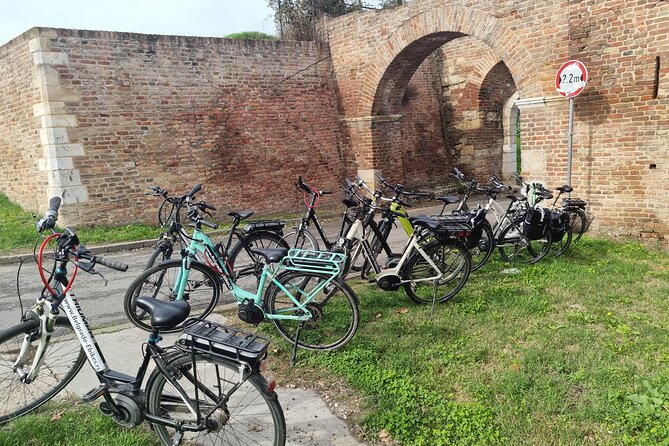
At $35.07 per person, the value depends on how much of the stated route you receive. You are paying for the bike, helmet, guide, and the ability to cross several districts in a short period. Lunch and private transport are not included, though lunch can reportedly be arranged.
For a first morning or afternoon in Belgrade, that is a reasonable use of money. A taxi-based sightseeing circuit would cost more and would give you less sense of the city’s streets. A walking tour might offer more detail at each stop but would not cover the same distance.
The low price also means you should keep expectations realistic. This is not a private, museum-focused tour with long admissions at every site. It is a moving overview, with short explanations and several exterior stops.
The supplied rating is 4.7 from 112 reviews, with 91 percent recommending the experience. The strongest praise centers on the guides’ historical explanations, the fun of riding, and the amount of ground covered. Danilo, Filip, Bogdan, and Alexander are singled out by name in positive accounts.
There are also serious service complaints. Two accounts describe arriving for a confirmed departure when nobody was present. Another describes a permanently closed office, while the provider response says the business was operating and that the booking had been refunded because no e-bikes were available at the selected time. Because these accounts conflict, confirm your booking, time, and address directly before you set out.
Bike condition and group management
The experience works best when the equipment is in good order. Some outings report bikes that worked flawlessly, while others describe repeated breakdowns, a motor that switched off, or too few functioning bikes. One account involving a group of eight reported frequent stops and a guide who rode too quickly.
That does not mean every departure has a problem. It does mean you should inspect your bike before leaving the shop. Make sure the electric assistance turns on, the battery is charged, and you understand how to change gears. Ask what to do if the motor fails in traffic.
A group of up to 11 is small enough for personal questions but large enough that riding discipline matters. Stay behind the guide, keep an eye on junctions, and tell the guide immediately if you are falling behind. If you are not comfortable riding in busy city areas, say so at the beginning.
The tour is listed as suitable for most people, but the supplied information does not give a detailed accessibility assessment. You need to be able to ride a bicycle and manage urban streets. Helmets and bicycles are included.
Who will get the most from this ride?
I would choose this tour if you have limited time and want a broad first look at Belgrade. It suits people who prefer moving through a city rather than spending an hour inside each museum, and it is especially useful when summer heat makes walking unpleasant.
It also fits families and mixed-age groups better than a strenuous standard bike tour because the motor reduces the effort. Still, children or less confident riders should receive careful bike instruction before the group moves into traffic.
History-minded visitors will appreciate the range of subjects: Serbian statehood, Orthodox faith, royal rule, Ottoman conflict, socialist Yugoslavia, football rivalry, and the city’s fortress defenses. The tour is less suitable if you want a fixed, guaranteed museum program or a slow architectural tour.
I would also ask in advance which optional stops are included. The stadiums and Tito’s mausoleum can change the character of the outing, but they may not be part of the standard ride.
Practical advice before you book
Choose a daytime departure if you want the best chance for photographs. There are two tour times, so you can fit the ride around other plans, but the actual times should be checked during booking.
Wear comfortable clothing and shoes suitable for cycling. Bring water, especially in warm weather, and leave room for short pauses at parks and viewpoints. Since lunch is not included, plan to eat before or after the ride, unless you arrange lunch through the provider.
The cancellation terms are simple: cancel at least 24 hours before the local start time for a full refund. Changes or cancellations inside 24 hours are not accepted for a refund. Poor weather or failure to reach the minimum group size can lead to a new date, another experience, or a full refund.
Should you book the Belgrade Power Glide tour?
Book it if you want an affordable, energetic overview of Belgrade and you value a guide’s explanation as much as the sightseeing itself. The route reaches places that are awkward to combine on foot, and the e-bike can make the city’s hills much less tiring.
I would book with two safeguards: confirm the exact meeting address and ask which stops will be included. At the start, test the bike and request a clear explanation of the gears and motor.
If the provider confirms those details and the bikes are in good condition, this can be one of the most efficient ways to get your bearings in Belgrade. If you want guaranteed museum access, a quiet pace, or a tightly controlled itinerary, choose a more formal private tour instead.
FAQ
How long does the Belgrade E-Bike Tour last?
The tour lasts approximately two to three hours.
How much does the tour cost?
The listed price is $35.07 per person. Group discounts are available.
What is included in the tour price?
Use of an electric bicycle and a bicycle helmet are included.
Is lunch included?
No. Lunch is not included, although the provider can arrange lunch.
Where does the tour start and finish?
The stated meeting point is Obilićev venac 6 in Belgrade, and the tour ends back at the meeting point. Other information has referred to Kralja Milana 8, so confirm the address before departure.
What sights are included?
The route can include the Serbian Parliament, St. Mark Orthodox Church, Tašmajdan Park, Slavija Square, Saint Sava Temple, Topčider Park, Nebojša Tower, Kalemegdan Park and Belgrade Fortress, and Republic Square. The stadiums and Tito’s mausoleum are listed upon request.
Are admission tickets included?
Admission is not included for the Serbian Parliament, Tito’s mausoleum, the Residence of Prince Miloš, or Nebojša Tower. Several outdoor stops are listed as free.
Can I cancel for a full refund?
Yes. You must cancel at least 24 hours before the experience start time for a full refund. Poor weather or failure to meet the minimum group size may also result in a new date or full refund.
Just added around Belgrade
- Private Wine Tasting by Party in Belgrade★ 5.0 · 3 reviews
- Zica and Studenica Monasteries Private Day Tour from Belgrade★ 5.0 · 4 reviews
- Urban & Alternative Belgrade tour★ 5.0 · 4 reviews
- Belgrade Bike Tour: Be a local in the hood of Belgrade!★ 5.0 · 5 reviews
- Sidecar Tours Belgrade★ 5.0 · 5 reviews
- The World of Pubs and Taverns: A Golden Mile★ 5.0 · 5 reviews
- Private Truffle‑Hunting Tour from Belgrade – Lunch with Wine★ 5.0 · 4 reviews
- Private Day Trip/Transfer Tour from Belgrade to Timisoara★ 5.0 · 5 reviews
Cycling Tours, compared.
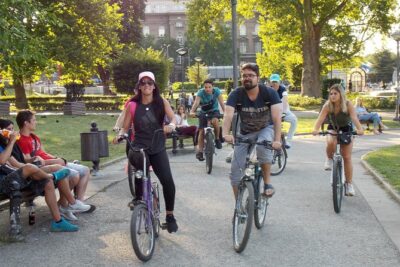
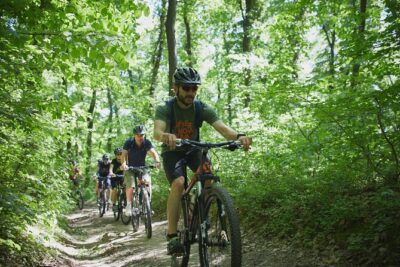
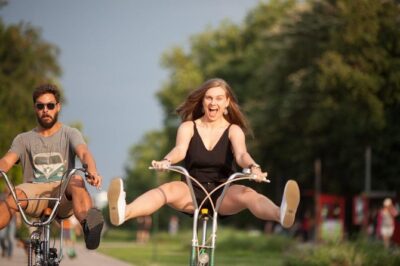
Belgrade Bike Tour: Be a local in the hood of Belgrade!
Read our review →Browse the lists this tour appears in