
Reviewed · TOURS
Red Belgrade Communist Tour
Belgrade’s Red Belgrade Communist Tour is less a narrow lesson about communist theory than a guided walk through the whole Yugoslav story. You move from Tito’s rise and the socialist state to Western music, public life, the 1990s conflicts, and the country’s breakup, ending at Tito’s grave and a museum full of gifts from world leaders.
I like the way the tour connects ordinary city streets with big political events, and I like the old trolley ride to Dedinje, which saves you the trouble of finding the Museum of Yugoslavia on your own. The main thing to consider is the pace: four hours includes a fair amount of walking, some hills, and a long museum visit.
Key points at a glance
- Tito’s Belgrade begins at Republic Square, where the guide sets the scene for postwar Yugoslavia.
- Terazije mixes glamour and socialist work culture, from Hotel Moskva to the former Trade Union Hall.
- A public trolley carries you to Dedinje, adding a useful piece of living transport history.
- The Museum of Yugoslavia takes about 90 minutes, including Tito’s ceremonial gifts and the House of Flowers.
- The tour is broader than its title suggests, covering Serbia, Yugoslavia, World War II, Tito, the 1990s, and present-day questions.
- Small groups make discussion easier, but a solo booking on the shared tour can bring a 75 percent supplement.
What the Red Belgrade Tour Is Really About
The word Communist in the title sets a clear expectation, but the tour’s actual scope is wider. You will hear about World War II, the creation of socialist Yugoslavia, Josip Broz Tito’s rule, daily life under the system, Yugoslavia’s relationship with the West, and the painful breakup of the country in the 1990s.
That wider approach is useful. You cannot make much sense of Tito’s Yugoslavia without knowing what came before it or what followed it. The guide puts political events beside buildings, squares, monuments, transport, music, and public rituals. That helps the story feel tied to Belgrade rather than delivered as a detached lecture.
I would book this if you want a clear introduction to Serbia and twentieth-century Yugoslav history. If you expect four hours focused almost entirely on communist architecture or political ideology, the tour may feel broader than advertised.
Guides named in the feedback include Nebo, Nebojsa, Radica, Marko, Hristina, Dragana, Nina, Isadora, Borjan, and Cristina. The repeated strengths are their ability to explain complicated events in plain language, answer questions, and bring personal insight to the subject. The exact guide depends on the date and group.
Other Belgrade days people book alongside this one:
- From Belgrade: Novi Sad & Sremski Karlovci Full-Day Tour
★ 4.7 · 1,068 reviews - From Belgrade: Gems of Eastern Serbia Tour
★ 5.0 · 427 reviews - Northern Serbia: Sremski Karlovci and Novi Sad Full-Day Tour from Belgrade
★ 5.0 · 425 reviews
Republic Square: Where the Story Opens
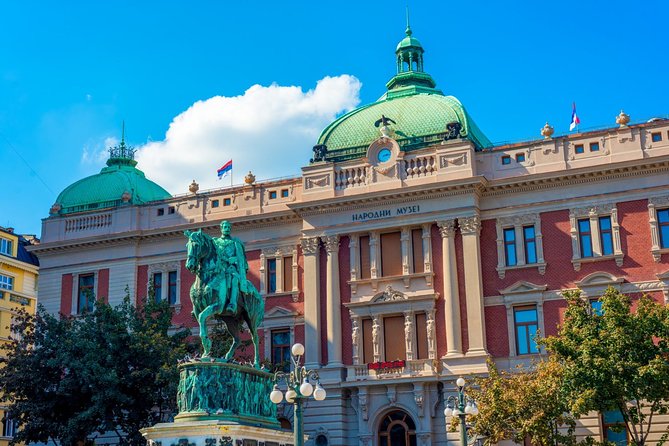
Meet the guide at Trg Republike 9 at 10:00 a.m. Republic Square is a practical place to begin because it sits in central Belgrade and puts you straight into the city’s political story.
The guide uses the square to introduce the period from World War II to the early 2000s. Tito’s speech connected with the creation of socialist Yugoslavia is part of the opening story, along with the nostalgia many people still feel for the years of his rule.
That nostalgia is worth handling with care. Tito is remembered by some as a strong leader who kept Yugoslavia independent from Moscow, built a more open socialist system, and gave the country a place between East and West. Others remember limits on political freedom and the darker side of one-party rule. The tour’s value lies in giving you room to understand both feelings.
From Republic Square, you begin to notice Belgrade’s visual mix. Socialist-era gray buildings sit beside structures and monuments from the Yugoslav Kingdom and more recent decades. The city does not present one clean architectural style, and that mixture matches the history: older national traditions, royal Yugoslavia, socialist modernization, and post-Yugoslav change all occupy the same streets.
The first stop lasts about 20 minutes. You will not spend the whole time looking at one monument. Instead, the square acts as a starting point for stories about the rise of communism, urban legends, political myths, and the way different generations remember the same past.
Terazije: Hotel Moskva and the Cult of Work
The walk continues to Terazije Square, one of the tour’s more varied stops. Here the story shifts from political beginnings to public life, ceremony, entertainment, and work.
Hotel Moskva provides the glamorous side. The guide discusses holidays, celebrations, famous figures, and unusual visitors connected with the hotel. This helps you see that socialist Yugoslavia was not simply a world of plain offices and gray apartment blocks. Public display, international visitors, music, travel, and ceremony all had a place in the capital.
The former square of Marx and Engels brings a different mood. The Trade Union Hall represents the socialist ideal of labor, and the guide explains how work was treated as a central value in Yugoslav society. One miner became a national star, showing how the regime could turn industrial labor into a public hero story.
I like this contrast because it gives you more than a list of leaders and dates. You see the system trying to shape daily values: work hard, join the collective, respect the worker, and take part in the public rituals of the state. At the same time, grand hotels and international contact show that life was not sealed off from the wider world.
This section takes about 20 minutes. The walk is generally easy to follow, but you should still wear shoes suited to several hours on foot. One detailed account described the route as long and hilly and suggested that a drink or rest stop would improve the morning. Bring water, as the tour specifically recommends it.
Pionirski Park: Oaths, Music, and Contradictions
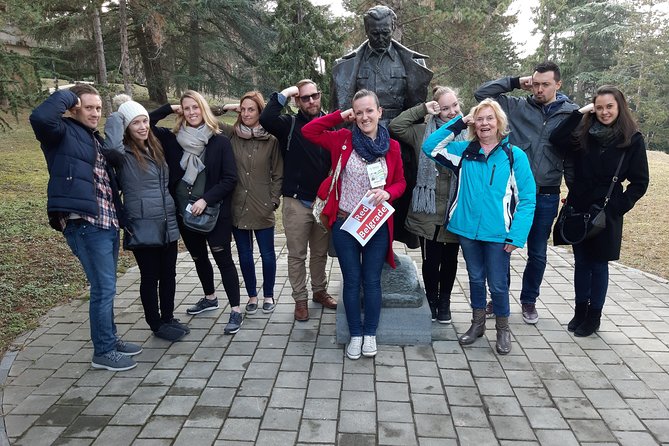
At Pionirski Park, the subject turns to children and public loyalty. The pioneer oath illustrates how the socialist state introduced its values early, with young people encouraged to identify with the country and its ideals.
This is also where the tour explores one of Yugoslavia’s key contradictions. Compared with many other socialist states, Yugoslavia allowed more contact with the West. Western music and changing styles of dress and life influenced the country, especially among younger people. The result was a society that could feel socialist in its politics while looking and sounding more open than the stereotype many visitors bring with them.
The guide also deals with the darker parts of the story. That may include political control, conflict, and the costs of the system. The exact balance depends partly on the guide, but the strongest guiding approach is clearly not simple nostalgia or easy condemnation. You are given the setting needed to understand why memories of Yugoslavia remain so emotional.
On the way, you see the monument to Ivo Andrić, Serbia’s Nobel Prize-winning writer and a diplomat in Berlin at the beginning of World War II. His presence offers a reminder that Serbia’s cultural and political story is larger than the communist period alone.
This stop lasts about 40 minutes. It is also the point where the tour becomes more active as a city experience, rather than just a walking lecture. After the park, you board a trolley for the ride to Dedinje.
Same riverbank, a completely different kind of day:
- Day Trip from Belgrade: Gems of Eastern Serbia
★ 5.0 · 424 reviews - Western Serbia 1-Day Tour of the Key Sites from Belgrade
★ 4.8 · 333 reviews - Belgrade Nightlife Bar Pub Club Crawl with Drinks
★ 5.0 · 277 reviews - From Belgrade: Golubac Fortress and Iron Gate Gorge Tour
★ 4.8 · 271 reviews
The Trolley to Dedinje: A Useful Ride, Not Just a Transfer
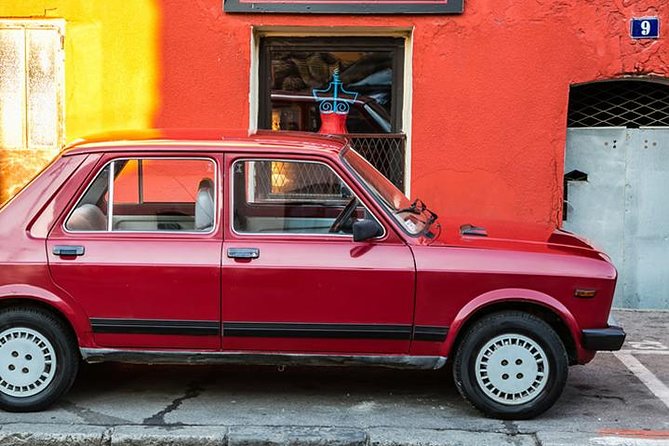
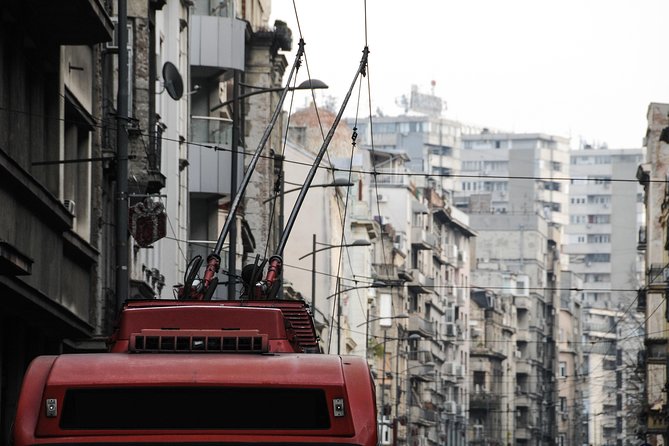
The one-way trolley ride is included in the price, and it is one of the smartest parts of the route. Public transport was an important part of everyday Yugoslav life, and the trolley lets you experience a still-active symbol of that period while moving from central Belgrade toward the museum.
There is practical value here, too. The Museum of Yugoslavia lies outside the central walking route in the Dedinje district. Finding your way there alone would require some planning, especially if you are unfamiliar with Belgrade’s public transport. The guided ride removes that worry and keeps the tour’s story moving.
Dedinje is known for embassies, villas, and elite residences. The change from central squares to this residential district adds another layer to the discussion of power. Tito’s Yugoslavia promoted the language of equality, yet political leadership and state life had their own spaces and privileges.
The trolley portion is not a sightseeing ride with a guide pointing out every building. Think of it as a practical and thematic bridge between the city-center walk and the museum. It also gives your feet a short break before the final indoor section.
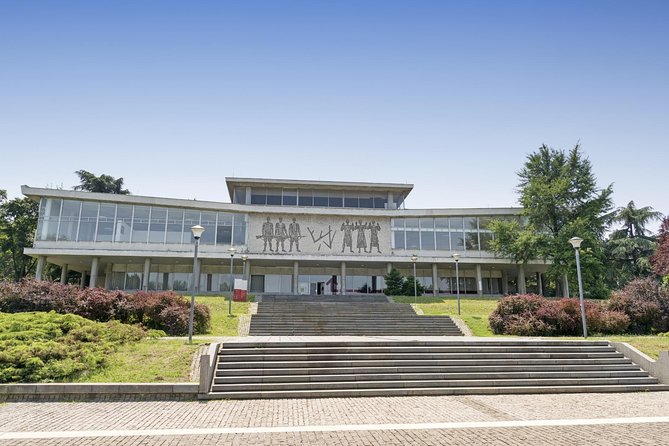
The Museum of Yugoslavia and Tito’s House of Flowers
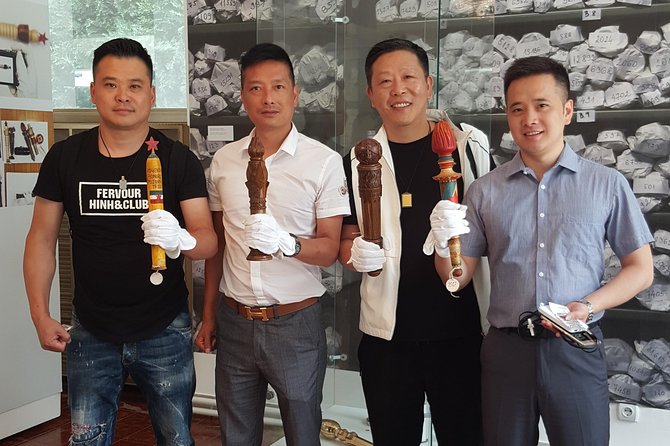
The final stop is the Museum of Yugoslavia, where you spend about an hour and a half. Entry is included, and this long visit is central to the tour rather than an afterthought.
The museum focuses on Tito’s life and political role. You will see ceremonial presents given to him by foreign leaders and other important figures. One especially striking object is described as a gift from the crew of Apollo 11, a reminder of Yugoslavia’s unusual international position during the Cold War.
The collection helps explain Tito’s public image. He was presented as the leader who guided the country toward a better future, and many people revered him for independence, stability, and international stature. The museum also lets you examine how political leaders are turned into symbols through gifts, ceremonies, photographs, and carefully preserved objects.
Your visit ends at the House of Flowers, the mausoleum where Tito is buried. This is a quiet and powerful close to a tour that began with his political rise. The setting brings the story back to memory: not just what Tito did, but how he was mourned, honored, and remembered after his death.
Allow the full 90 minutes. Some people will find the museum the highlight of the morning, particularly if they are interested in Cold War diplomacy, political memorabilia, and the breakup of Yugoslavia. If museums are not your main interest, the final section may feel long after the walk and trolley ride. Still, skipping it would remove much of the tour’s point.
The tour ends at the Yugoslav History Museum after the visit, at the House of Flowers. You should not expect to return to Republic Square as part of the planned route.
How Much History Fits Into Four Hours
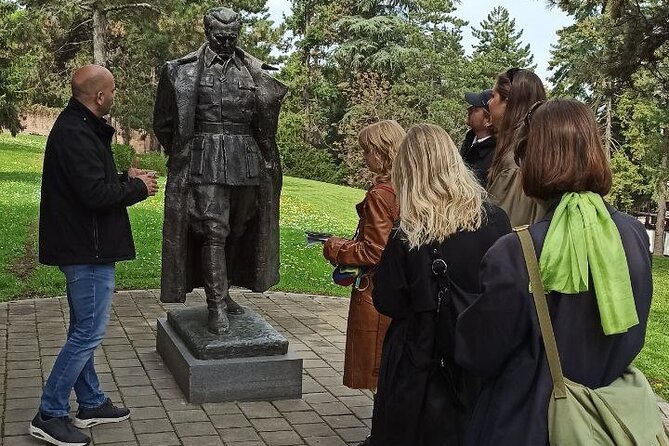
Four hours is enough to give you a useful framework, but not enough to settle every argument about Yugoslavia. The tour covers a large period and several countries, identities, and conflicts. That means the guide must simplify at times.
This is where the human guide matters most. The best accounts describe guides who answer individual questions, explain events from more than one viewpoint, and use personal experience to make the material easier to grasp. Nebojsa, for example, is praised for engaging each person in the group and talking through difficult questions with patience. Hristina is described as clear and sympathetic when explaining Serbia and the region.
You may also hear about current conflicts and political questions facing Serbia. That can make the tour feel more relevant, but it also means the experience is not politically neutral in the sense of avoiding every sensitive topic. Go in with an open mind and ask direct questions. A good guide can help you separate official slogans, family memories, and later political narratives.
The tour earned a 4.8 rating from 78 reviews, with 96 percent recommending it. Those figures point to a strong experience, but the useful pattern is more specific: the guides receive the most consistent praise, and the museum visit is often singled out as something you might not arrange easily on your own.
Price, Group Size, and What You Get
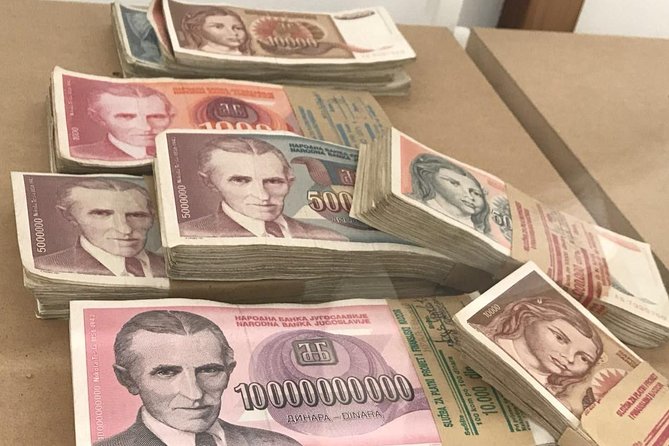
At $53.10 per person, the tour is not the cheapest way to walk around central Belgrade. It is also more than a basic free city walk. The price includes an English-speaking guide, the trolley tickets, and admission to the Museum of Yugoslavia.
I think the value is fair if you want context rather than isolated sights. You are paying for four hours of connected storytelling, transport to Dedinje, and museum entry. The route also saves you planning time and gives you a way to ask questions as the story develops.
The maximum group size is 25 people, though groups can be much smaller. A group of six, for example, gives the guide room to involve everyone without making the walk feel private. Smaller groups are especially helpful here because the subject invites questions and personal reflection.
Shared tours require at least two passengers. If you are the only person booked, the operator says it will notify you no later than 24 hours before departure. You can cancel without fees or pay a 75 percent supplement to keep the tour as a private experience. This has worked well for some solo bookers, but you should budget for that possible extra charge if you are booking alone.
The experience is offered in English. One booking mix-up involved people expecting English but receiving a Spanish-language tour, so check the selected language carefully before paying.
Who Should Book It
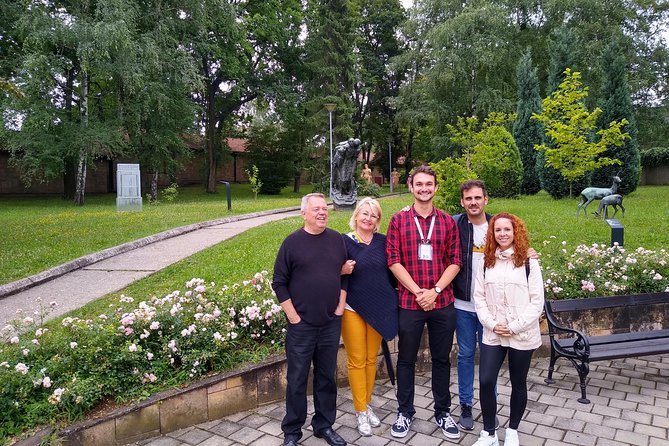
I would recommend this tour to you if:
- You want a practical introduction to Tito and Yugoslavia.
- You are interested in the Cold War and the 1990s breakup of the country.
- You want to understand Belgrade through streets, monuments, public transport, and museums.
- You prefer a guide who can answer questions rather than a recorded audio tour.
- You are comfortable walking for several hours and handling some hills.
- You want to visit the Museum of Yugoslavia without arranging the route yourself.
You may want a different experience if you only want architecture, food, or a short orientation walk. The tour carries a lot of political and historical material, and some sections may feel dense. It also does not end back in central Belgrade, so plan the rest of your day from Dedinje.
Wear comfortable walking shoes and bring water. Most people can take part, and the route stays near public transport, but the length and hills deserve attention. Free cancellation is available until 24 hours before the 10:00 a.m. start time. Changes or cancellations inside that window are not accepted for a refund.
Should You Book the Red Belgrade Communist Tour?
Yes, if you want to understand why Belgrade and Serbia cannot be explained through one political label. The tour gives you Tito, socialism, Western influence, public rituals, international diplomacy, Serbian memory, the 1990s, and the museum objects that tie those subjects together.
Its best feature is the link between place and story. You begin at Republic Square, walk through Terazije and Pionirski Park, ride a trolley like a local, and finish where Tito is buried. That route turns an enormous subject into something you can follow with your feet.
Book it early if your schedule is fixed, since it is commonly reserved about four weeks ahead. For most history-minded visitors, the $53.10 price is justified by the guide, transport, and museum entry. Just book with the right expectation: this is a broad, thoughtful Belgrade and Yugoslavia history tour, not a narrow lesson on communist buildings.
FAQ
How long is the Red Belgrade Communist Tour?
The tour lasts approximately four hours, including the walking sections, trolley ride, and visit to the Museum of Yugoslavia.
Where does the tour begin?
It begins at Trg Republike 9 in Belgrade. The stated start time is 10:00 a.m.
Where does the tour end?
The tour ends at the Yugoslav History Museum after the visit to the House of Flowers, Tito’s mausoleum, in Belgrade.
Is museum admission included?
Yes. Entry to the Museum of Yugoslavia is included, along with the trolley tickets.
Is the tour offered in English?
Yes. The tour is offered in English with an English-speaking guide. Check the language selected during booking because one reported booking issue involved a mismatch between the expected and delivered language.
How much walking is involved?
The tour includes several walking sections through central Belgrade and can be long and hilly. Comfortable walking shoes and a bottle of water are recommended.
What happens if I am the only person booked on the shared tour?
The shared tour requires at least two passengers. If you are the only person, you will be informed no later than 24 hours before departure and offered the choice of canceling without fees or paying a 75 percent supplement to continue with the tour.
Can I cancel for a full refund?
Yes. You can cancel at least 24 hours before the local start time for a full refund. Cancellations or changes made less than 24 hours before the start are not accepted for a refund.
Just added around Belgrade
- Private Wine Tasting by Party in Belgrade★ 5.0 · 3 reviews
- Zica and Studenica Monasteries Private Day Tour from Belgrade★ 5.0 · 4 reviews
- Urban & Alternative Belgrade tour★ 5.0 · 4 reviews
- Belgrade Bike Tour: Be a local in the hood of Belgrade!★ 5.0 · 5 reviews
- Sidecar Tours Belgrade★ 5.0 · 5 reviews
- The World of Pubs and Taverns: A Golden Mile★ 5.0 · 5 reviews
- Private Truffle‑Hunting Tour from Belgrade – Lunch with Wine★ 5.0 · 4 reviews
- Private Day Trip/Transfer Tour from Belgrade to Timisoara★ 5.0 · 5 reviews
Tours, compared.
Sremski Karlovci and Novi Sad Full-Day Tour from Belgrade
Read our review →
Western Serbia 1-Day Tour of the Key Sites from Belgrade
Read our review →
From Sofia: Day Tour to Nis, Serbia with tickets and pick-up
Read our review →
Belgrade Big Tour: Top Attractions and Belgrade Neighborhoods
Read our review →Browse the lists this tour appears in