
Reviewed · HISTORICAL TOURS
Football tour: Red Star and Partizan Ultras History
Belgrade’s football rivalry is not just played on a pitch. It is painted across walls, tied to neighborhoods, and woven into the city’s modern identity. This tour takes you into the Partizan and Red Star districts, then inside both clubs’ stadiums, including Marakana’s trophy museum and the 1991 European Cup.
I like the way the tour connects football fandom with Belgrade neighborhoods, rather than treating the clubs as isolated sports attractions. I also like that guides such as Andrija and Tihomir can add personal insight into ultras culture, club rivalries, and Serbian football.
The main consideration is time. A 3 to 4-hour walk with two stadium visits can feel packed, and the maximum group size is listed as 99 people, so ask about the group size on your date if you prefer a quieter experience.
Key points about Belgrade’s football rivalry
- Partizan’s Dorcol district: See supporter graffiti in a central neighborhood filled with bars, pubs, and local character.
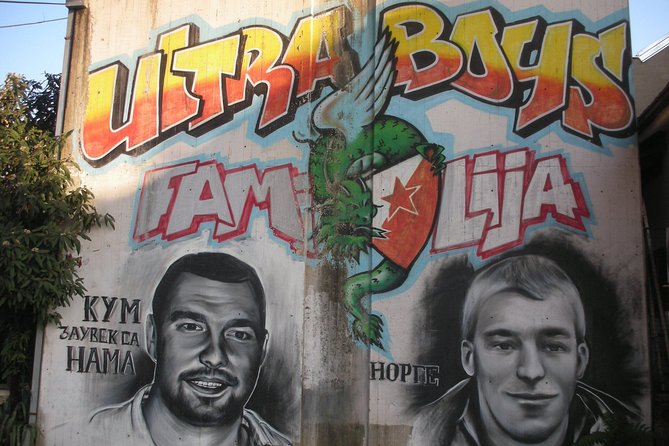
- Red Star’s Senjak murals: Visit one of the city’s oldest football graffiti sites, dating from the 1990s.
- Marakana museum: View trophies, flags, club documents, and Red Star’s 1991 Champions League trophy.
- Two stadiums in one morning: Walk through both Red Star and Partizan grounds instead of choosing only one.
- Guides with football expertise: Andrija and Tihomir are named guides praised for their knowledge of Serbian football and ultras culture.
- A useful match-day connection: Andrija has helped participants attend a Red Star match later the same day, though this is not presented as a standard tour inclusion.
Why this is more than a stadium visit
A standard stadium tour shows you seats, changing rooms, and a few club displays. This experience begins on the street, where football allegiance is part of the visual fabric of Belgrade.
That difference matters. You see where supporters gather, how club identity appears on walls, and how rival districts create their own sense of place. The tour also gives you a way to understand Belgrade beyond its usual sightseeing circuit.
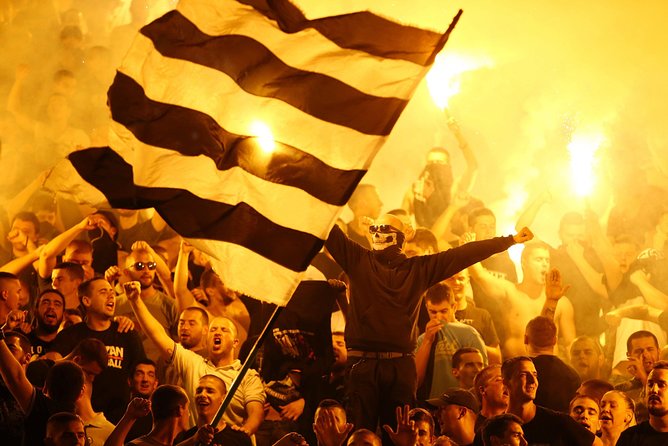
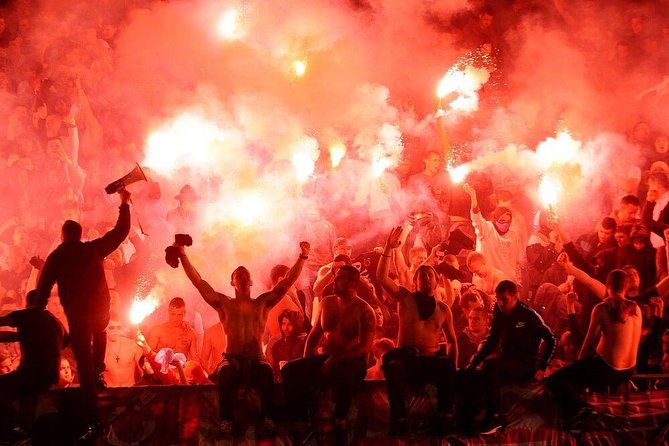
The focus is on the two biggest football rivals in the city: Red Star Belgrade and Partizan. Their rivalry has a strong supporter culture, often called ultras culture, with its own symbols, murals, stories, and social influence.
You should not book this expecting a neutral museum lecture. The appeal is the direct connection between football, neighborhood life, and Serbian society. If you follow European football, you will likely find the subject especially rewarding. If you only want a quick look inside a stadium, the walking and cultural sections may feel like more than you need.
A few more Belgrade trips to weigh up
- A Crash Course through Serbian History
★ 5.0 · 58 reviews - History and Culture in my Belgrade
★ 5.0 · 41 reviews - NATO Bombing of Belgrade Historical Tour
★ 5.0 · 17 reviews
Dorcol, where Partizan support covers the walls
The first neighborhood is Dorcol, described as a Partizan supporters’ district. You spend about an hour here, with no separate admission charge.
Dorcol is a useful starting point because it is not only a football area. It is also a popular part of Belgrade with bars, pubs, and attractive streets. That gives the first section a good balance. You are not being led through a purely symbolic fan zone with nothing else to see.
The main attraction is the supporter graffiti. Murals and painted signs honor players, clubs, and famous fan groups. Your guide explains the meaning behind what you see, which is important because football graffiti can look like decoration if you do not know the people, events, and rivalries behind it.
I like this part because it puts football in a real urban setting. You are walking through a neighborhood where people live, meet, and drink, not simply moving from one ticketed attraction to another.
The drawback is that street art can change. A mural may be repainted, covered, or altered, and the tour information does not promise a fixed list of specific artworks. Still, the neighborhood itself remains part of the experience, and the guide’s explanation gives the walk its value.
Wear comfortable shoes. The tour is primarily on foot, and the first stop alone lasts about an hour before the stadium visits begin.
Senjak and Red Star’s older graffiti
The tour then moves to Senjak, a district associated with Red Star supporters. This stop lasts about 20 minutes, so it is shorter and more focused than Dorcol.
The special feature here is an older piece of football graffiti dating from the 1990s. It is described as being watched over by supporters around the clock, a detail that shows how seriously certain symbols are treated by the fan community.
You get a glimpse of the rivalry from the other side. Dorcol gives you the Partizan district, while Senjak shows you a Red Star area. Seeing both helps keep the tour from becoming a one-club story.
The short visit also keeps the morning moving. You will not spend equal time in both neighborhoods, but the two stops work as a pair. One offers more time to wander through a lively central district, while the other concentrates on a particular Red Star landmark.
This is also where a good guide matters most. The graffiti may be impressive, but its meaning depends on context. Tihomir is praised for his grasp of ultras culture, while Andrija is described as someone who can explain Serbian football history in an accessible way.
Inside Marakana, Red Star’s stadium and museum
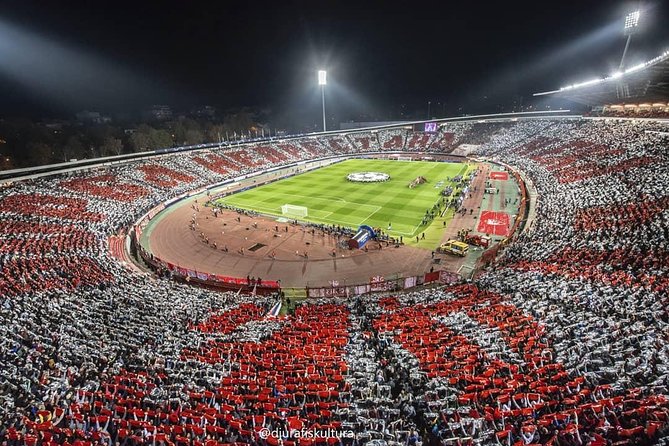
The Red Star stadium, commonly known as Marakana, is the longest stop. Allow about two hours here.
The stadium visit includes the Red Star museum, so you can see both attractions with the same admission arrangement. The museum contains trophies, flags, important club documents, and the European Cup won by Red Star in 1991, now known as the Champions League trophy.
That 1991 victory is the centerpiece. Red Star became the only Eastern European club, alongside Steaua Bucharest, to hold that trophy in its collection. For football fans, this gives the museum real weight. You are not simply seeing a display of local awards. You are seeing evidence of a major European achievement.
The museum also gives you a clearer sense of how clubs preserve identity. Flags and documents can explain a club’s public story in a way that a mural cannot. Together, the neighborhood walk and museum visit move from street culture to official club memory.
The time allocation is generous, but that is useful. You have room to look at the displays rather than rushing through them. One participant also described entering the pitch and seeing conference rooms when the tour was customized. Those areas may depend on access on the day, so treat them as a possible bonus, not a guaranteed part of the advertised schedule.
A beer inside one team’s stadium is listed among the tour highlights. The supplied details do not specify exactly when this happens or whether it is included in the price, so confirm the arrangements when booking if that detail matters to you.
Same riverbank, a completely different kind of day:
- From Belgrade: Novi Sad & Sremski Karlovci Full-Day Tour
★ 4.7 · 1,068 reviews - From Belgrade: Gems of Eastern Serbia Tour
★ 5.0 · 427 reviews - Northern Serbia: Sremski Karlovci and Novi Sad Full-Day Tour from Belgrade
★ 5.0 · 425 reviews - Day Trip from Belgrade: Gems of Eastern Serbia
★ 5.0 · 424 reviews
Partizan Stadium and a different football setting
The final major stop is Partizan Stadium, with about 30 minutes set aside for the visit.
Here you walk down onto the pitch and see what is described as one of Europe’s last remaining ghetto stadiums. That phrase points to the ground’s older, rough-edged character rather than a polished modern arena.
The contrast with Marakana is part of the appeal. Red Star’s stop gives you a substantial museum and a major European trophy. Partizan’s stop focuses more on the physical stadium and the feeling of being down at pitch level.
You may also get impressive views across Belgrade from the stadium. One guide helped a participant see the city from this vantage point, adding a useful visual finish to the tour.
Thirty minutes is enough for a focused visit, but not for a long stadium exploration. If you want extensive access to changing rooms, offices, press areas, or every stand, this may feel brief. Customized access has happened before, but it is not guaranteed.
What the guides add to the experience
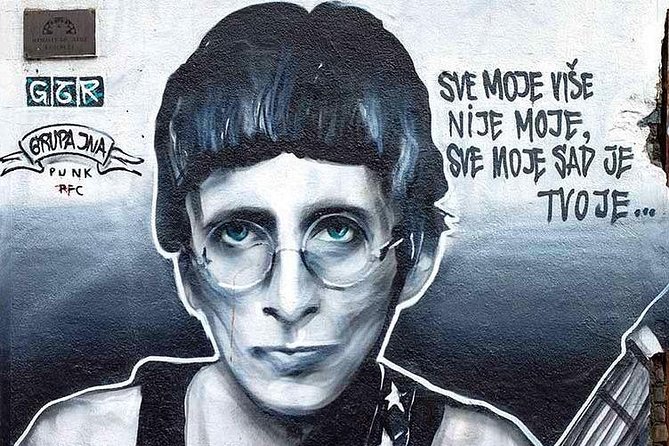
The guide can make or break a tour about supporter culture. Names specifically associated with this experience include Andrija and Tihomir.
Andrija is praised for explaining Belgrade’s football stories while leading the neighborhood walk and stadium visits. He has also helped a participant attend a Red Star match later that day and even joined that person at a basketball game the following day. That kind of local help is unusual, but you should see it as an example of his personal hospitality, not as a promised part of the booking.
Tihomir is described as professional and especially well informed about ultras history. If your main interest is the social role of football supporters, his approach may suit you well.
The tour is offered in English. Since the subject includes rivalry, politics, social influence, and club identity, do not hesitate to ask questions as you walk. The more curious you are, the more useful the experience becomes.
Is $84.21 a fair price?
At $84.21 per person, this is not the cheapest way to see a Belgrade stadium. The value depends on how much you want from the experience.
You are paying for a guided walk through two fan districts, access to two stadiums, the Red Star museum, and several hours of interpretation. A simple museum ticket would not give you that neighborhood context, while a basic city walk would not normally take you into both football grounds.
I consider the price reasonable for a football-focused visitor who would otherwise spend time trying to locate murals, understand the rivalry, and arrange stadium access independently. It is less compelling if you have little interest in football or if you only want to photograph the outside of the stadiums.
Group discounts are available, which may improve the value for families or larger parties. The maximum group size is listed as 99, so the actual experience could range from intimate to fairly large. Ask before booking if the size of the group is important to you.
Timing, meeting point, and practical planning
The tour begins at 10:00 a.m. at Student Park, Studentski trg 16, in central Belgrade. It ends back at the same meeting point.
That central start is convenient for anyone already exploring the city center, and the meeting point is near public transportation. Plan for roughly half a day once you include getting to the meeting point before 10:00 and any time needed afterward.
The total duration is approximately 3 to 4 hours. The published stop times add up to a little over three hours, but walking between locations and moving through the stadiums can affect the final length.
The experience needs good weather. If poor conditions force cancellation, you are offered another date or a full refund. For your own comfort, wear shoes suited to walking and bring clothing appropriate for an outdoor neighborhood tour.
Confirmation is provided when you book. Service animals are allowed, and most people can participate. The information does not give a detailed route or step-free access description, so contact the provider if you need specific mobility information.
Free cancellation is available up to 24 hours before the start time. Changes or cancellations made less than 24 hours before the start are not accepted for a refund.
Who should book the Red Star and Partizan tour?
I would choose this for a football fan who wants to understand how clubs shape a city, not just collect stadium photographs. It is also a good fit if you enjoy local neighborhoods, murals, supporter stories, and guides who can point out details you would miss alone.
European football followers will get the most from the 1991 trophy, the rivalry between the two clubs, and the ultras material. You do not need to support either team, but you should be comfortable with a tour that takes fan identity seriously.
Families and mixed-interest groups may find the first and last sections easier to share than the more detailed supporter discussions. Dorcol’s pubs and streets offer some general sightseeing value, while the stadium views give non-specialists a reason to stay engaged.
I would skip it if you dislike walking, want a quiet museum visit, or need a guaranteed schedule of behind-the-scenes rooms. The tour is about football culture as much as architecture, and access inside the stadiums can vary.
Should you book it?
Book this tour if you want the story behind Belgrade’s football rivalry, especially the connection between Partizan and Red Star supporters, their neighborhoods, and their stadiums. The combination of Dorcol, Senjak, Marakana’s museum, and Partizan Stadium gives you a fuller picture than visiting one ground alone.
The strongest reasons to go are the 1991 European trophy, the older supporter graffiti, and the chance to walk on the Partizan pitch. Ask about group size, beer arrangements, and possible customized stadium access before you pay.
At $84.21, it is best viewed as a specialized cultural tour rather than a low-cost sightseeing stop. For the right football fan, that focus makes the price worthwhile.
FAQ
Where does the tour begin?
It begins at Student Park, Studentski trg 16, Beograd 11000, Serbia.
What time does the tour start?
The start time is 10:00 a.m.
Where does the tour end?
The activity ends back at the meeting point at Student Park.
How long does the tour last?
The tour lasts approximately 3 to 4 hours.
Is the tour offered in English?
Yes, the tour is offered in English.
What neighborhoods are included?
The tour visits Dorcol, associated with Partizan supporters, and Senjak, associated with Red Star supporters.
Does the tour include both stadiums?
Yes. It includes Red Star Belgrade Stadium, also called Marakana, and Partizan Stadium.
Can I cancel for a full refund?
Yes. You can cancel at least 24 hours before the experience start time for a full refund. Changes or cancellations made less than 24 hours before the start are not accepted, and poor-weather cancellations offer a different date or a full refund.
Just added around Belgrade
- Private Wine Tasting by Party in Belgrade★ 5.0 · 3 reviews
- Zica and Studenica Monasteries Private Day Tour from Belgrade★ 5.0 · 4 reviews
- Urban & Alternative Belgrade tour★ 5.0 · 4 reviews
- Belgrade Bike Tour: Be a local in the hood of Belgrade!★ 5.0 · 5 reviews
- The World of Pubs and Taverns: A Golden Mile★ 5.0 · 5 reviews
- Private Truffle‑Hunting Tour from Belgrade – Lunch with Wine★ 5.0 · 4 reviews
- Sidecar Tours Belgrade★ 5.0 · 5 reviews
- Private Day Trip/Transfer Tour from Belgrade to Timisoara★ 5.0 · 5 reviews
Historical Tours, compared.

Full-Day Private Royal Heritage Tour to Oplenac With a Winery Visit
Read our review →Browse the lists this tour appears in