
Reviewed · HISTORICAL TOURS
History and Culture in my Belgrade
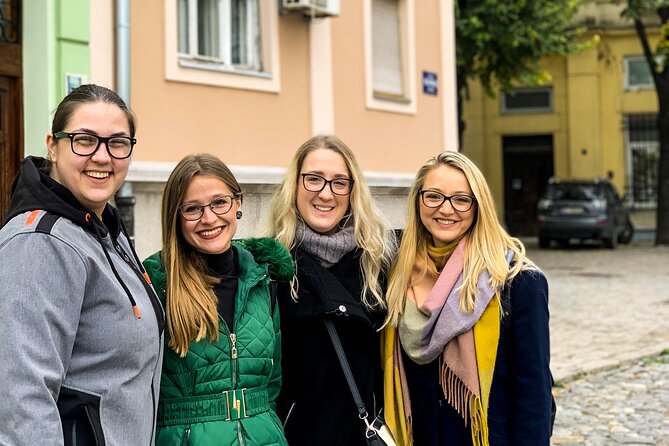
Belgrade’s past is not kept behind museum glass on this walk. You move from St. Mark Orthodox Church to the bomb-damaged RTS buildings, Ottoman-era streets, a traditional kafana, and a viewpoint over the Sava River. Marija connects Serbia’s medieval, Yugoslav, wartime, and present-day stories in a compact three-hour route.
I like the small-group format, which gives you a better chance to ask about Serbia’s complicated past and daily life. I also like the tasting stop, where rakija, wine, honey, jam, slatko, and natural juices turn a history walk into a friendly introduction to Serbian hospitality.
The main consideration is pace. The route covers many stops in only three hours, so you will see places from the outside or spend just a few minutes at several of them. The advertised tour group is capped at six, though the general activity information gives a maximum of 15, so confirm the group size when booking if that matters to you.
Key points to know before you book
- St. Mark Church begins the story: You enter one of Belgrade’s major Orthodox churches and learn about Serbian religious customs.
- The 1999 bombing is treated as living history: The RTS stop puts recent Serbian history in a physical setting rather than reducing it to dates.
- A tasting break adds local flavor: Try rakija, wine, slatko, jam, honey, and juices while learning how Serbs say cheers.
- The route crosses several eras: Ottoman Belgrade, Yugoslavia, the 1990s, and modern student and street culture all appear.
- You finish with a fine city view: Kosančićev Venac gives you a panorama toward New Belgrade, the Sava, and traditional river splavs.
- The walk is useful early in a stay: Marija offers practical ideas for the rest of your time in Serbia.
A fast way to understand Belgrade
This is not a standard march past monuments. It is a walking introduction to how Belgrade works and why the city can feel full of contrasts. An Orthodox church, a damaged television headquarters, an Ottoman mosque, a student square, modern graffiti, and a centuries-old restaurant all appear on one route.
That range is the real value. Belgrade’s story is not simple, and Marija’s approach links major events with ordinary customs and current life. You are not only told what a building is. You also hear why it matters to people now.
The route lasts about three hours and is offered in English. You can choose from three start times, a useful feature if you are fitting the walk around a morning arrival, a museum visit, or an evening meal. The meeting point is in front of St. Mark Orthodox Church at Bulevar kralja Aleksandra 17. The walk ends at Kosančićev venac 22, so plan to continue from that neighborhood rather than return to the starting point.
A few more Belgrade trips to weigh up
- A Crash Course through Serbian History
★ 5.0 · 58 reviews - NATO Bombing of Belgrade Historical Tour
★ 5.0 · 17 reviews - Football tour: Red Star and Partizan Ultras History
★ 5.0 · 14 reviews
St. Mark Church and Serbian religious customs
The opening stop at St. Mark Orthodox Church gives the tour a strong beginning. It is described as the second-largest church in Belgrade, and the visit includes entry rather than a quick look at the facade.
Expect an explanation of important events in Serbian history, along with the customs and religious practices connected to Serbian Orthodoxy. The church also contains the remains of one of Serbia’s great medieval rulers, adding a direct link to the country’s royal past.
I like beginning here because it gives you a cultural frame for the rest of the walk. Serbia’s history is closely tied to faith, rulers, foreign powers, and national identity. This stop lets you ask questions before the route moves into the more difficult modern period.
The planned visit lasts about 20 minutes. That is enough for an introduction, but not for a long architectural study. If you want to examine every detail of the interior at leisure, you will need a separate visit.
RTS and the physical scars of 1999
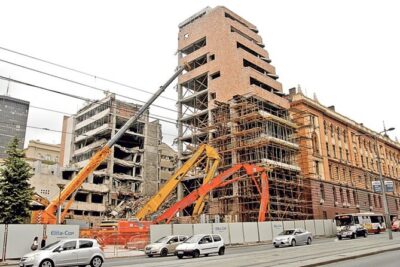
At the Radio Television of Serbia buildings, you see damage left by the 1999 bombing. This is one of the more serious sections of the walk, and it gives recent Serbian history a clear physical setting.
You hear about tragic events from the 1990s, then move into discussion of Yugoslavia, the Serbian economy, and contemporary life. These subjects can be difficult and politically charged. Marija’s value here is her ability to explain hard material in plain terms, a quality repeatedly praised in her feedback.
The stop lasts around 20 minutes. That is long enough to establish the basic story and its effect on Serbia, though the tour cannot offer a full account of every political argument surrounding Yugoslavia and the NATO bombing. Think of it as a foundation for further reading and conversation.
This part may be especially useful if you know little about the breakup of Yugoslavia. You get context without having to begin your trip with a formal lecture.
Tašmajdan Park and the stories below the city
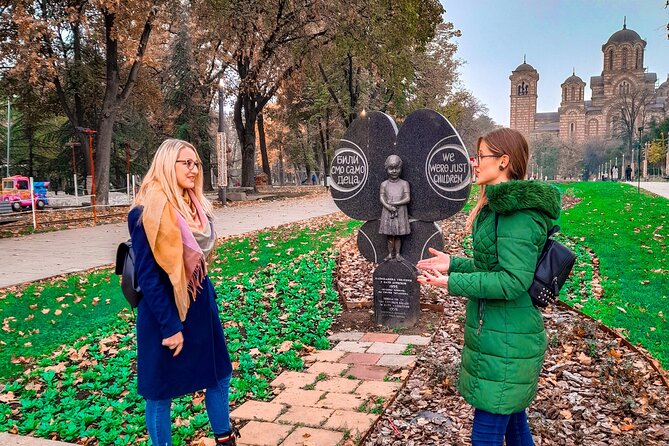
Tašmajdan Park changes the mood. After the church and the RTS buildings, you have a short pause in a green public space known for mysteries and underground passages.
The stop is only about 15 minutes, so do not expect a full park tour. Its purpose is to show another side of Belgrade and introduce the layers beneath the modern city. The mention of underground passages adds a sense of curiosity, while the calm setting gives your feet and mind a brief rest.
This is also a reminder that Belgrade is not only grand buildings and political history. Its parks, local stories, and everyday gathering places help explain how people use the city.
Same riverbank, a completely different kind of day:
- From Belgrade: Novi Sad & Sremski Karlovci Full-Day Tour
★ 4.7 · 1,068 reviews - From Belgrade: Gems of Eastern Serbia Tour
★ 5.0 · 427 reviews - Northern Serbia: Sremski Karlovci and Novi Sad Full-Day Tour from Belgrade
★ 5.0 · 425 reviews - Day Trip from Belgrade: Gems of Eastern Serbia
★ 5.0 · 424 reviews
Parliament, Nikola Pašić Square, and modern Serbia
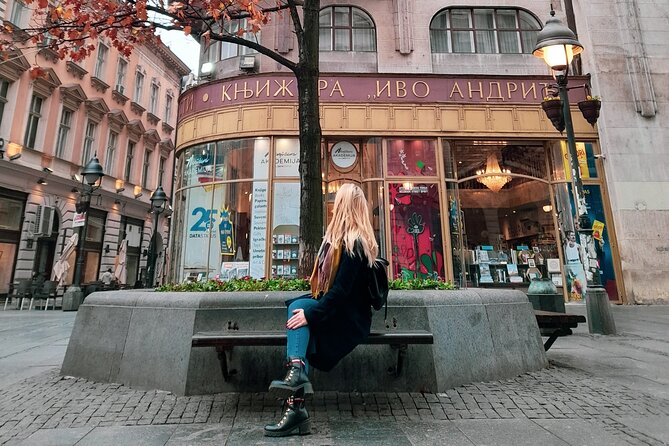
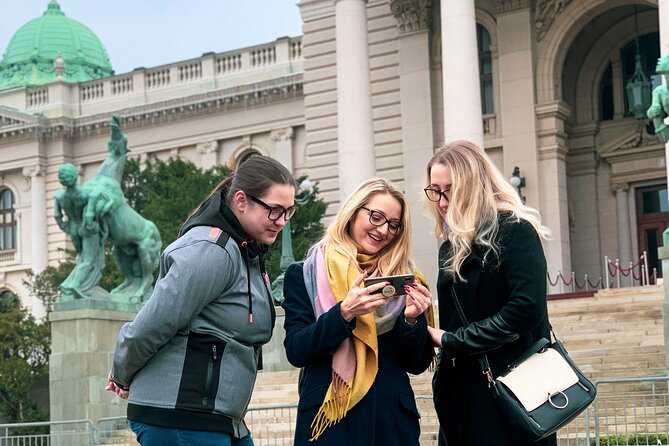
At the House of the National Assembly of the Republic of Serbia, the talk turns to political power and public protest. You hear why the monumental building became associated with Game of Thrones and learn about the major demonstrations that took place there.
The stop is scheduled for about 10 minutes. You will get the essential story rather than an interior visit or a detailed architectural tour. That is enough to understand why the building matters as a symbol of Serbian politics.
Next comes Nikola Pašić Square, described as the youngest square in the city. Its fountain is tied to unusual contemporary customs among young people in Belgrade. This is a small but useful detail because it shifts the focus from national events to local behavior and present-day city life.
The route also passes the only hotel in Serbia listed among historic hotels worldwide. The name is not supplied in the tour details, so you should ask Marija to point it out and explain its place in Belgrade’s story.
Čumićevo sokače and the tasting break
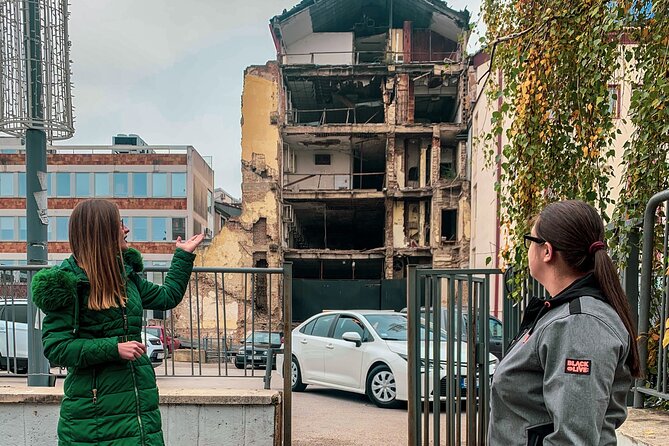
The tasting at Čumićevo sokače is the most hands-on part of the walk. In a small local shop in Belgrade’s design district, you sample traditional Serbian products and hear about old customs, hospitality, and everyday life.
The tasting includes domestic rakija, wine, natural juices, jam, slatko, and honey. Slatko is a sweet preserve traditionally offered in Serbian hospitality, and this stop gives you a chance to encounter that custom in a simple, practical way.
You also learn how Serbs say cheers. That may sound like a small detail, but it is exactly the sort of thing you can use later at a restaurant or family-run winery. Food and drink provide an easy entry into culture, especially after the heavier discussion of war and politics.
The scheduled time is about 30 minutes, making this one of the longest stops. I like that balance. The tour does not treat local food as a decorative extra. It gives you time to taste, ask questions, and connect customs with daily life.
There is no admission charge listed for the stops, and the tasting is included as part of the route description. At $90.11 per person, the price is not bargain-level for a three-hour city walk. Its value depends on what you want: if you prefer a low-cost orientation walk, you may find it high; if you want a private-feeling group, a local guide, a tasting, and a wide historical range, the cost is easier to justify.
Republic Square and the pedestrian center
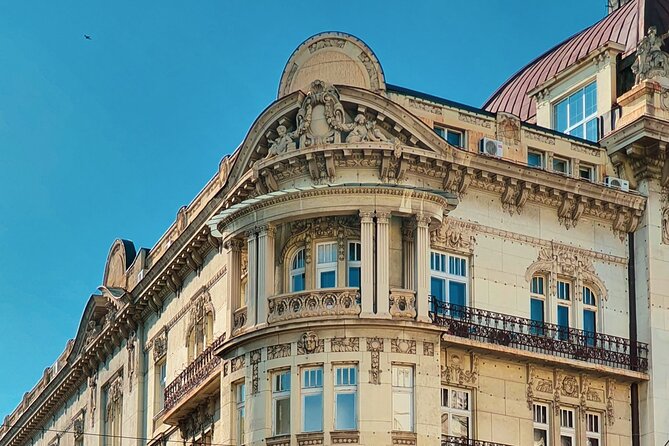
Republic Square brings you into the city’s main public center. You get about 10 minutes to take in the lively atmosphere and see one of Belgrade’s best-known meeting places.
From here, the route crosses the main pedestrian zone, known for street musicians, cafes, and a social atmosphere. This part helps you place the city’s monuments in the setting where people actually spend time.
Do not expect long cafe stops or free time for shopping. The walk keeps moving, but you will get useful orientation for returning on your own. If you want to linger over coffee on the pedestrian street, save that for later.
Students’ Square and the University of Belgrade
The University of Belgrade section focuses on education in Serbia. You admire Students’ Square and its park while hearing how education fits into Serbian society.
This is a short, roughly 10-minute stop, but it broadens the tour again. So far, the route has focused on religion, war, politics, food, and city life. The university adds a look at young people and public learning.
It is also a good point to ask Marija about contemporary Serbian life. The tour is designed to cover current cultural trends as well as older events, and this setting makes that conversation feel natural.
Dorcol, the mosque, and Ottoman Belgrade
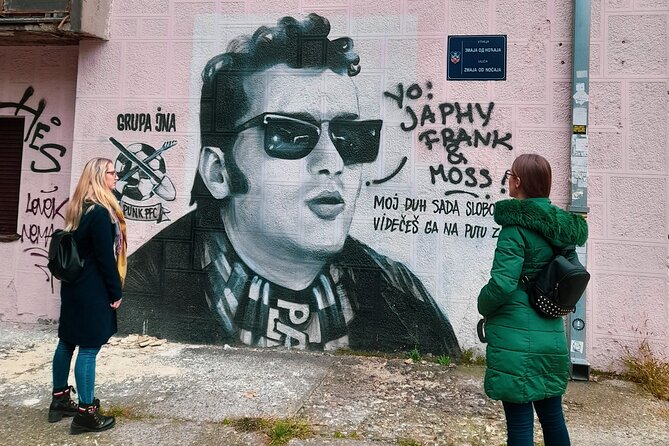
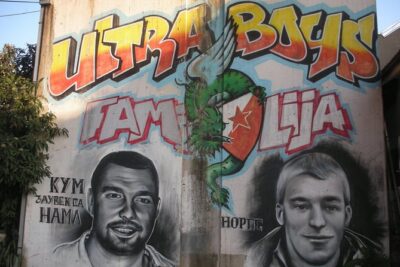
Walking through Dorcol brings a more neighborhood-focused section. The area is known here for distinctive graffiti and stories from the past. You are not simply viewing a polished historic quarter. You are seeing how old parts of Belgrade continue to change.
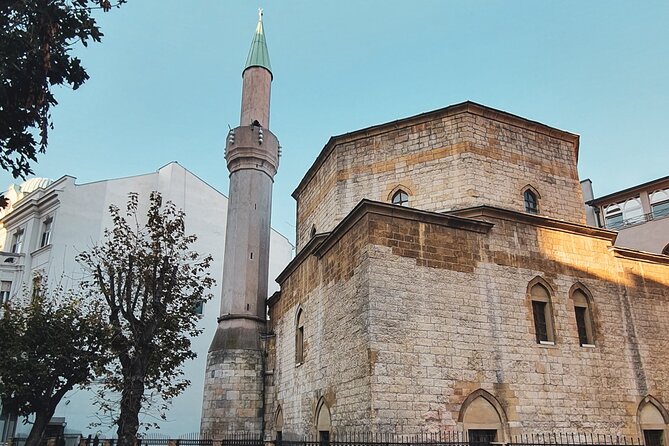
The route then reaches Bayraklee Mosque, also called Bajrakli džamija. It is the only preserved mosque in Belgrade from the 273 that once existed, and the stop explains nearly five centuries of Ottoman influence in Serbia.
That figure gives you a sense of how different Belgrade once looked. The mosque is an important counterpoint to the Orthodox church at the beginning of the route. Seeing both helps you understand that Serbian culture developed through contact, conflict, and long periods of rule by different powers.
The mosque visit is planned for about 15 minutes. It is a brief introduction, not an extended study of Islamic architecture or Ottoman administration. Still, it is one of the most useful stops for anyone who wants to move beyond a narrow national story.
Question Mark kafana and old Belgrade streets
Znak Pitanja, or Question Mark, is described as Belgrade’s oldest kafana, a traditional restaurant and social institution. The focus is on its architecture and what a kafana represents in local life.
A kafana is more than a place to eat. It is tied to conversation, drinks, music, and public social life. The tasting earlier in the walk introduces Serbian hospitality through products. This stop shows how hospitality has also found a home in the city’s restaurants.
The visit lasts about 10 minutes. You should not expect a full meal or a long sit-down session. If the building catches your eye, note its location and consider returning later for a slower look at the neighborhood.
Kosančićev Venac and the final river view
The route ends in Kosančićev Venac, one of Belgrade’s oldest areas. You walk along a cobblestoned street, see distinctive cultural heritage, pass an Orthodox church, and approach a viewpoint.
The final panorama looks toward New Belgrade, the Sava River, and traditional Serbian splavs. These river boats are part of Belgrade’s social life and give the view a distinctly local character.
This is a satisfying ending because it pulls together several themes from the walk. You have seen old and new Belgrade, religious and secular buildings, local customs and national politics, and the effects of outside powers. From the viewpoint, you can see the city as a whole rather than as a string of separate stops.
The tour ends at Kosančićev Venac 22. That is useful planning information: you are not returned to St. Mark Church, and the end point places you in an area worth exploring on foot.
How Marija shapes the experience
Marija is the named guide associated with this experience, and her strongest quality is her ability to make difficult subjects easier to follow. The comments about her consistently stress her passion, clear explanations, kind manner, and professional approach.
One particularly useful trait is her ability to blend older history with modern life. You hear about medieval rulers and Ottoman influence, but also Serbian economic conditions, youth customs, graffiti, street culture, and current habits. That mix makes the tour feel connected to the city you are actually walking through.
The walk can also be adjusted in spirit to your interests. The published timing is fixed, but a small group gives you a better chance to ask about the 1990s, religion, food, or everyday life. If you have a strong interest in one subject, say so early.
The activity is offered in English. A few comments about Marija praise her explanations at a pleasant pace, but the tour still covers a lot of ground. You should be ready for steady walking and several short stops.
Group size, timing, and practical value
The tour highlights a maximum of six people, which is one of its biggest advantages. A small group usually makes it easier to hear the guide near busy streets, ask questions, and keep the tasting relaxed.
At the same time, the general activity information lists a maximum of 15 participants. Since those two figures differ, ask for clarification before you pay if a six-person maximum is essential to your plans.
The route is suitable for most people and is near public transportation. The details do not provide a full accessibility assessment, so ask directly about the walking surface, cobblestones, church access, and any mobility concerns before booking.
The tour is often booked about 40 days in advance. That suggests you should reserve ahead if your dates are fixed, especially if you want one of the three start times or the smallest possible group.
Free cancellation is available if you cancel at least 24 hours before the local start time. Changes or cancellations inside that window are not accepted for a refund.
Who will get the most from this walk
I would choose this tour for a first visit to Belgrade, especially if you want a strong orientation before exploring alone. It is also a good fit if Serbia’s recent history feels confusing and you want someone to connect the major events in a clear order.
Food-focused visitors will appreciate the tasting, but this is not a dedicated culinary tour. History fans will appreciate the church, mosque, parliament, RTS buildings, and old quarter, but the short stops limit the amount of detail at each site.
The walk suits people who want:
- A short introduction before a longer Serbian trip
- A local guide who can discuss both history and current life
- A small group rather than a large coach
- A tasting of traditional drinks and sweets
- A route that reaches neighborhoods beyond the most obvious center
- Practical suggestions for what to see next
You may prefer another activity if you want extensive interior visits, a slow photography walk, a full meal, or a detailed treatment of one historical period.
Should you book History and Culture in my Belgrade?
Book it if you want to understand Belgrade through contrasts: Orthodox and Ottoman heritage, royal history and modern protest, old kafanas and student life, war damage and river nightlife. The route is short, but it covers a striking amount of ground.
At $90.11, the experience makes the most sense when you value Marija’s explanations, the small-group design, and the tasting stop. It is less compelling if you are counting every dollar or prefer to explore monuments independently.
For a first day or two in Belgrade, I think it is a useful choice. You finish with a better map of the city, several local customs to remember, and a viewpoint that helps you see how the neighborhoods fit together.
FAQ
How long does the tour last?
The tour lasts approximately three hours.
What language is the tour offered in?
The tour is offered in English.
Where does the tour begin?
It begins in front of St. Mark Orthodox Church at Bulevar kralja Aleksandra 17 in Belgrade.
Where does the tour end?
The tour ends at Kosančićev Venac 22, Belgrade 11000.
What food and drinks are included in the tasting?
The tasting includes domestic rakija, wine, natural juices, jam, slatko, and honey.
How many people can join the tour?
The experience highlights a maximum group size of six people. The general activity information lists a maximum of 15 participants, so confirm the expected group size when booking.
Are there different start times?
Yes. You can choose from three start times.
Can I cancel for a full refund?
Yes, if you cancel at least 24 hours before the experience’s local start time. Cancellations or changes made less than 24 hours before the start are not accepted for a refund.
Just added around Belgrade
- Private Wine Tasting by Party in Belgrade★ 5.0 · 3 reviews
- Zica and Studenica Monasteries Private Day Tour from Belgrade★ 5.0 · 4 reviews
- Urban & Alternative Belgrade tour★ 5.0 · 4 reviews
- Belgrade Bike Tour: Be a local in the hood of Belgrade!★ 5.0 · 5 reviews
- The World of Pubs and Taverns: A Golden Mile★ 5.0 · 5 reviews
- Private Truffle‑Hunting Tour from Belgrade – Lunch with Wine★ 5.0 · 4 reviews
- Sidecar Tours Belgrade★ 5.0 · 5 reviews
- Private Day Trip/Transfer Tour from Belgrade to Timisoara★ 5.0 · 5 reviews
Historical Tours, compared.
Football tour: Red Star and Partizan Ultras History
Read our review →
Full-Day Private Royal Heritage Tour to Oplenac With a Winery Visit
Read our review →Browse the lists this tour appears in