
Reviewed · HISTORICAL TOURS
NATO Bombing of Belgrade Historical Tour
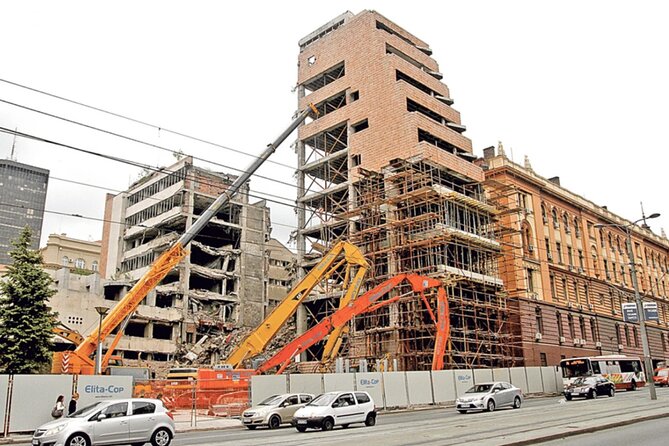
The most useful part of this tour is its Serbian point of view on the Yugoslav wars and the NATO bombing. Rather than treating Belgrade’s damaged buildings as simple photo stops, the guide connects them with the city’s public spaces, memorials, government buildings, and royal history.
I like the private transportation, which keeps a two-hour route practical, and I like the choice of Tašmajdan Park, where a memorial honors children who died during the bombing. The main drawback is pace: several stops last only 5 or 10 minutes, and one previous customer found the tour too fast. You are paying for interpretation and transport, not a long visit inside major attractions.
Key points to know before booking
- A Serbian perspective on wartime history: The tour explains the Yugoslav wars and NATO bombing from a local point of view.
- A private ride through central Belgrade: Your group travels alone in an air-conditioned vehicle with pickup and onboard WiFi.
- Short visits at several important sites: Expect 20 minutes at St. Mark’s Church and Tašmajdan Park, then brief stops of 5 to 10 minutes elsewhere.
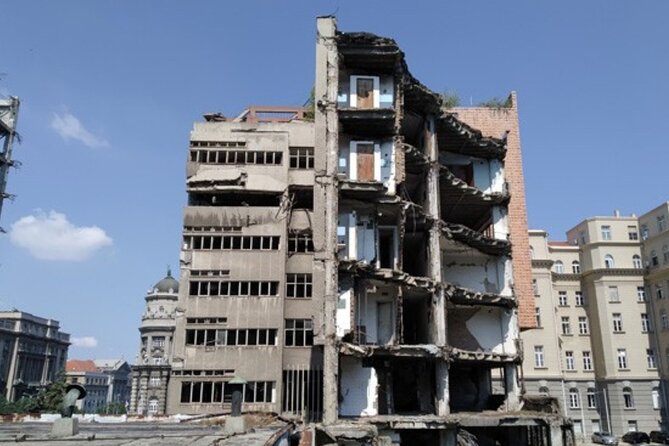
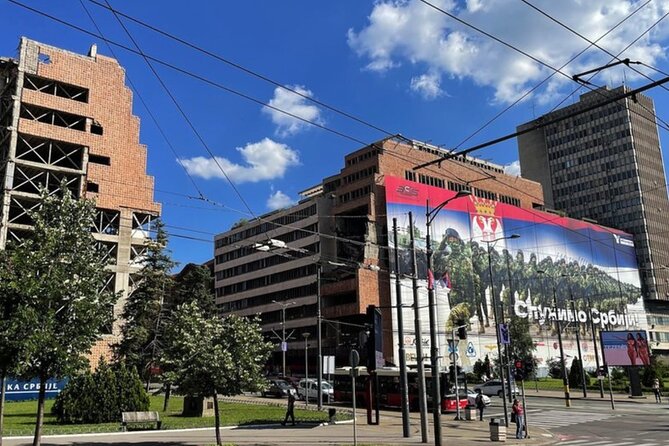
- Generalštab is the strongest visual reminder: The damaged former military headquarters is one of the tour’s central symbols.
- Good for history-focused visitors with limited time: The route covers several connected sites in about two hours, but it is not a slow museum tour.
What this Belgrade war-history tour is really about
This experience is not a conventional sightseeing circuit. You are not moving from one grand monument to another for postcard views. Instead, you are following a difficult chapter of Belgrade’s recent past through buildings, parks, memorials, and places tied to Serbia’s state and royal story.
The subject needs care. A tour about NATO bombing and the Yugoslav wars can easily become either a political lecture or a quick collection of damaged buildings. Here, the value depends heavily on the guide’s ability to explain Serbia’s point of view clearly and respectfully.
The experience lasts about two hours and is private, so only your group takes part. That matters with a sensitive topic. You can listen without being folded into a large crowd, and your guide can presumably adjust the explanation to your questions and interest. The supplied details do not name the guide, so you should not book expecting a particular person.
The route is also useful for getting your bearings in central Belgrade. You pass a major Orthodox church, a city park, the National Assembly, the old railway station, a former royal palace, and a monument to Tsar Nicholas II Romanov. The tour does not treat these as unrelated sights. It places them within a broader story about Serbia, its institutions, and the marks left by conflict.
A few more Belgrade trips to weigh up
- A Crash Course through Serbian History
★ 5.0 · 58 reviews - History and Culture in my Belgrade
★ 5.0 · 41 reviews - Football tour: Red Star and Partizan Ultras History
★ 5.0 · 14 reviews
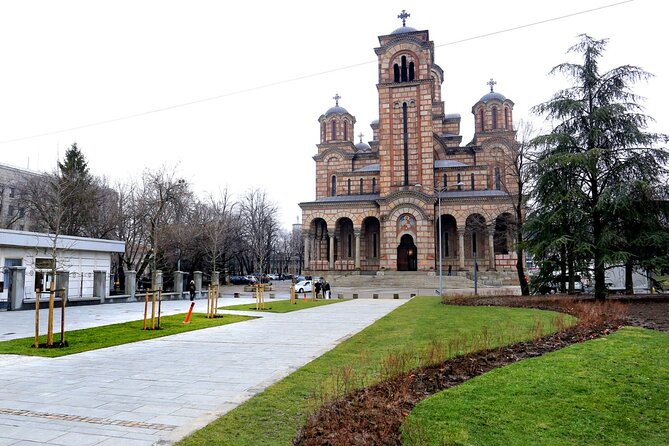
St. Mark’s Church begins the route with 20 minutes
St. Mark’s Church is one of Belgrade’s important churches and the first listed stop. You have about 20 minutes here, with admission included.
That opening makes sense. A church gives the tour a calmer beginning before the route turns toward memorials and bomb-damaged structures. It also helps place Serbia’s religious and cultural identity alongside the political subjects that follow.
The time is enough for an introduction and a look around, but you should not expect a full architectural tour. The available information does not promise a long interior visit or a separate guided church program. Think of this stop as context, not a standalone church excursion.
I would pay attention to how your guide connects St. Mark’s with the rest of the route. The church is not specifically described as a bombing site, and that is part of the point. The tour is setting up a picture of Belgrade as a living capital, not only a place defined by wartime damage.
Tašmajdan Park and the memorial to children
The next stop is Tašmajdan Park, with about 20 minutes to see the park and the statue honoring children who died during the NATO bombing. Admission is free.
This is likely the most emotionally direct stop. A memorial to children changes the tone of the tour. It reminds you that military and political events are experienced by ordinary families, and that public memory in Belgrade is not limited to government buildings or military targets.
The park setting also gives you room to pause. You are not simply looking at a damaged facade from a vehicle window. You have a little time to hear the story, see the memorial, and consider how the city remembers those who died.
One practical point: you do not need to pay an entrance fee here. The cost of the experience is for the private vehicle, guide, and organized route, not admission to the park. One previous customer felt that a park visit alone would not justify the price, and that is a fair warning. Tašmajdan becomes worthwhile when the guide’s explanation adds meaning that you would not get from a casual walk through the park.
The National Assembly in a ten-minute stop
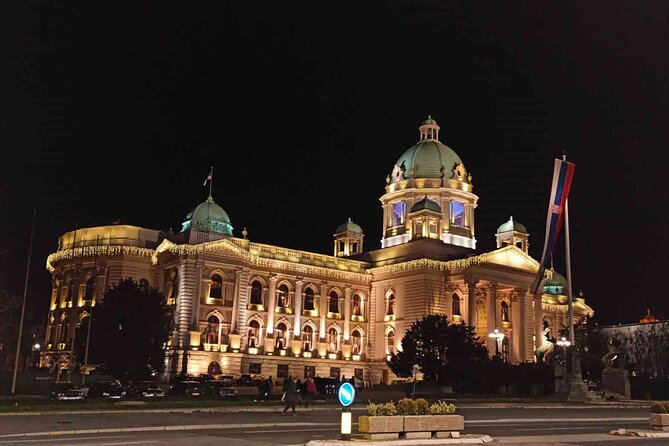
The House of the National Assembly of the Republic of Serbia is next, with roughly 10 minutes outside. This is Serbia’s parliament, so the stop shifts the focus from personal loss to state power and public authority.
You should expect a short explanation and a view of the building rather than a parliamentary visit. Admission is listed as free, but there is no indication that the tour enters the building or includes an official interior tour.
Ten minutes can work if the guide gives a clear account of why the parliament matters in the route. It can feel thin if you want architectural detail or a longer discussion of Serbian politics. I would treat this as a quick orientation stop, useful because it links the tour’s wartime subject to the country’s governing institutions.
The private vehicle helps here. You are not spending time organizing a large group around a busy public building. Still, the schedule leaves little room for delays, extended questions, or an unexpectedly long explanation.
Same riverbank, a completely different kind of day:
- From Belgrade: Novi Sad & Sremski Karlovci Full-Day Tour
★ 4.7 · 1,068 reviews - From Belgrade: Gems of Eastern Serbia Tour
★ 5.0 · 427 reviews - Northern Serbia: Sremski Karlovci and Novi Sad Full-Day Tour from Belgrade
★ 5.0 · 425 reviews - Day Trip from Belgrade: Gems of Eastern Serbia
★ 5.0 · 424 reviews
Generalštab, Belgrade’s most striking bombing site
Generalštab is one of the symbols of the bombing, and the tour allows about 10 minutes here. For many people, this will be the clearest physical reminder of the subject.
The damaged structure gives the history a visible form. Unlike a memorial plaque or a spoken account, a ruined building can show how conflict remains present in an urban setting. You can look at the site while the guide explains its place in the bombing and in Belgrade’s memory.
The stop is brief, so your expectations matter. This is not a long architectural inspection, and no interior access is listed. You will likely see the building from outside, hear the relevant explanation, and move on.
I would keep your camera ready, but do not reduce the stop to a photograph. The purpose is not just to collect an image of a damaged building. It is to understand why Generalštab has become a symbol and how that symbol fits the Serbian account of the period.
The old railway station and the palace connection
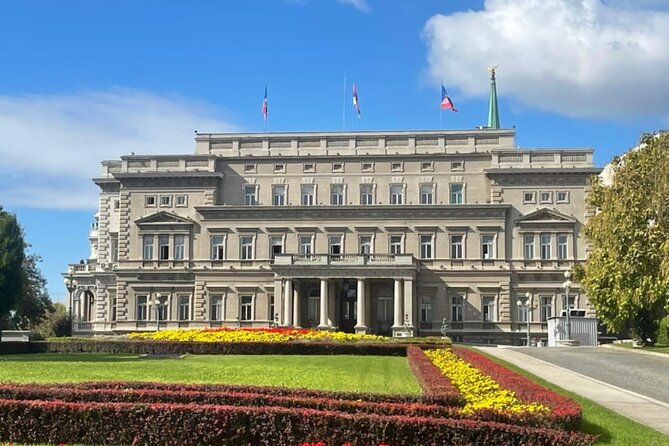
The Railway Museum stop is described as the old railway station, with about 10 minutes and no admission fee. The route also includes the old king’s palace, although the information does not give it a numbered stop, exact duration, or admission detail.
That makes this part of the tour slightly less predictable than the listed stops. The old railway station adds another layer to the city’s story. Railways connect Belgrade to movement, government, commerce, and the wider region, while the palace points toward the country’s royal past.
You should ask the guide how much time is available for the palace when the tour begins. Since the schedule is tight, the palace may be a brief drive-by or a short exterior stop rather than a full visit. The tour description does not promise entry.
The Railway Museum itself may sound like a separate museum visit, but the stated stop refers to the old railway station, and admission is free. Do not book this experience expecting a detailed museum tour, a long collection of railway exhibits, or time to explore independently.
Tsar Nicholas II Romanov in five minutes
The monument to Tsar Nicholas II Romanov receives about five minutes. That is the shortest listed stop, so it is a quick look and explanation.
The monument brings Russian and Serbian connections into the route. It also keeps the experience from being only about NATO bombing. Belgrade’s political and royal memories overlap, and the tour uses this monument to broaden the story.
Five minutes is enough for a short account and a photograph. It is not enough for a long discussion of the monument, Romanov history, or Serbia’s relationship with Russia. If that subject interests you, use the stop to ask a focused question rather than expecting a full lecture.
This is one reason the tour works best as an introduction. It touches several themes, but it cannot give each one equal depth in two hours.
What the two-hour schedule means for you
The route adds up to a compact series of visits: 20 minutes at St. Mark’s Church, 20 minutes at Tašmajdan Park, 10 minutes at the National Assembly, 10 minutes at Generalštab, 10 minutes at the old railway station, and 5 minutes at the Tsar Nicholas II monument. The old palace has no listed duration.
That schedule tells you exactly what kind of experience this is. You will cover ground and gather context quickly. You will not have long periods to sit, wander, read displays, or explore interiors.
One customer described the tour as too fast, and the criticism is important. The short stops can feel efficient if you want a broad introduction. They can feel rushed if you want to photograph every site, ask many questions, or linger at the children’s memorial.
I would treat the two-hour duration as a benefit if your Belgrade visit is short. You can see several connected locations without spending a full morning on a single museum or neighborhood. If you already know the subject well, though, the tour may leave you wanting more.
The guide’s communication style also matters. One English-speaking customer found the guide friendly and well informed but sometimes difficult to understand. That does not mean every departure will be the same, but it is a useful reason to ask for clarification when a point is important. With a politically sensitive subject, clear language matters as much as the route.
Why the private vehicle is part of the value
The price is $69.99 per person. You receive private transportation, an air-conditioned vehicle, WiFi onboard, a guide, and pickup. Lunch is not included.
The value depends on group size. If you are traveling with several people, the private format can make the price easier to justify because the vehicle and guide serve only your group. You avoid sharing the experience with strangers and can focus on a subject that may prompt personal questions.
If you are alone, the price feels higher for a two-hour tour, especially because the sites themselves have free admission or no listed entry charge. You are paying mainly for the guide’s interpretation, door-to-door convenience, and the efficient connection between places.
Pickup is another practical advantage. You do not need to find each location yourself or work out the order of the route. The air-conditioning is useful in warm weather, and onboard WiFi is a small convenience during transfers, though it should not be the reason you book.
The tour starts at 11:00 a.m. and is near public transportation. Pickup is offered, but the supplied details do not specify every pickup location or the exact pickup procedure. Confirm that detail when booking so your morning plan is clear.
Who will get the most from this experience
I would recommend this tour to you if you want a focused introduction to Belgrade’s wartime memory and prefer an English-speaking guide to independent research. It suits a first visit, a short stay, or a person who wants to see several central locations in one organized outing.
It is also a good match if you want a Serbian interpretation of the Yugoslav wars and NATO bombing. The route does not promise a neutral academic seminar, and that is worth understanding. You are hearing a local point of view, so bring curiosity and ask questions rather than expecting every political issue to be settled for you.
You may be less satisfied if you want long museum visits, extensive architecture commentary, or a leisurely walking tour. The route is not built around meals, shopping, or free time. Lunch is not included, and the schedule does not leave much room for an unscheduled break.
A moderate level of physical fitness is requested. No special accessibility details are provided, so you should confirm your needs with Belgo before booking if walking, standing, or vehicle access is a concern.
Booking, cancellation, and the final decision
Confirmation is provided at booking, and the experience is offered in English. You can cancel for a full refund up to 24 hours before the 11:00 a.m. start time. Cancellations or changes made within 24 hours are not accepted for a refund, with cut-off times based on local time.
My advice is simple: book this tour if the explanation matters more to you than the number of attractions. The stops are free or brief, but the guide gives them a shared subject and a clear order. The private car also saves time and makes the route easier than arranging each location yourself.
If you want a slower and more detailed experience, use this as an introduction rather than your only activity on the subject. Plan extra time elsewhere in Belgrade to reflect on what you see and to explore places at your own pace.
Should you book the NATO Bombing of Belgrade Historical Tour?
Book it if you want a compact, private route through Belgrade’s memorials, institutions, damaged buildings, and royal landmarks, with a Serbian point of view and pickup included. The strongest reasons are the children’s memorial in Tašmajdan Park, the visible remains of Generalštab, and the chance to ask questions in a small private setting.
Skip it if $69.99 feels too high for a two-hour tour with several five or ten-minute stops, or if you prefer to explore parks and exterior sights independently. The experience earns its price through transport and interpretation, so the guide’s clarity will shape your day. For a history-minded visitor with limited time, it is a useful and sobering introduction. For a visitor seeking a relaxed sightseeing morning, the pace may be too quick.
FAQ
How long does the NATO Bombing of Belgrade Historical Tour last?
The tour lasts approximately two hours.
What time does the tour start?
The start time is 11:00 a.m.
How much does the tour cost?
The price is $69.99 per person.
Is pickup available?
Yes. Pickup is offered, and private transportation is included.
Is the tour private?
Yes. Only your group participates in the activity.
What language is the tour offered in?
The tour is offered in English.
Is transportation included?
Yes. Private transportation in an air-conditioned vehicle is included, along with WiFi onboard.
Is lunch included?
No. Lunch is not included in the price.
Can I cancel for a full refund?
Yes. You can cancel at least 24 hours before the experience starts for a full refund. Cancellations or changes made less than 24 hours before the start time are not accepted for a refund.
Just added around Belgrade
- Zica and Studenica Monasteries Private Day Tour from Belgrade★ 5.0 · 4 reviews
- Private Wine Tasting by Party in Belgrade★ 5.0 · 3 reviews
- Urban & Alternative Belgrade tour★ 5.0 · 4 reviews
- Belgrade Bike Tour: Be a local in the hood of Belgrade!★ 5.0 · 5 reviews
- Sidecar Tours Belgrade★ 5.0 · 5 reviews
- The World of Pubs and Taverns: A Golden Mile★ 5.0 · 5 reviews
- Private Truffle‑Hunting Tour from Belgrade – Lunch with Wine★ 5.0 · 4 reviews
- Private Day Trip/Transfer Tour from Belgrade to Timisoara★ 5.0 · 5 reviews
Historical Tours, compared.

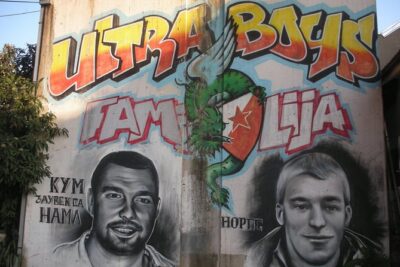
Football tour: Red Star and Partizan Ultras History
Read our review →
Full-Day Private Royal Heritage Tour to Oplenac With a Winery Visit
Read our review →Browse the lists this tour appears in