
Reviewed · CYCLING TOURS
Zagreb: 2.5-Hour Cycle Back to Socialism Tour
Zagreb changes character the moment you cross the Sava River. This 2.5-hour bicycle tour takes you from the grand old center into New Zagreb, where postwar apartment blocks, broad cycling paths, public art, and everyday city life tell a different story.
I like the easy contrast between Old and New Zagreb, and I like that the route includes the shady lakes of Bundek Park rather than sticking to monuments. The main thing to consider is the guide: several tours have been praised for clear, engaging history, but one recent booking found the explanation of socialist Zagreb and the 1990s war too thin.
Key points to know before you ride
- Crossing the Sava changes the whole city: The route moves from Zagreb’s historic center into its postwar housing districts.
- New Zagreb is the main subject: You’ll see how socialist planning shaped daily life, streets, apartment blocks, and public spaces.
- Bundek adds a calm green break: Lakes, shade, and open paths give the ride a pleasant pause.
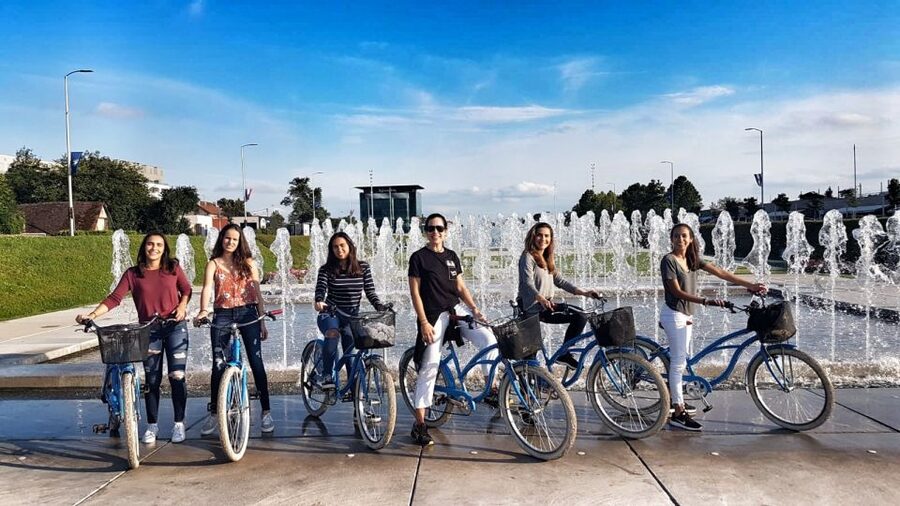
- You cover a lot by bicycle: The route reaches places that would take much longer on foot, including Zagreb Fair and the Sava riverfront.
- Guides make the difference: Roza and Ilona have received especially warm praise for lively, useful explanations.
- The ride suits many ages: Children and elderly adults are welcome, but the tour is not designed for wheelchair users or people with mobility impairments.
Why this route shows you a more useful Zagreb
Most first visits to Zagreb stay north of the railway station, among the cathedral, Upper Town lanes, cafés, and historic squares. That area deserves your time, but it is only part of the city. This ride takes you into the districts where much of modern Zagreb actually functions.
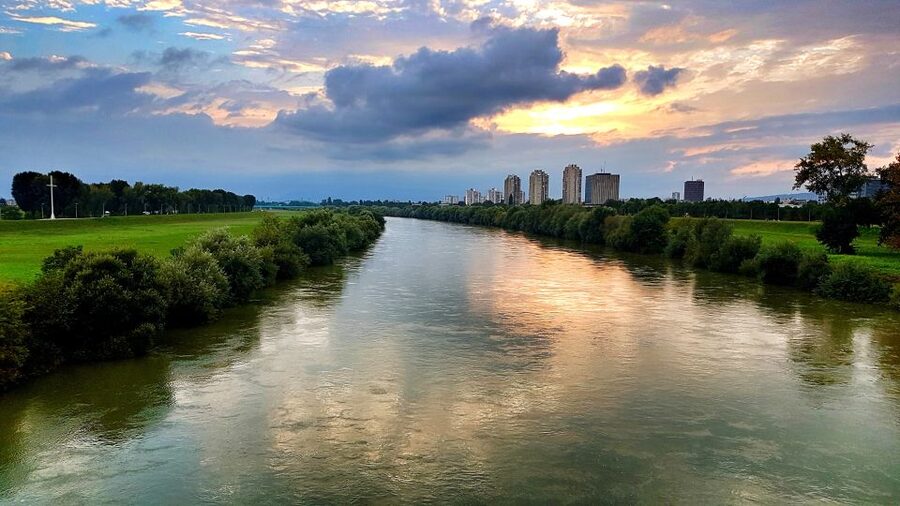
The key idea is the sharp shift after crossing the Sava. The Lower Town has formal squares, old institutions, and the Green Horseshoe parks. South of the river, New Zagreb reflects the city’s expansion after World War II, especially during the period of socialist Yugoslavia.
That makes the tour worthwhile even if you have already walked through central Zagreb. You are not simply seeing more streets. You are seeing how political ideas shaped housing, transport, open space, and public life.
The tour costs $57 per person. That is more than a basic bicycle rental, but you are paying for the bicycle, an English-speaking guide, and a route that connects several distant areas without requiring you to work out the directions yourself. I consider the price fair if you want context along with the ride. If you only want to pedal around a park, it is more than you need.
The advertised duration ranges from 150 minutes to three hours. The listed sightseeing portions add up to about two hours and 20 minutes, before allowing for riding between stops, pauses, and explanations. Check the selected starting time and expected length when booking.
A few more Serbia trips to weigh up
- Belgrade E-Bike Tour: Power Glide!
★ 4.5 · 112 reviews - Cycling the parks, ride through the ages
★ 5.0 · 21 reviews - Fruška Gora Bike Tour
★ 5.0 · 16 reviews
Starting at Trg bana Josipa Jelačića
You meet at Blue Bike Zagreb near Trg bana Josipa Jelačića, Zagreb’s main square. The office is in an alley indicated by the direction of the statue in the square, so allow a few minutes to find the exact entrance rather than arriving at the last second.
This is a sensible starting point. The main square is easy to reach and gives your guide a chance to orient you before the streets open up. You receive a bicycle, and a helmet is available but listed as optional.
The first part of the ride leads through the Lower Town. This section helps connect the familiar historic center with the less familiar districts ahead. You may spend part of it riding and part of it strolling through the Green Horseshoe, the chain of parks and formal spaces that frames central Zagreb.
Croatian National Theatre and the first city contrast
The Croatian National Theatre is one of the tour’s early stops. Its grand setting introduces the civic side of Zagreb, with architecture and public institutions that belong to the city’s older identity.
The stop also works as a practical warm-up. You are still close to the center, so the group can settle into the bicycles before the route becomes more open and spread out. The planned visit here takes about 30 minutes.
Do not expect a full theatre visit. This is a bicycle tour, not an indoor performance tour. The value comes from seeing the theatre as part of Zagreb’s public life and from hearing how the old center connects to the newer areas.
Croatian State Archives and the Green Horseshoe
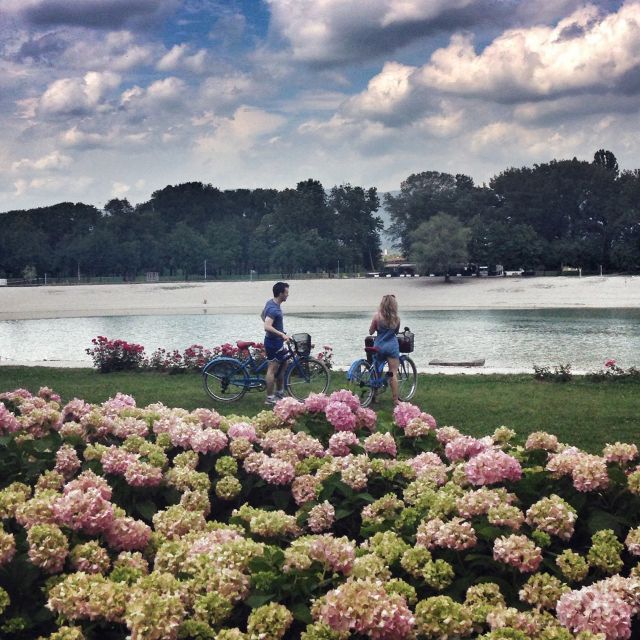
The Croatian State Archives follows, with about 15 minutes of cycling time listed for this part of the route. Together with the theatre and the nearby parks, it shows off the Lower Town’s orderly design.
This is where the tour’s history can become more than a string of dates. A good guide can explain why the city’s institutions, parks, and public buildings were arranged as they were, then set up the contrast with the broad residential districts across the river.
I would pay attention here, even if archives and formal architecture are not your main interests. The early stops give you the visual reference points needed to understand how much New Zagreb differs from the center.
Same riverbank, a completely different kind of day:
- From Belgrade: Novi Sad & Sremski Karlovci Full-Day Tour
★ 4.7 · 1,068 reviews - From Belgrade: Gems of Eastern Serbia Tour
★ 5.0 · 427 reviews - Northern Serbia: Sremski Karlovci and Novi Sad Full-Day Tour from Belgrade
★ 5.0 · 425 reviews - Day Trip from Belgrade: Gems of Eastern Serbia
★ 5.0 · 424 reviews
Crossing the Sava into New Zagreb
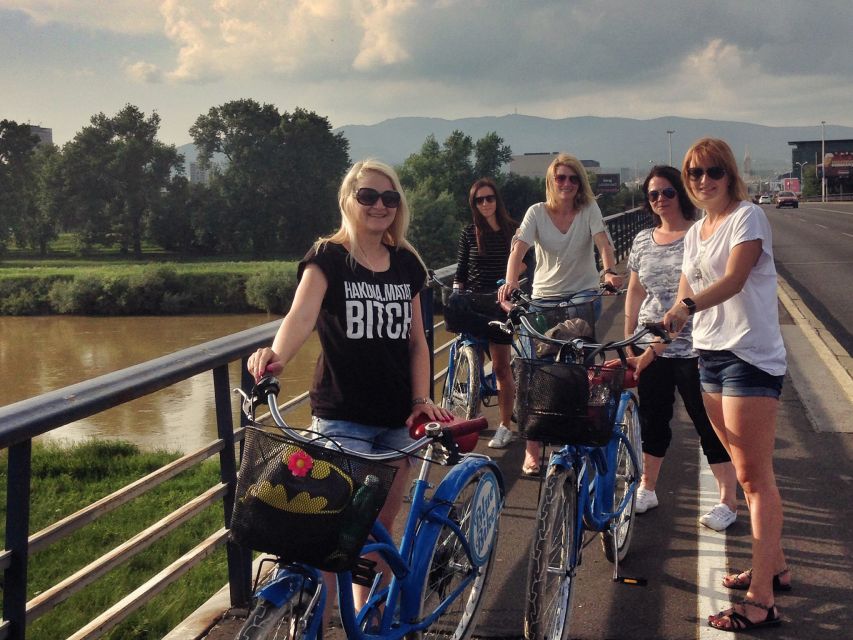
The Sava River is the turning point. The ride across it takes about 20 minutes in the itinerary, including the approach and explanation. Once you are south of the river, the mood changes quickly.
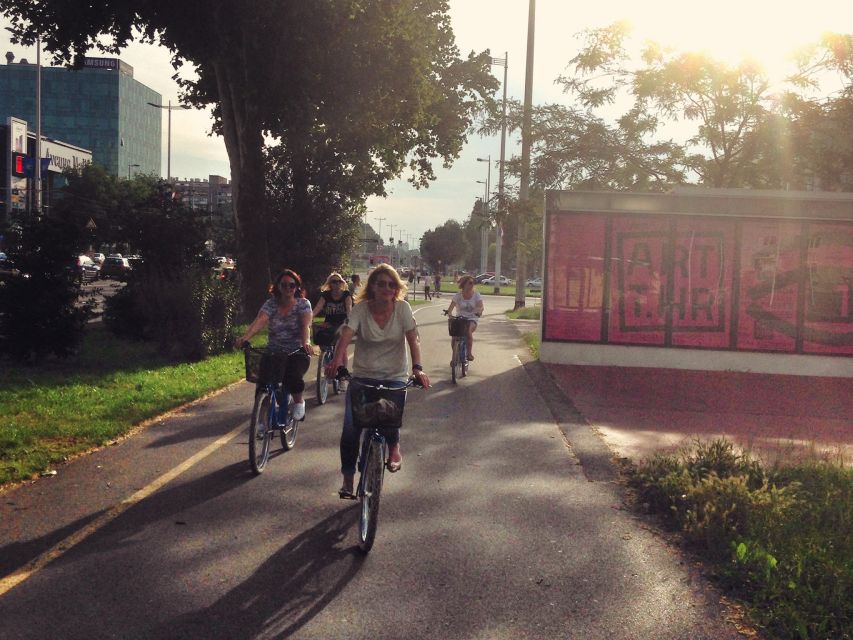
The route uses established cycling lanes, which makes this more practical than trying to improvise a ride through a busy unfamiliar city. Still, cycling conditions can vary, and you should be comfortable handling a bicycle in an urban setting. The tour is not suitable for wheelchair users or people with mobility impairments.
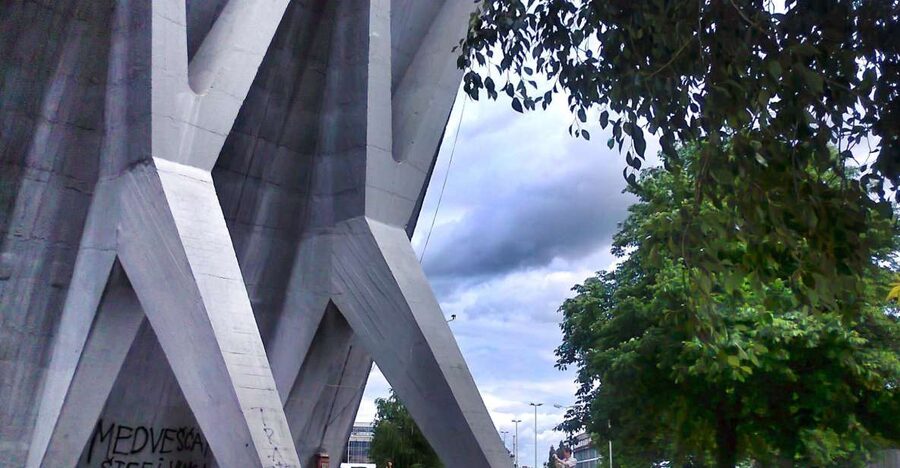
Across the river, the guide’s explanation matters most. New Zagreb is closely linked to the post-World War II expansion of the city and to socialist planning. Large housing areas were built for a growing population, and their scale is very different from the compact streets around the main square.
You will not get the same old-stone atmosphere here. Instead, look at the relationship between apartment blocks, open areas, roads, and public services. The point is not to label the district as pretty or ugly. It is to understand why it looks the way it does and how the social system influenced ordinary life.
Zagreb Fair and the postwar city
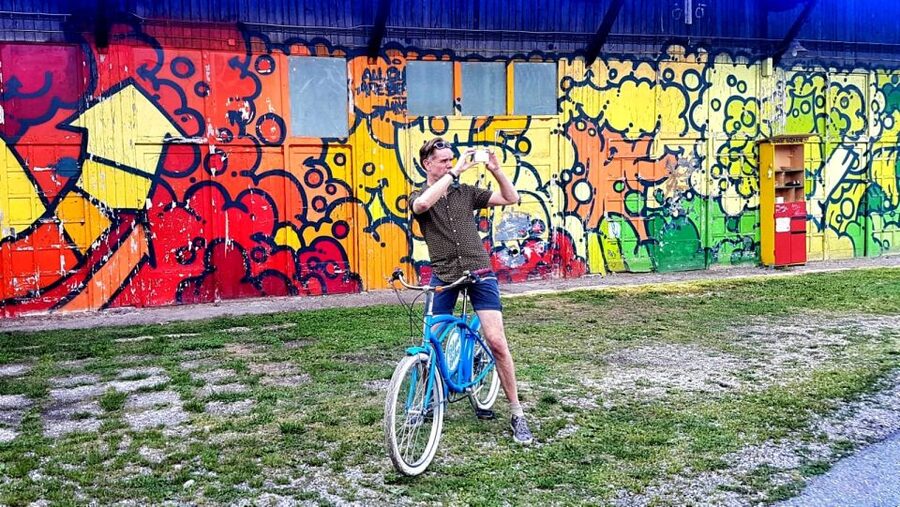
The ride continues toward Zagreb Fair, with about 20 minutes allocated to this section. The fairgrounds are another useful marker of the city’s modern development and its links with business, trade, public events, and international exchange.
This part may appeal most to visitors who want to see Zagreb outside the postcard center. You get a sense of the city as a working place rather than only a collection of monuments.
The title of the tour promises a look back at socialism, but the strongest experience depends on how much interpretation your guide provides. Roza has been praised for making the history interesting and for filling the ride with useful information. Ilona has also been singled out for helping explain everyday life in Zagreb and for making the bicycle an efficient way to see more.
One recent tour was criticized because the guide gave little information about socialist Zagreb and offered only brief, inaccurate comments about the 1990s war. That is an important caution. The route itself is strong, but the historical depth can vary. If this subject is your main reason for booking, ask questions and make clear that you want the social and political background, not only a ride through New Zagreb.
Bundek Park brings a quieter pace
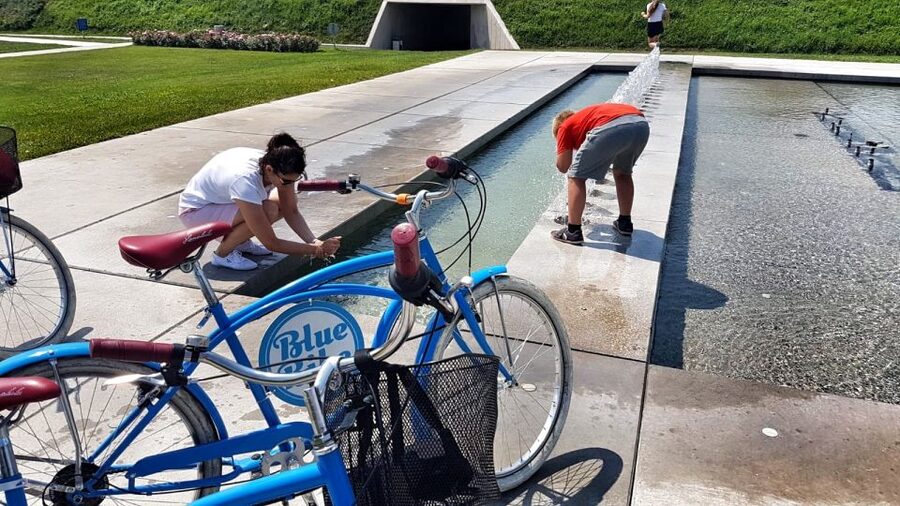
Bundek is one of the best stops on the route. The park has lakes, shade, and a peaceful feel that gives you a break from roads and apartment districts. The planned cycling time here is about 20 minutes.
I like this stop because it broadens the picture of New Zagreb. The district is not only concrete and large blocks. It also includes places for walking, rest, leisure, and family time.
The park gives your guide room to explain how public space works in a planned city. It also gives you a chance to enjoy the bicycle itself. You can move farther than you would on foot, but you are not trapped in a vehicle passing everything behind glass.
The family angle is useful. The tour is described as suitable for children and elderly adults, and one recent family particularly enjoyed the ride. That does not mean every child will find the historical talk engaging, but the route includes enough parks and open areas to keep the outing from feeling like a lecture on wheels.
Contemporary art in New Zagreb
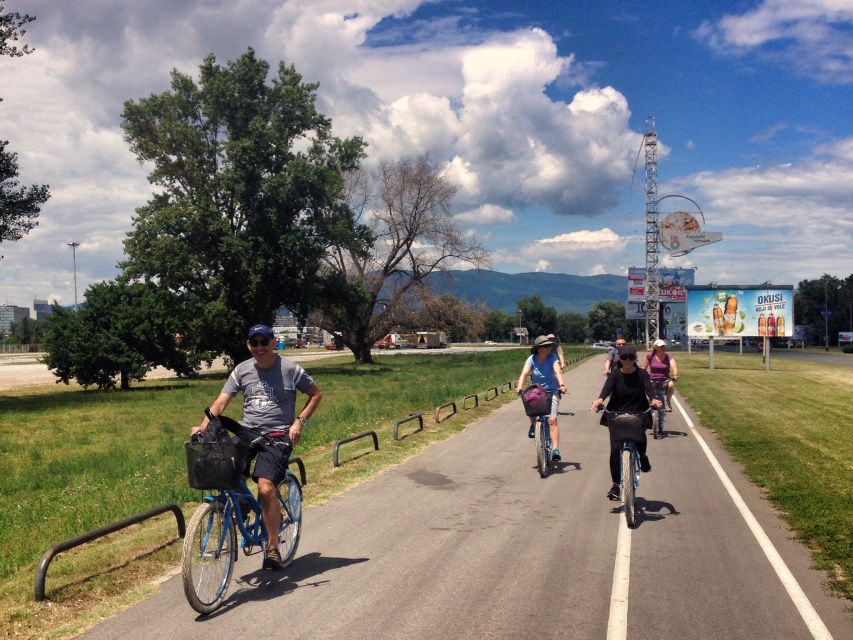
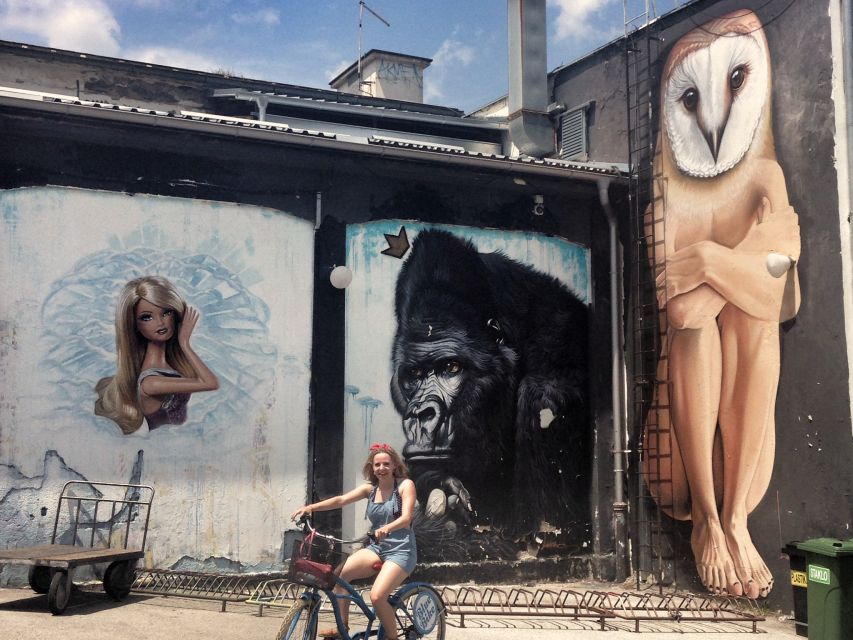
New Zagreb is also tied to Croatia’s contemporary art scene. The route passes the area of the Contemporary Art Museum and the city’s vivid street-art zone, adding a modern visual layer to the socialist-era setting.
This is one of the tour’s more interesting combinations. Public art and street art can show how the district’s identity has changed over time. What began as a planned residential area now also serves as a setting for current artistic expression.
The supplied route does not promise an indoor museum visit, so do not book this expecting a museum admission or a guided gallery tour. You are seeing the museum area and the surrounding city as part of a broader ride.
That distinction matters. If you want a full museum experience, plan a separate visit. If you want to understand how contemporary art sits within New Zagreb’s older urban plan, this stop adds useful context.
Returning through the Botanical Garden
After New Zagreb and Bundek, the ride returns toward the central districts. The Botanical Garden of the Faculty of Science at the University of Zagreb receives about 15 minutes of cycling time.
The garden belongs to the calmer, greener side of central Zagreb and helps ease the transition back from the broad southern districts. It also fits naturally with the Green Horseshoe theme, showing how parks shape the city’s central structure.
As with the other stops, the tour appears to view the garden from the route rather than offering a long botanical visit. You should treat it as part of the city ride, not as a substitute for spending an afternoon inside the garden.
King Tomislav Square and Zrinjevac
King Tomislav Square comes next, with about 10 minutes listed for the ride. Its broad open setting and central position make it a useful point for reconnecting New Zagreb with the historic core.
The final park stop is Zrinjevac, another 10-minute section. Here the atmosphere returns to the elegant Lower Town, with formal greenery and the architectural character that most first-time visitors associate with Zagreb.
This ending works well because you see the city in reverse. At the beginning, the old center was your starting point. After crossing the river and seeing postwar Zagreb, you return with a clearer sense of how the two halves relate.
The ride finishes back at Blue Bike Zagreb. From there, you are already in a handy position for more central sightseeing, dining, or an evening performance. One person specifically enjoyed the ballet during a visit, so the theatre district makes a natural follow-up if your schedule allows.
What the bicycle adds to the experience
You could visit some of these places independently, but the distances make a bicycle useful. Walking from the main square to New Zagreb and Bundek would take much longer and would leave less time for stopping to look around.
The bike also lets you feel the city’s changes physically. You pass through formal parks, cross the river, follow cycling lanes, reach large residential areas, and return through the central green belt. That sequence is harder to grasp from a taxi.
The tradeoff is that cycling limits how long you linger at each site. The itinerary includes many stops, so most are short. If you prefer one museum or landmark at a slow pace, this will feel rushed. If you like connecting several parts of a city in one outing, the pace is productive.
The helmet is optional, according to the tour details. I would still use it, especially on a route that crosses city streets and covers several districts. Children and older adults can join, but each participant should be able to ride and manage the movement of a bicycle.
Guide quality and the history you should expect
The English-speaking guide is the most important variable. Recent guides named Roza and Ilona have been praised for warmth, clear explanations, and making the route useful for understanding real life in Zagreb. The overall score is 4.6 from 25 ratings, which suggests the experience is usually well received.
I would keep expectations precise. This is not a full academic course on Yugoslavia, socialism, or the Croatian War of Independence. It is a city bicycle tour built around those subjects.
The best version gives you a practical explanation of why New Zagreb was built, how the social system affected housing and society, and how the area functions today. The weaker version may feel like a pleasant ride with only surface-level history. Ask direct questions if the talk stays general, especially about the postwar period and the 1990s.
The tour is offered in English, and a private group is available. A private booking may be worth considering if you want to set the pace or focus the conversation on architecture, socialism, contemporary art, or everyday life.
Is $57 a fair price?
At $57 per person, the value rests on three things: the bicycle, the time saved by covering long distances, and the guide’s interpretation. The bicycle alone would not justify the cost, but the route connects Old Zagreb, the river, New Zagreb, Bundek, the museum area, and several central parks in one outing.
I would book it early in a Zagreb stay, not on your final afternoon. The ride gives you a useful city map in your head and may help you decide which southern areas deserve a longer return visit.
Free cancellation up to 24 hours before the tour and reserve-now, pay-later booking make it easier to fit into a changeable schedule. Starting times vary, so check availability for your date.
Who should book this ride?
Book it if you want to see more than Zagreb’s historic center, enjoy moderate city cycling, and care about how ordinary neighborhoods developed. It is especially useful for a first visit, because you get Old Zagreb and New Zagreb in one continuous route.
Families can consider it, since children are accepted and the route includes parks. Older adults who are comfortable on a bicycle can also join. People with mobility impairments or wheelchair users should choose another way to explore.
I would also recommend it to anyone interested in architecture, urban planning, public space, or the social history of former Yugoslavia. Just keep in mind that the guide’s historical detail may vary, and one disappointing experience focused mainly on cycling rather than the advertised socialist theme.
Should you book the Zagreb Socialism bicycle tour?
Yes, if your idea of a good city tour includes the places where Zagreb’s daily life happens, not only its prettiest monuments. The Sava crossing, New Zagreb housing districts, Bundek Park, street art, and return through the Green Horseshoe create a strong, practical route.
Book with realistic expectations. You are getting a guided city ride with historical discussion, not a museum tour or a guaranteed specialist lecture on socialism and the 1990s war. If you enjoy moving at a steady pace and want to understand Zagreb’s modern shape, $57 is a sensible investment. If you need deep historical detail, consider a private group and ask for that focus when arranging the tour.
FAQ
Where does the Zagreb bicycle tour start?
The tour starts at Blue Bike Zagreb, at Trg bana Josipa Jelačića 15. The office is in an alley near the main square, where the statue points toward it.
How long does the tour last?
The stated duration is between 150 minutes and three hours. Starting times vary, so check availability for your chosen date.
What language is the tour offered in?
The tour is offered in English with a live English-speaking local guide.
Is a bicycle provided?
Yes. A bicycle is included in the tour price.
Is a helmet included?
Yes, a helmet is available, but its use is listed as optional.
Can children and older adults join?
Yes. The tour is described as suitable for children and elderly adults, provided participants can ride a bicycle.
Is the tour accessible to wheelchair users?
No. The tour is not suitable for wheelchair users or people with mobility impairments.
Just added around Serbia
- Zlatibor tour – Gold gondola, Stopic cave, Sirogojno & falls★ 5.0 · 3 reviews
- Mokra Gora and Tara National Park Full-Day Private Tour★ 5.0 · 3 reviews
- UNESCO tour★ 5.0 · 3 reviews
- Private Wine Tasting by Party in Belgrade★ 5.0 · 3 reviews
- Zica and Studenica Monasteries Private Day Tour from Belgrade★ 5.0 · 4 reviews
- Stara Plana Day Tour★ 5.0 · 4 reviews
- Urban & Alternative Belgrade tour★ 5.0 · 4 reviews
- Belgrade Bike Tour: Be a local in the hood of Belgrade!★ 5.0 · 5 reviews
Cycling Tours, compared.

Belgrade Bike Tour: Be a local in the hood of Belgrade!
Read our review →Browse the lists this tour appears in