
Reviewed · BELGRADE CITY TOURS
Half-Day Sightseeing and Walking Tour of Belgrade City
Belgrade makes sense when you connect its Serbian royal past with its Ottoman and Austrian layers. This small-group walk does that well, moving from St. Mark’s Church and the National Assembly through Terazije, Knez Mihailova, and the fortress above the meeting point of the Sava and Danube.
I like the six-person maximum, which gives Aleksandar Bastic or Milica room to answer questions and adjust the pace. I also like the coffee stop, since coffee in Serbia is a ritual, not just a quick drink. The main drawback is that the advertised route can feel short on detailed fortress time, and traffic noise may make some explanations hard to hear.
Key points at a glance
- A compact history lesson: Connects medieval Serbia, royal Belgrade, Ottoman rule, World War I, and modern city life.
- Small groups only: The tour accepts a maximum of six people, making conversation and questions easier.
- Coffee is included: Expect a Serbian coffee ritual during the walk, not simply a drink handed over on the move.
- Strong first-day choice: The route covers central landmarks and ends near Knez Mihailova, useful for continuing on your own.
- Mostly an exterior sightseeing walk: Admission is listed as free at every stop, but the amount of interior access can vary.
- Check the language carefully: The experience is offered in English, while one booking issue involved Russian-language expectations not being met.
Why this Belgrade walk works as a first introduction
At $38.34 per person, this is priced as a modest city orientation rather than an all-day historical expedition. You are paying for a local guide, a carefully linked route, conversation in a very small group, and coffee, not for museum tickets, lunch, or transportation.
That makes the value strongest at the beginning of a Belgrade visit. You can use the walk to learn the city’s basic pattern, then return to the places that catch your eye. The finish at 56 Knez Mihailova puts you near one of Belgrade’s main pedestrian streets, so you can continue with lunch, shopping, or a visit to the fortress area.
The published duration is about two to three hours, though one reported Russian-language outing lasted four hours. I would plan for the stated half-day window and keep the rest of your schedule flexible. The route includes ten stops, so the guide has to balance broad context with time at each site.
The tour begins at 11:00 am on Kosovska 47. You do not need to arrange a bus or taxi between stops because this is a walking experience. That is a plus in central Belgrade, where the links between the sights are part of the story, but you should wear comfortable shoes and expect city sounds along the way.
More belgrade city tours in Belgrade:
- Taxi to/from Belgrade Airport to/from Belgrade City Center
★ 5.0 · 241 reviews - Belgrade Sightseeing Half-Day Trip Old and New Belgrade
★ 4.5 · 71 reviews - Belgrade sightseeing by car
★ 5.0 · 40 reviews
St. Mark’s Church and the story of Stefan Dušan
The first stop is Crkva Svetog Marka, or St. Mark’s Church. The key historical detail here is the tomb and sarcophagus of Stefan Uroš IV Dušan, the medieval Serbian ruler who was king from 1331 to 1346 and emperor from 1346 to 1355.
Dušan is presented as Serbia’s greatest medieval ruler, and this stop gives your guide a useful opening to explain how Serbian power once reached across parts of the Balkans. You are not simply looking at a church building. You are starting with the question of how Serbia understood its place in the region.
The listed visit lasts about 20 minutes, with no admission charge. One practical point matters here: a child in shorts was told that long trousers were needed to enter the churches. If you are visiting with children, pack clothing that covers the knees. The guide even helped one family by sharing a coat, but it is better to arrive prepared.
Royal Belgrade at the Old Palace and National Assembly
The Old Palace brings the story forward to the nineteenth-century Serbian monarchy. Built from 1882 to 1884 for the Obrenović dynasty, it now houses the City Assembly of Belgrade and sits at the corner of Kralja Milana and Dragoslava Jovanovića streets.
The building is associated with academic architecture, a formal nineteenth-century style that aimed to convey order and status. Your guide can help you read the facade as political messaging. This was a period when Serbia was shaping its institutions and presenting itself as a modern European state.
The stop is scheduled for about 30 minutes. That is a generous portion of the walk, useful if you want context about the royal family and the changing capital. Do not expect a full palace tour, since admission is listed as free but interior access is not specifically promised.
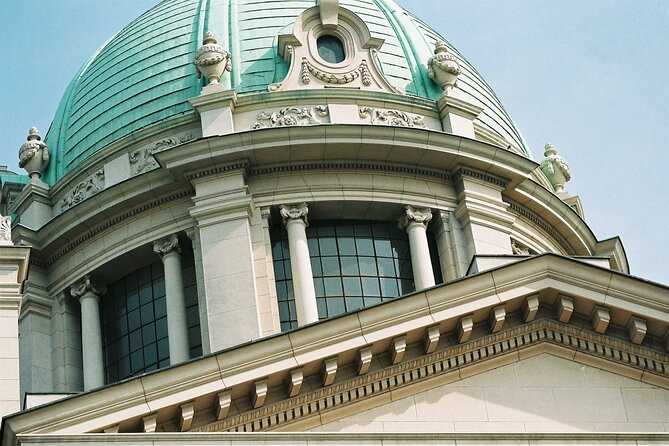
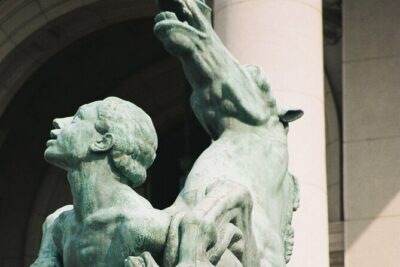
The National Assembly of the Republic of Serbia follows as another major civic building. Construction took almost 30 years, delayed by money problems, wars, and disagreement within society. The sculpture group called Play of the Black Horses adds a memorable visual detail to the setting.
This is a good place to see how Belgrade’s public buildings carry political meaning. The route does not treat the city as a collection of pretty facades. It links architecture to monarchy, government, conflict, and national identity.
Terazije, Prince Mihailo, and the pedestrian city
At Terazije Fountain, you get a smaller but useful piece of urban history. The fountain was erected in 1860 as both a practical and decorative feature.
The stop lasts about 15 minutes. That may sound brief, but a short explanation here helps you notice how a water source could also become a civic marker. It is the kind of detail easy to miss when walking alone.
The Prince Mihailo Monument offers another view of Serbia’s political story. Italian sculptor Enrico Pazzi created the monument, while Konstantin Jovanović designed its decorative reliefs. Prince Mihailo Obrenović is central to the later handover of Belgrade’s fortresses from Ottoman control, so this monument prepares you for the next part of the walk.
Knez Mihailova then shifts the mood. This broad pedestrian street runs through central Belgrade toward Kalemegdan Fortress. It is a natural place to pause and watch the city at street level, with shops, cafes, and people moving between the central districts and the park.
I like this section because it gives you a break from formal monuments. You get the public squares and national symbols, then a more everyday part of Belgrade. The guide can also offer practical ideas for restaurants, nightlife, and other activities, which is especially useful if this is your first day in town.
A few more Belgrade trips to weigh up
- Belgrade: 3-Hour Small Group Walking Tour
★ 5.0 · 180 reviews - Belgrade Private Walking Tour with a Local
★ 5.0 · 19 reviews - Belgrade City Walk, Gathering and Sightseeing
★ 5.0 · 19 reviews - Belgrade Old City 2-Hour Walking Tour
★ 5.0 · 15 reviews
Kalemegdan Park and the fortress above two rivers
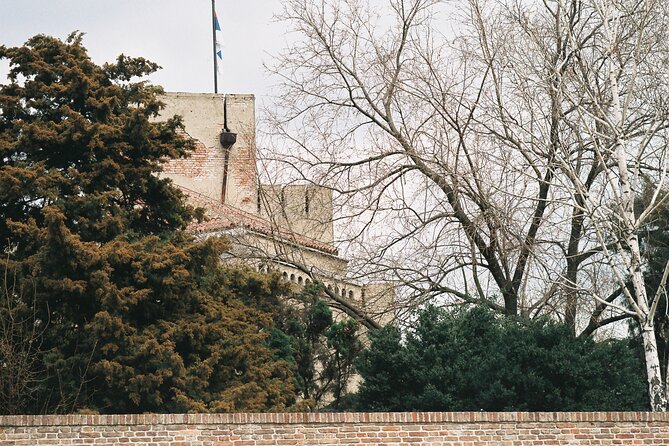
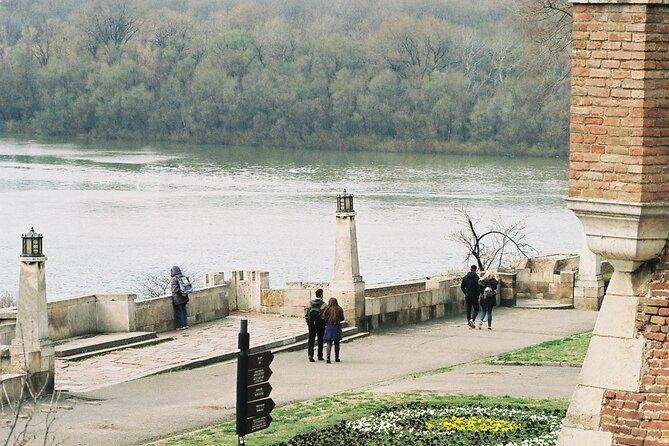
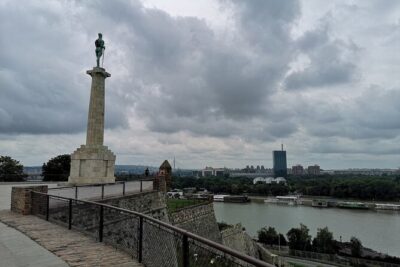
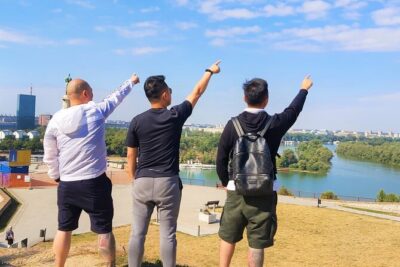
Kalemegdan is the longest stop, scheduled for about 45 minutes. The site occupies a ridge above the confluence of the Sava and Danube, a position that made it useful for watching and controlling the surrounding plain.
People lived on this ridge as far back as prehistoric times. That single fact helps explain why the fortress area is so important: this was not chosen by accident. Its position mattered to prehistoric communities, medieval Serbian rulers, Austrians, Ottomans, and later residents of Belgrade.
The fortress itself is the central historical stop of the tour. You can expect your guide to explain the strategic role of the site and the succession of powers that shaped it. The setting also gives you some of the city’s best open views, though the supplied details do not promise a formal viewpoint stop or entry into every section.
Here is the main limitation to keep in mind. A four-star assessment described the walk around the main highlights as easy, but noted that traffic noise sometimes caused missed explanations. Another assessment wanted more information about Kalemegdan Fortress. If the fortress is your main reason for booking, tell the guide early that you want as much detail there as possible.
The walk through the park also means you are outdoors for much of the experience. Late autumn sunshine made one outing especially pleasant, but conditions can change. Bring a layer, and do not expect the entire tour to feel like a quiet museum visit.
The Clock Tower and Ottoman Belgrade
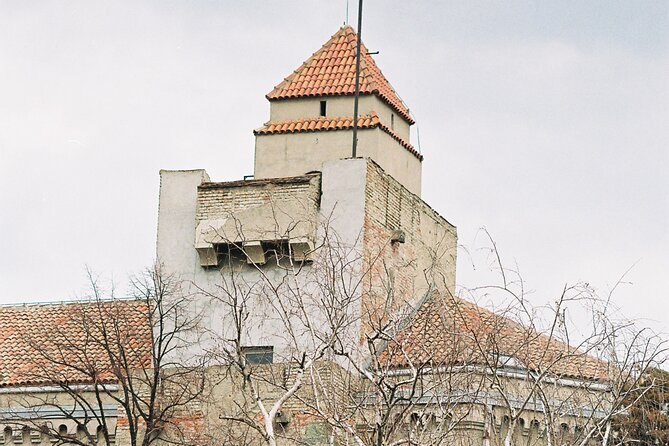
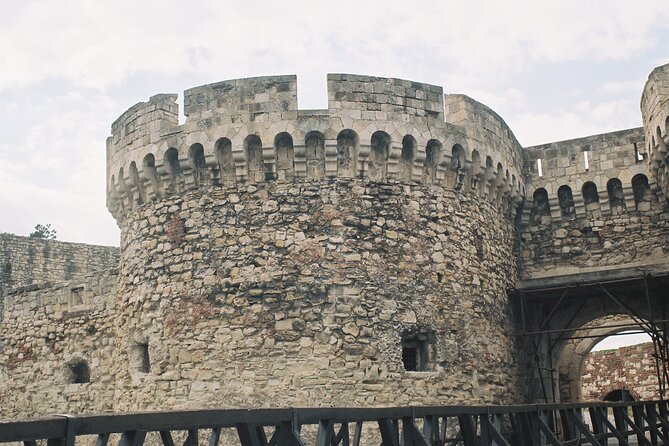
Inside the fortress area, the Clock Tower, or Sahat Kula, adds an Ottoman-era layer. Construction began under Austrian rule and was completed under Turkish rule between 1740 and 1789.
That overlap is exactly why a local guide adds value. Belgrade’s past is not divided into neat boxes where one empire leaves and another begins without complications. A building can carry the marks of two ruling powers, and the guide can place it in the larger story of the city.
The scheduled stop is about ten minutes. This is enough for a focused explanation and photographs, but not a long architectural study. If you want to explore every fortress structure slowly, plan to return after the tour.
French friendship and the return of the city keys
The Monument of Gratitude to France sits just outside Kalemegdan Fortress. It commemorates friendship and cooperation between Serbia and France during World War I.
This stop broadens the tour beyond medieval and Ottoman history. Serbia’s modern identity was also shaped by wartime alliances and international relationships. The monument gives your guide a chance to explain how Belgrade remembers support from abroad.
The final historical stop is the place where the city keys were handed to the Serbs in 1867. On April 6 of that year, the Ottoman Turks gave the keys to several Serbian fortresses to Prince Mihailo Obrenović.
The event marked an important step toward Serbia’s later international recognition at the Treaty of Berlin in 1878. That is a powerful ending because the walk has moved from medieval imperial ambition to royal state-building, Ottoman withdrawal, and international recognition.
The official finish is in front of the Belgrade City Library at 56 Knez Mihailova, listed as Kneza Mihaila 54a. This location is practical. You are already near the pedestrian center, and you can easily continue exploring without arranging a ride.
The guide makes the difference
The strongest part of this experience is the guide-led storytelling. Aleksandar Bastic is described as friendly, personable, and able to explain events affecting Belgrade, Serbia, Yugoslavia, and the wider Balkan region. He is also comfortable discussing sensitive questions about politics and national identity.
That matters in Belgrade. The city’s story includes medieval expansion, Ottoman and Austrian rule, royal dynasties, world wars, Yugoslavia, and present-day Serbia. A list of dates will not help much unless someone connects them.
Aleksandar also gives practical suggestions for restaurants, nightlife, and other things to do. Milica has led the walk as well, with a friendly and professional style. The guide may adapt the route or add a detour, particularly when the group is very small.
Solo visitors should find the format comfortable. One January outing had only one participant, which allowed the guide to make the experience more personal. A small group can also help if you have specific interests, such as royal history, Ottoman Belgrade, or modern politics.
There is one language issue to handle carefully. The experience information lists English, while one participant booked expecting Russian and found that the tour was conducted only in English. Another outing was conducted in Russian, so language availability may depend on the guide and date. If Russian is essential for someone in your group, confirm it directly before booking.
Coffee, pace, and practical planning
Coffee is included, and it is treated as a Serbian ritual. This is more than a refreshment between monuments. It gives you a slower moment to ask questions and discuss what you have seen.
Lunch is not included. Transportation is not included either, but no transport is needed between the listed stops. The meeting point is Kosovska 47, while the walk finishes near the Belgrade City Library on Knez Mihailova.
The group maximum is six people. Most people can participate, and service animals are allowed. The route is near public transportation, but the supplied details do not promise that every surface is fully step-free, so anyone with specific mobility needs should confirm before booking.
Free cancellation is available up to 24 hours before the 11:00 am start for a full refund. If the minimum number is not reached and the operator cancels, you are offered another date or experience, or a full refund.
Who should book this walk?
I would choose this tour if you have only a short time in Belgrade, want a structured first look at the center, or prefer history explained by a local rather than read from plaques. It also suits solo visitors and couples who value conversation over a large coach group.
Families can book it, but dress children appropriately for church visits. Anyone hoping for a long, detailed fortress exploration should treat this as an introduction and plan extra time at Kalemegdan afterward.
At $38.34, the price is fair for a two to three hour walk with a small group, an experienced local guide, and coffee. Book it if you want context, human stories, and a useful starting point. Skip it if you prefer to move at your own pace, need guaranteed Russian service, or want a full fortress tour rather than a broad overview.
FAQ
How long does the Belgrade walking tour last?
The stated duration is approximately two to three hours. One reported Russian-language outing lasted four hours, so you should allow some flexibility in your schedule.
Where does the tour begin and end?
The tour begins at Kosovska 47 in Belgrade at 11:00 am. It ends near the Belgrade City Library, at 56 Knez Mihailova, also listed as Kneza Mihaila 54a.
Is coffee included?
Yes. Coffee and/or tea is included, with the coffee presented as part of Serbia’s wider coffee ritual.
Are entrance tickets included?
Admission is listed as free at all ten scheduled stops. The information does not specifically promise interior access at every building, so ask the guide about church or building entry on the day.
What language is the tour offered in?
The experience is offered in English. Some information also describes a Russian-language outing, but one booking resulted in an English-only tour despite a Russian-language expectation. Confirm Russian availability directly if it is important to your group.
What is the cancellation policy?
You can cancel at least 24 hours before the local start time for a full refund. Cancellations or changes made less than 24 hours before the start are not refunded or accepted.
More Half-Day in Belgrade
- “Golden Standard” Private Half-Day Sightseeing Tour of Belgrade
★ 5.0 · 5 reviews
Just added around Belgrade
- Private Wine Tasting by Party in Belgrade★ 5.0 · 3 reviews
- Zica and Studenica Monasteries Private Day Tour from Belgrade★ 5.0 · 4 reviews
- Urban & Alternative Belgrade tour★ 5.0 · 4 reviews
- Belgrade Bike Tour: Be a local in the hood of Belgrade!★ 5.0 · 5 reviews
- The World of Pubs and Taverns: A Golden Mile★ 5.0 · 5 reviews
- Private Truffle‑Hunting Tour from Belgrade – Lunch with Wine★ 5.0 · 4 reviews
- Sidecar Tours Belgrade★ 5.0 · 5 reviews
- Private Day Trip/Transfer Tour from Belgrade to Timisoara★ 5.0 · 5 reviews
Belgrade City Tours, compared.
Belgrade Sightseeing Half-Day Trip Old and New Belgrade
Read our review →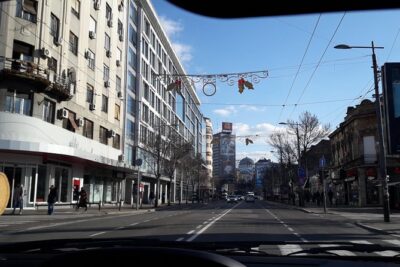
Browse the lists this tour appears in