
Reviewed · BELGRADE CITY TOURS
Belgrade City Walk, Gathering and Sightseeing
Belgrade packs centuries of Serbian, Ottoman, and Yugoslav history into a walk of about three hours. This tour links churches, royal buildings, grand squares, and the Sava-Danube meeting point, then adds a very Serbian finish: coffee as a social ritual, not just a quick caffeine stop. I like the clear city orientation and the small group, capped at six people. You get a useful first look at central Belgrade, then can return to the places that catch your eye.
Guide Aleksandar Bastic is the main reason this walk earns such strong marks, with a 4.8 out of 5 rating from 19 ratings and 95 percent recommending it. His explanations are praised for their warmth, local insight, and balanced tone. One caution: a past guest found the discussion too political and felt the route did not follow the advertised plan closely enough, so tell the guide early if sticking to the stated itinerary matters to you.
Key points to know before you book
- A compact route covers nine major sights, from St. Mark’s Church to the Victor monument above the Belgrade Fortress.
- The group is limited to six people, making it easier to ask questions and keep a relaxed walking pace.
- A Serbian coffee or tea is included, with Hotel Moskva’s café often serving as the memorable refreshment stop.
- The walk begins at 11:00 a.m. on Kosovska Street and ends near the Belgrade City Library on Knez Mihailova Street.
- No transportation is provided, so you need to reach the starting point and remain comfortable on foot for two to three hours.
- The tour suits first-time visitors best, especially if you want context before exploring Belgrade on your own.
Why this walk works as a first look at Belgrade
Belgrade is not a city you understand from a single postcard view. Its story runs through Serbian independence, royal dynasties, religious life, Ottoman rule, Yugoslavia, war, and modern urban life. This route gives you a working map of that story without asking you to spend an entire day on a formal museum program.
The route begins on Kosovska 47 at 11:00 a.m. and moves through central streets toward the fortress. The listed stop times add up to close to three hours, though the overall duration is given as two to three hours. I would plan for the full three hours, especially if you ask questions or the guide adapts the pace.
The six-person maximum is a real advantage. A large group can make a city walk feel like a moving queue, while this format should let you hear the explanations and speak directly with Aleksandar. Several ratings praise his ability to adjust to a guest’s interests, though the one negative account shows why it is wise to confirm your expectations at the start.
More belgrade city tours in Belgrade:
- Taxi to/from Belgrade Airport to/from Belgrade City Center
★ 5.0 · 241 reviews - Belgrade Sightseeing Half-Day Trip Old and New Belgrade
★ 4.5 · 71 reviews - Belgrade sightseeing by car
★ 5.0 · 40 reviews
St. Mark’s Church and the road to Serbian autonomy
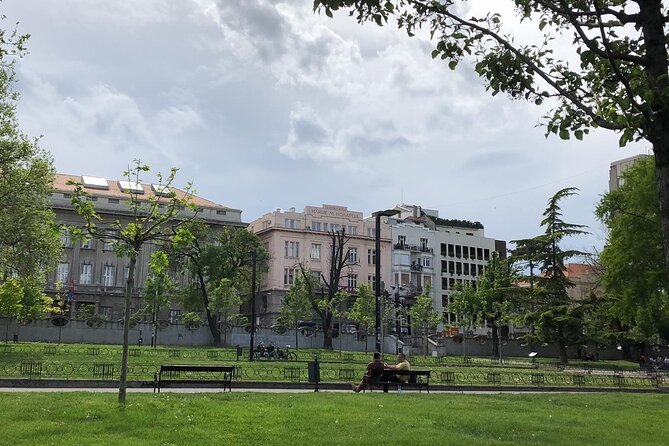
The first stop, Crkva Svetog Marka, gives you an immediate lesson in Serbia’s political and religious past. The church contains the tombs of Milan Obrenovic, the eldest son of Milos Obrenovic, and King Alexander I Obrenovic with Queen Draga.
The ground beneath the church also carries political weight. In 1830, an edict from the Ottoman sultan announcing Serbian autonomy within the Ottoman Empire was read here. That detail helps you see Belgrade as more than an old European capital. It was a place where Serbian self-rule was publicly declared and gradually built.
You receive about 20 minutes at the church, with admission included. The stop is less about a long interior visit and more about understanding why this location matters. Ask Aleksandar to connect the Obrenovic family, the autonomy announcement, and later Serbian statehood. That is the sort of question that can turn a quick church stop into a useful history lesson.
The National Assembly and Serbia’s difficult modern story
The House of the National Assembly is one of the grandest buildings on the route. Built between 1907 and 1936, it reflects the political ambitions and interruptions of the former Kingdom of Yugoslavia.
Its construction involved several architects, delays, financial problems, political upheaval, and changes to the original plans. Konstantin A. Jovanovic first received the assignment in 1892, but the project was postponed. Later, architect Jovan Ilkic took charge.
You spend about 15 minutes here, viewing the building from outside. Admission is not included, so do not expect a scheduled interior visit. The real value is the connection between architecture and politics. The building’s long construction period mirrors the changing Serbian and Yugoslav states around it.
I like this stop because it prevents the tour from becoming a simple list of pretty façades. Aleksandar can explain how a government building reflects the confidence, uncertainty, and changing identity of the country that built it.
The Old Palace and the Obrenovic dynasty
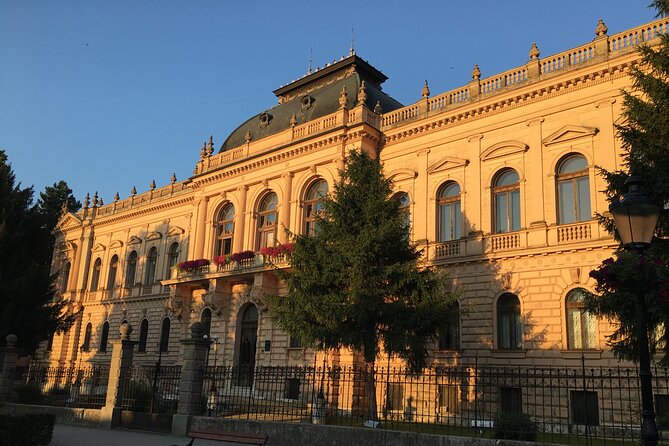
The Old Palace sits at the corner of Kralja Milana and Dragoslava Jovanovica streets. Aleksandar Bugarski designed it, and construction took place from 1882 to 1884 for the Obrenovic royal dynasty.
The building now houses the City Assembly of Belgrade. Its exterior follows the academic style popular in 19th-century Serbia, with the formal look expected of a royal residence and government building.
This is a short 15-minute stop with free admission. Since the route does not promise a full palace tour, think of it as an architectural and historical pause. It fits neatly with the earlier visit to St. Mark’s Church, helping you trace the Obrenovic family through both religion and government.
For first-time visitors, this part of the walk is useful because it puts several central landmarks into one mental map. You will know where the royal and parliamentary buildings sit before returning to explore the area independently.
A few more Belgrade trips to weigh up
- Belgrade: 3-Hour Small Group Walking Tour
★ 5.0 · 180 reviews - Half-Day Sightseeing and Walking Tour of Belgrade City
★ 5.0 · 37 reviews - Belgrade Private Walking Tour with a Local
★ 5.0 · 19 reviews - Belgrade Old City 2-Hour Walking Tour
★ 5.0 · 15 reviews
Hotel Moskva and the Serbian coffee ritual

Hotel Moskva is one of the most appealing stops for anyone who likes historic hotels and everyday local customs. Opened in 1908 on Terazije Square, this 123-room hotel is known for its Russian Secession style and is protected as a cultural monument.
Its café, restaurant, and spa have hosted famous names including Albert Einstein and Robert De Niro. You do not need to stay there to appreciate the building. The café gives the tour a more relaxed rhythm after the formal architecture of the palace and assembly.
Coffee or tea is included, and this is more than a standard refreshment. The tour frames Serbian coffee as a ritual, a social pause with its own place in local life. One rating calls the coffee at Hotel Moskva the highlight of the walk, and I can see why. It gives you a chance to sit, talk, and ask Aleksandar about customs beyond the official dates and buildings.
The stop lasts about 15 minutes. Admission to the hotel itself is not listed as included, but the complimentary drink is. If you care most about the café experience, ask at the start how the refreshment stop fits into the day’s route.
Republic Square, where Belgrade meets itself
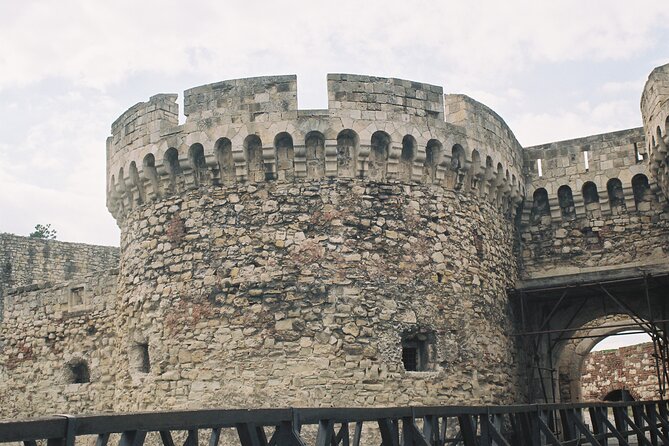
Republic Square is the city’s main meeting point. It occupies ground where gates once led into Belgrade, linking the modern public square to the older fortified city.
The square is a good place to pause and watch how Belgrade functions today. People cross through it, meet friends, and use it as a reference point for the central city. The tour allows about 15 minutes here, with admission not applicable.
This is not a stop that requires a long formal explanation. Its value comes from orientation. After the tour, you can use Republic Square to place the National Theatre, nearby streets, and the pedestrian center on your own map. If you plan to explore central Belgrade independently, this is one of the most practical parts of the walk.
The itinerary also promises discussion of Serbian roots, religion, mentality, customs, and heritage. Those subjects can make the square more interesting than its simple appearance suggests. They also explain why this tour depends so much on the guide’s approach.
Nebojsa Tower and Serbian customs
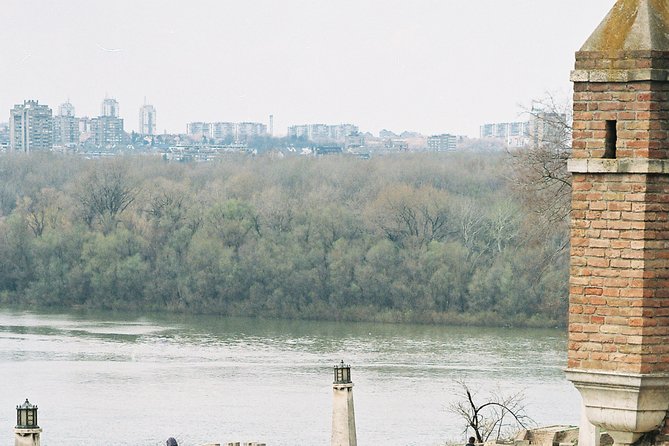
Nebojsa Tower brings the route closer to the old defensive heart of Belgrade. The stop lasts about 25 minutes and admission is listed as free.
The focus here includes customs and celebrations found in Serbia. That shift is welcome. A good city walk should explain how people live, not only who built a palace or fought a battle. Use this section to ask about religious traditions, family celebrations, and the customs that shape Serbian identity.
The supplied information does not promise a full interior tour or a detailed museum program inside the tower. Treat the stop as a guided introduction rather than a lengthy visit. If you want to study Nebojsa Tower in detail, you may need to return later.
The Monument of Gratitude to France in Kalemegdan
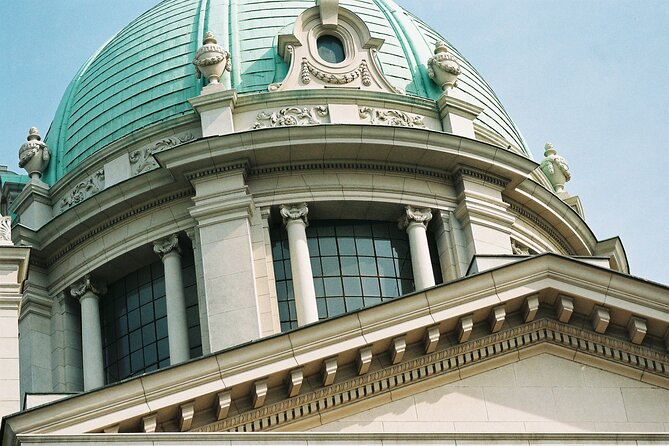
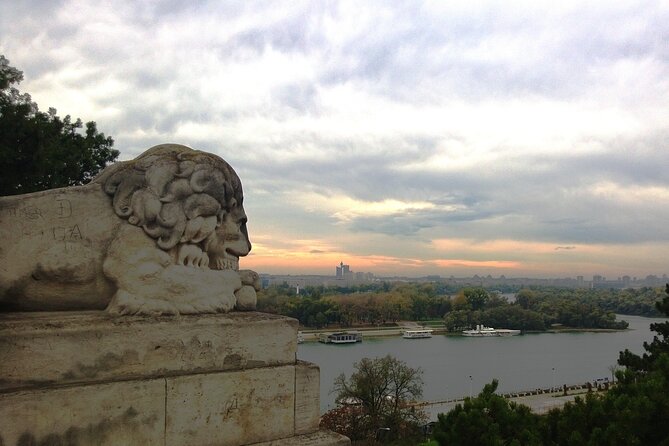
The Monument of Gratitude to France sits at the end of the main alley through Kalemegdan Park. Sculptor Ivan Mestrovic created it, and it was erected in 1930.
The monument gives the guide another chance to explain Serbia’s international relationships and the memory of wartime support. Its setting in the park also marks the transition from central streets to Belgrade’s historic fortress area.
The stop is brief, about 10 minutes, and admission is not included. You will get the most from it if you look at both the sculpture and its position within Kalemegdan. The walk is not simply taking you to isolated sights. It is showing how monuments, parks, fortifications, and city views work together.
Kalemegdan Park and Belgrade Fortress
The longest stop is Kalemegdan Park and Belgrade Fortress, with about 45 minutes. This is the visual high point of the walk, where the Sava and Danube meet below the city.
The fortress consists of the old citadel and the surrounding park. It forms the historic core of Belgrade and sits within the modern Stari Grad municipality. That mix is what makes the area so useful for orientation: you can look across the rivers, then turn back toward the streets and buildings you have already seen.
Fortress grounds offer the broadest sense of Belgrade’s position. The rivers are not background decoration. They help explain the city’s long strategic importance and why this high ground became its central defensive site.
Admission to the park and fortress is free. The route does not include transportation, so reaching this point means walking the full way from the central stops. A gentle pace is reported, but you should still wear practical shoes. The tour lasts two to three hours, and nearly three hours on foot can feel longer in poor weather.
One rating specifically notes that the walk remained enjoyable in grey skies and light rain because Aleksandar kept the explanations lively. Still, rain can affect your comfort and the views, so check the forecast and bring suitable clothing.
The Victor monument and the best final view
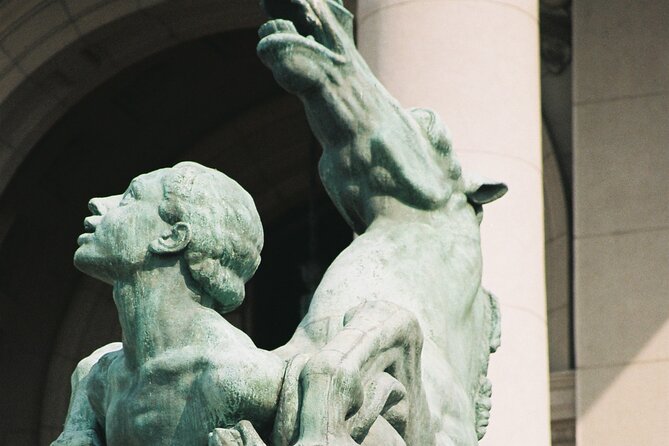
The final listed stop is Pobednik, or the Victor monument, one of Belgrade’s most recognizable symbols. Ivan Mestrovic created the figure, which holds a sword in the right hand and a falcon in the left. The sword represents war, while the falcon represents peace.
The monument was first imagined as part of a fountain planned for Terazije Square. It was intended to honor the Serbian army’s victory in the Balkan Wars. Work began before the First World War, but the project took an unusually long time to reach its final form.
You get about 15 minutes here, with admission not included. The statue’s open setting makes it an especially good place for a final explanation of Serbian national memory. It also brings together several themes from the walk: conflict, independence, political change, and the way public monuments shape a city’s identity.
From this area, you can appreciate why the fortress is the right ending. The tour has moved from churches and royal buildings to the point where Belgrade’s rivers and defensive position come into view.
How much value do you get for $38.41?
At $38.41 per person, this is not the cheapest way to stroll through Belgrade, since many of the outdoor sights are free. You are paying for the guide’s interpretation, the compact route, the small group, and the included coffee or tea.
That price makes sense if you want context. Without a guide, you can certainly see Republic Square, Hotel Moskva, Kalemegdan, and the Victor monument. You may not connect the Ottoman autonomy announcement, the Obrenovic dynasty, Yugoslav parliamentary history, Serbian customs, and the symbolism of the Victor in one short walk.
The six-person limit improves the value. It gives you a better chance to ask questions and avoid the stop-and-start feel of a large group. The main question is how much you care about guided history. If you prefer wandering alone and reading signs at your own pace, you may find the fee harder to justify.
The coffee stop also makes the price easier to accept. It is not a full meal or a separate tasting, but it adds a local social element that a standard sightseeing route often misses.
What to know about Aleksandar Bastic’s guiding style
The strongest praise centers on Aleksandar’s enthusiasm, clear explanations, local knowledge, and ability to share small facts that do not always appear in a basic guidebook. His love for Serbia comes through, and several ratings describe the walk as both informative and personal.
His style also appears conversational. One person appreciated being able to exchange facts about different countries, while another valued the balanced treatment of Serbian history. That makes this a good fit if you enjoy asking questions rather than simply following a script.
There is one important qualification. A past participant felt the tour became more political than historical and that the guide did not follow the planned route closely. I would handle this simply: at the start, say that you want the advertised sights covered, and mention if you prefer a mostly historical, cultural, or political discussion. Clear expectations should help.
Who should book this Belgrade city walk?
I would choose this tour for a first or second day in Belgrade. It gives you a practical map of central sights and helps you decide where to return. It is also a good match for solo visitors or couples who want a small social setting without joining a large group.
You will get the most from it if you enjoy history, architecture, local customs, and conversation. The tour is conducted in English, confirmation arrives at booking, service animals are allowed, and it is near public transportation. Most people can participate, but you should be ready to walk for up to three hours.
It is less suitable if you want extensive interior visits. Several stops are viewed from outside, admission is not included at some locations, and the itinerary gives only short periods to individual buildings. It is also not a transportation tour, so you need to make your own way to Kosovska 47 and remain on foot until the end.
The stated endpoint is in front of the Belgrade City Library on Knez Mihailova Street, given as Kneza Mihaila 54a and also as 56 Knez Mihailova in the meeting details. Confirm the exact meeting instructions before setting out, especially if you are using a map app.
Should you book it?
Book this Belgrade City Walk if you want a friendly, compact introduction led by Aleksandar Bastic, with strong attention to Serbian history and culture. The best features are the small group, the fortress and river views, the broad range of central sights, and the Hotel Moskva coffee ritual.
Skip it if you want a museum-heavy tour, guaranteed interior access, or a completely fixed script. At $38.41, the fee is worthwhile for the guide and context, not for admission tickets. Free cancellation is available up to 24 hours before the 11:00 a.m. start, giving you some flexibility if your plans change.
FAQ
How long does the Belgrade City Walk last?
The experience lasts approximately two to three hours. The listed stop times total close to three hours, so you should plan for the longer estimate.
What time and where does the tour begin?
The tour starts at 11:00 a.m. at Kosovska 47, Beograd 11000, Serbia.
Where does the tour end?
The walk ends in front of the Belgrade City Library on Knez Mihailova Street. The meeting details identify the location as Kneza Mihaila 54a and also refer to 56 Knez Mihailova.
Is transportation included?
No. Transportation is not included, so you must reach the starting point yourself and walk between the sights.
Is coffee included?
Yes. Coffee and/or tea is included. The tour describes Serbian coffee as a social ritual, and Hotel Moskva is one of the stops.
How many people can join the tour?
The group has a maximum of six participants.
Just added around Belgrade
- Private Wine Tasting by Party in Belgrade★ 5.0 · 3 reviews
- Zica and Studenica Monasteries Private Day Tour from Belgrade★ 5.0 · 4 reviews
- Urban & Alternative Belgrade tour★ 5.0 · 4 reviews
- Belgrade Bike Tour: Be a local in the hood of Belgrade!★ 5.0 · 5 reviews
- Private Truffle‑Hunting Tour from Belgrade – Lunch with Wine★ 5.0 · 4 reviews
- Sidecar Tours Belgrade★ 5.0 · 5 reviews
- The World of Pubs and Taverns: A Golden Mile★ 5.0 · 5 reviews
- Private Day Trip/Transfer Tour from Belgrade to Timisoara★ 5.0 · 5 reviews
Belgrade City Tours, compared.
Belgrade Sightseeing Half-Day Trip Old and New Belgrade
Read our review →
Half-Day Sightseeing and Walking Tour of Belgrade City
Read our review →
Browse the lists this tour appears in